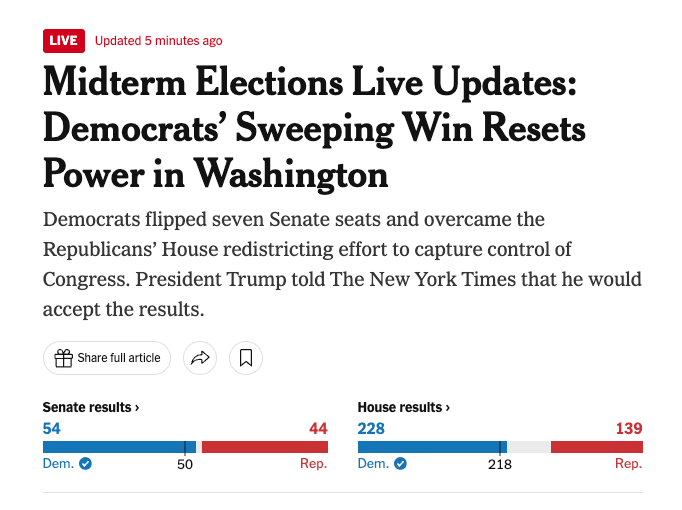
Not only was it a night of undeniably forceful repudiation of Trump and the GOP’s governance over the past 2 years, but also a night signaling demographic and generational change in the United States. James Talarico will take the title of youngest serving Senator as he heads to Washington DC to represent Texas — the first time the Lone Star state has sent a Democrat to the Senate since before Talarico was born — grabbing the baton from Jon Ossoff, re-elected handily for a second term as the senior Senator from Georgia.
Elsewhere, many other historic firsts unfolded across the country — including 4 states electing their first ever Black governors, a number that exceeds the totality of Black governors ever elected prior to this year. With potentially more still to come, we’re kicking off this list of historic firsts in American politics and hoping to add more in the coming days as the final races are called:
National firsts
Keisha Lance Bottoms (D), Georgia governor: the first Black woman elected governor in U.S. history, and Georgia’s first governor of color.
Deb Haaland (D), New Mexico governor: the first Native American woman elected governor.
Peggy Flanagan (D), Minnesota Senate: the first Native American woman elected to the U.S. Senate.
Chris Pappas (D), New Hampshire Senate: the first openly gay man elected to the U.S. Senate.
Abdul El-Sayed (D), Michigan Senate: the first Muslim elected to the U.S. Senate.
Josh Turek (D), Iowa Senate: the first Paralympian elected U.S. Senator.
Byron Donalds (R), Florida governor: Florida’s first Black governor, and CBS Miami calls him the first Black Republican elected governor in U.S. history.
Juliana Stratton (D), Illinois Senate: makes Illinois the first state represented by two women of color in the Senate, alongside Tammy Duckworth.
Georgia and Florida together: with Bottoms and Donalds, two Deep South states will be governed by Black leaders at the same time for the first time.
State firsts
Gina Hinojosa (D), Texas governor: Texas’s first Latina governor.
Aaron Ford (D), Nevada governor: Nevada’s first Black governor.
Amy Acton (D), Ohio governor: Ohio’s first woman governor.
Amy Klobuchar (D), Minnesota governor: Minnesota’s first woman governor.
Marsha Blackburn (R), Tennessee governor: Tennessee’s first woman governor.
David Crowley (D), Wisconsin governor: Wisconsin’s first Black governor.
Annie Andrews (D), South Carolina Senate: the first woman elected to the Senate from South Carolina. Darline Graham, whom she beat, was appointed, not elected.
Denise Powell (D), NE-02: the first woman and first Latina elected to represent the district.
Phil Scott (R), Vermont governor: a record sixth term.
Long droughts ended
Kansas Senate (Adam Hamilton): the first Democrat Kansas has elected to the Senate since 1932.
Texas governor (Hinojosa): the first Democrat elected governor since Ann Richards in 1990.
Texas Senate (James Talarico): the first Democratic Senate win in Texas in decades. The last one was Lloyd Bentsen in 1988.
South Carolina Senate (Andrews): the first Democrat South Carolina has elected to the Senate in 28 years.
Georgia governor (Bottoms): the first time the office has flipped in 24 years, according to NBC.
Iowa governor (Rob Sand): the first Democrat to win since Chet Culver in 2006.
Ohio governor (Acton): the first Democrat in 20 years.
MO-02 (Fred Wellman): the first Democrat to win the seat since 1990.
WI-01 (Mitchell Berman): the first Democrat to represent the district in more than 30 years.
UT-01 (Ben McAdams): Utah’s first Democrat in Congress since he left in 2021.
Less than two weeks out. Here’s where to learn the part of the midterms nobody puts on screen.
Here’s the paradox of November 3: the number you’ll stare at all night, the one in the corner of the screen with the little checkmark beside it, is the least official number in American democracy.
It has no legal status. None. It’s a private news organization’s running total, pieced together from county websites, state feeds and reporters in the field. This cycle, every major broadcast network reads from the same one. ABC, CBS, NBC, CNN and Fox News all buy their 2026 results data from the Associated Press, the first time since the 2016 election that all the major broadcast networks have used a single vendor. The call desks are still separate. The numbers feeding them aren’t.
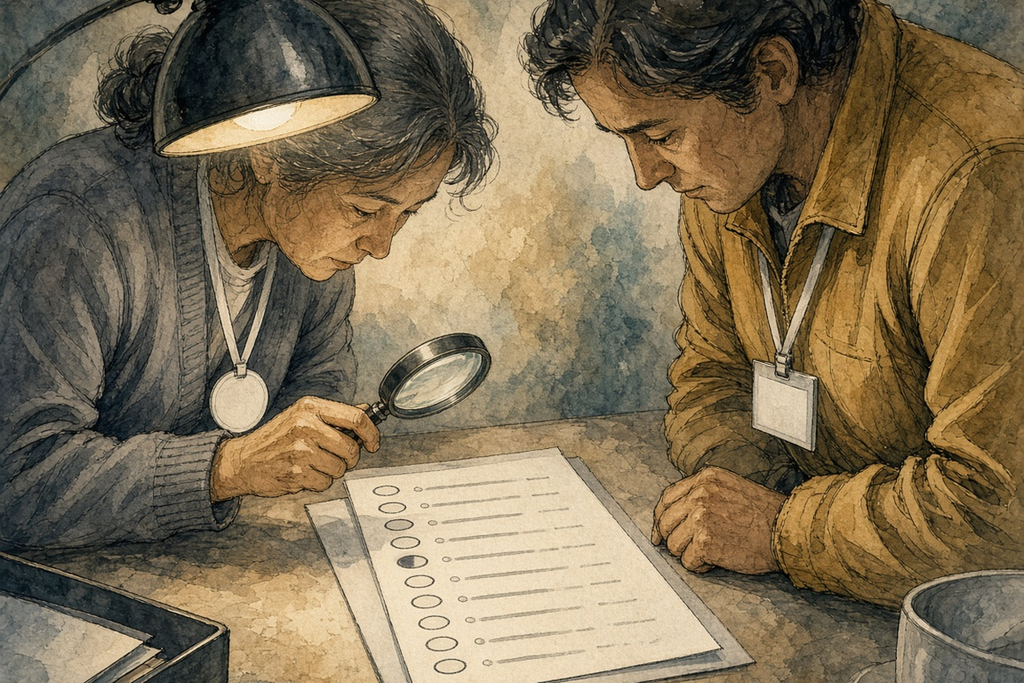
Meanwhile, the actual election happens somewhere far less telegenic. In county offices. In rooms where election workers decide what a half-filled oval meant. In Pennsylvania, where counties can’t even start processing mail ballots before 7 a.m. on Election Day. That’s why the mail vote there lands last, and why the margin “moves” overnight. That’s not the count shifting. That’s the calendar.
And when somebody loses? The National Archives has a stock answer to the question of what a concession speech does to the process. It begins with one word: “None.”
So on November 4th someone will tell you the late-counted ballots are suspicious. Or that a race was over because a candidate said so on TV. You’ll want to know how the machine actually works.
It moves fast. In the past week alone, close to 100 midterm pages were added or updated: new race pages, new super PAC money, new court rulings. A “Latest midterm updates” feed at the top of the hub refreshes every morning, so you can see what changed since your last visit. And if reading isn’t enough, the hub will point you to volunteer shifts near you.
The bigger map
The midterms section is one corner of something bigger. The Civics vs. Oligarchy Knowledge Base is more than 10,000 linked pages mapping the people, money, ideas and institutions of the modern American right: who funds what, who knows whom, and where the receipts are. New here? Begin at Start Here, with a 15-minute tour and six one-hour reading tracks. Election season is track one.
Then follow the links. That’s the whole trick. Every page connects to the people and the money around it.
It’s free, and there’s no paywall. Send it to the friend who’s planning to doomscroll through election night.
Because election night is a broadcast. The election is a process: slow, local, deeply unglamorous. When the numbers lurch at 2 a.m., the system isn’t broken. It’s working exactly as designed.
The people who want you to panic are counting on you not knowing the difference.
Almost nobody can see it. That’s not because it’s hidden. It’s because it’s scattered across thousands of filings, press releases and paywalled archives, and nobody has time to trace Leonard Leo to the Federalist Society, then to a 6–3 Supreme Court, then to the rulings that changed your rights. The information is free. Connecting it costs time, and time is what oligarchy counts on you not having.
The money. Dark money networks, donor-advised funds, the Koch Network, Citizens United, and a running tracker of what officials say about federal spending compared with what the contracts and filings show.
The Tech Right. How Silicon Valley money and ideas moved to the center of right-wing power. It runs from Peter Thiel and Palantir to Curtis Yarvin and the defense-tech pipeline. Start at The Tech Right Hub.
The 2026 midterms. With less than three weeks until November 3, the 2026 Midterms Hub covers every Senate and governor’s race, the most competitive House seats, ballot measures, and how the election is actually run and counted.
If you have fifteen minutes, go to Start Here. Five pages tell the whole story in order: the plan, who pays for it, the new money, the story that mobilizes the base, and what’s at stake in November. If you have an hour, pick one of six reading tracks.
If you’re coming back, What’s New is refreshed daily. In the past week alone the wiki added 172 new pages and made 121 major updates.
How it’s built
I came up in the Friendster era, back when we really believed the open web would put information in everyone’s hands. Silicon Valley lost that plot. I didn’t.
I built this with heavy AI assistance for research, drafting and cross-linking, plus a separate fact-checking pass. The rules are simple. Claims carry sources. Where sources conflict or a number can’t be confirmed yet, the page says so in a warning box instead of quietly picking a side. Fast-moving pages say when their figures were last checked. Short pages are placeholders, there so a name can be linked, and they fill in over time.
It’s free and has no sponsors. It grows every day.
Its older sibling, Foundations, is still home to the dictionaries and timelines. The two sites are meant to be read together.
None of this was ever secret. Keeping it scattered was the trick.
The Hunter Standard, Part 1. Trump’s son-in-law Jared Kushner is negotiating two wars as a “volunteer,” which means nobody gets to see what he owns. Reporters found out anyway.
Republicans “nearly wore out the subpoena machine investigating Hunter Biden’s foreign relationships” and “should not unplug it now.” — Sen. John Curtis (R-Utah), letter to the Senate Judiciary Committee, Sept. 22, 2026
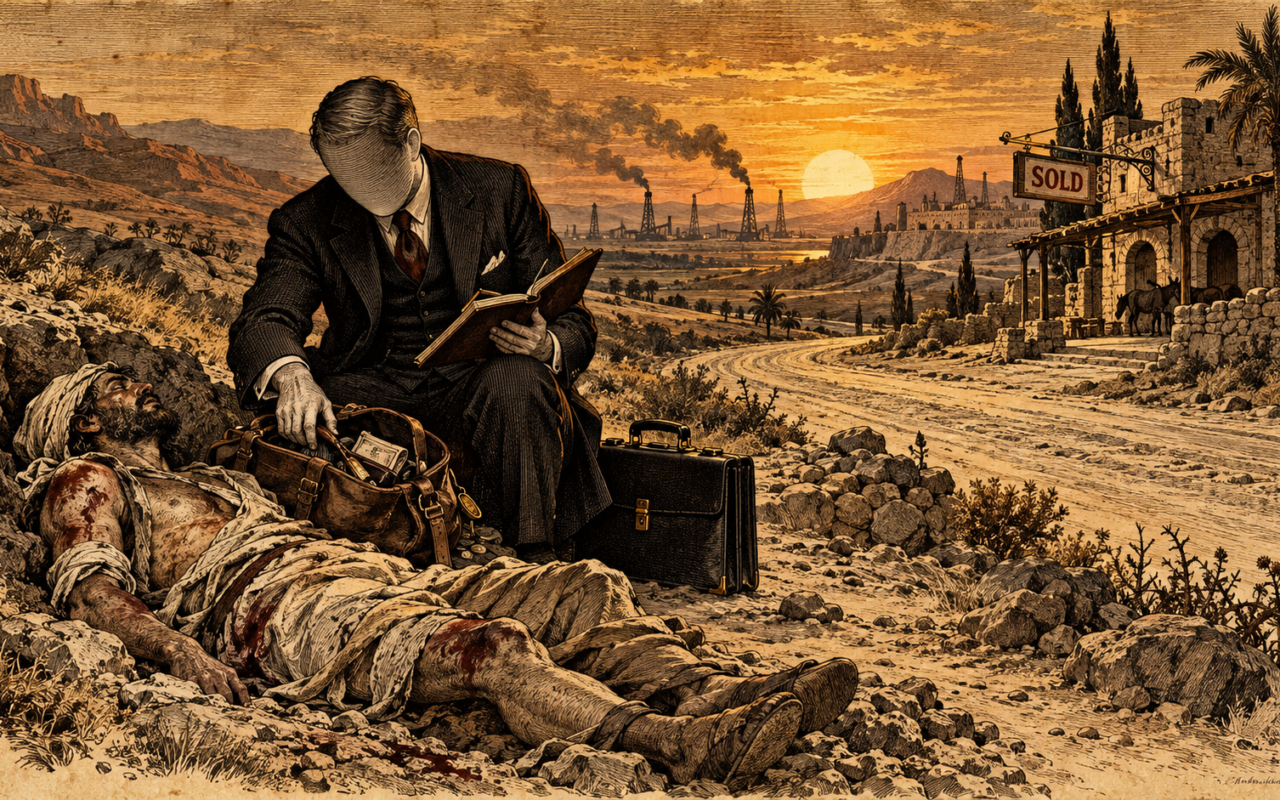
Even people who have never cracked a Bible know the story of the Good Samaritan. A man traveling the road from Jerusalem to Jericho gets jumped by robbers, stripped, beaten, and left half dead in a ditch. A priest comes along and crosses to the other side of the road. So does a Levite. Then a Samaritan, a member of a group the story’s audience despised, stops, bandages the man’s wounds, puts him on his own animal, hauls him to an inn, and pays the innkeeper two silver coins out of his own pocket, promising to cover whatever else it costs.
The point of the parable is that being a neighbor costs you something.
The road from Jerusalem to Jericho is still there. It runs through the West Bank. And the man the President of the United States sent to bind up the wounds of the region has worked out a much better arrangement with the innkeeper.
The volunteer
Jared Kushner holds no government job. He has spent the second Trump term negotiating over Gaza, Iran, and now Ukraine alongside special envoy Steve Witkoff, the President’s longtime friend and fellow real-estate developer. Kushner does it as an unpaid “volunteer.”
It sounds selfless. It’s actually the whole trick. Government officials file financial disclosures — volunteers don’t.
All 50 states have Good Samaritan laws that shield people who stop to help in an emergency from liability for whatever happens next. Kushner’s volunteer status works like a Good Samaritan law for his portfolio: it shields him from having to tell anyone what he owns while he decides how wars end.
So reporters had to find out the hard way. In the first week of October, they found two things.
Table one: Gaza
On October 1, CNN reported that while Kushner was negotiating an end to the war in Gaza, his private equity firm, Affinity Partners, was the largest shareholder in Phoenix, one of Israel’s biggest insurers and asset managers. Affinity held 7.4% of the company, a stake worth more than $1 billion.
You learned the fairy tale in civics class. The ballot box is the one clean machine — the sacred mechanism, the great equalizer, the place where the powerful and the powerless cancel each other out one vote at a time. The peaceful transfer of power is American scripture. We even built a little ritual around it: the concession call, the inauguration, the loser standing on the dais clapping for the winner.
It’s a lovely story. The documentary record just doesn’t back it up — especially after the 2020 election and the events of January 6, 2021.
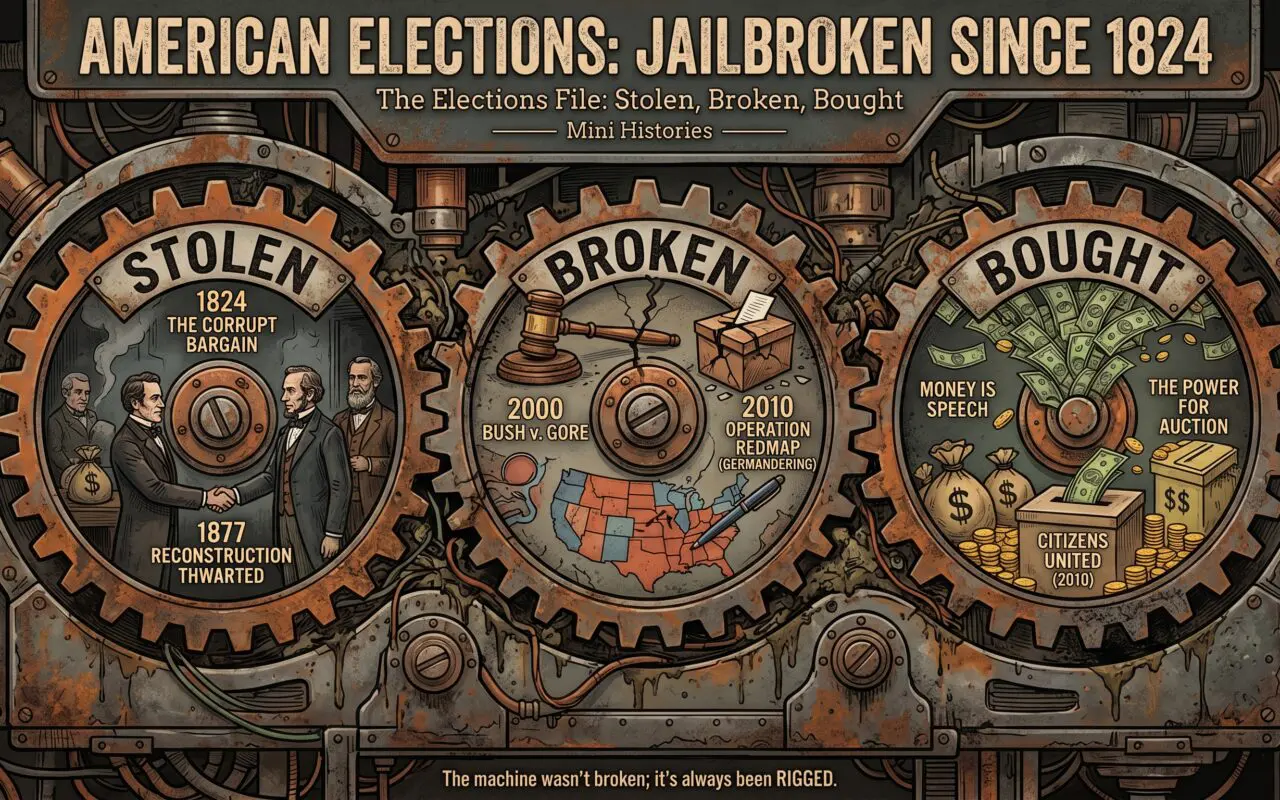
This is part of my daily Mini Histories series — 40-second tilt-shift AI-created video dives into the moments American memory conveniently misplaced, each one built around a thesis that runs against the grain of what you were taught. (You can find the whole archive on the channel.)
And the elections file is one of the thickest, because the thing the fairy tale leaves out is that American elections don’t get stolen on election day, via so-called voter fraud. They get stolen before it, broken around it, or bought after it — by the very elites who cry big crocodile tears about the unfairness of elections as they rig them in their favor (sometimes, with the blessing of SCOTUS including recently). Election denial becomes a whole grift in itself for the unpopular party that cheats. Using three failure modes, over two hundred years, one remarkably consistent cast of beneficiaries emerges again and again to wield power against the will of the people.
Let’s go to the tape.
Stolen: the backroom
Long before anyone “stopped the steal,” the steal was a gentleman’s arrangement — the proverbial smoke-filled back rooms where deals were made amongst men of influence.
The Corrupt Bargain (1824)
The first stolen presidential election happened earlier than you think — Andrew Jackson won the most votes and the most electors, and still walked away with nothing after the contest got thrown to the House and the runners-up cut a deal.
Reconstruction, Thwarted (1877)
A half-century later they did it again, only this time the price was an entire people’s freedom. To settle a disputed election, the parties traded away Reconstruction itself — federal troops out of the South, the door held open for Jim Crow.
There was a weird controversy that set in after the events of the white nationalist Unite the Right rally in Charlottesville, VA in which a neo-Nazi 8chan bottomfeeder killed Heather Heyer by running her over with his car, while injuring 19 others. It was a shocking moment for the nation and all Trump had to say about it was they condemned violence “on many sides, on many sides” — though there were only two sides, and only one of those two sides had killed someone.
A couple of days later he managed to get through a scripted teleprompter statement explicitly condemning white supremacists and neo-Nazis only to walk it back again and then double down on it the following day, saying “The statement I made on Saturday, the first statement, was a fine statement… What I’m saying is this: You had a group on one side and you had a group on the other, and they came at each other with clubs—and it was vicious and it was horrible. You had some very bad people in that group, but you also had people that were very fine people, on both sides.”
First of all, both sides did not have clubs. One side had tiki torches and a car that killed someone while the other side was armed with hymnals and homemade signage. Secondly — where were those “other” fine people? The vagueness allows for almost any interpretation — were some of the people with clubs “very fine” despite beating others about the head? Were some of the people who didn’t have clubs themselves but were cheering on the people with clubs “fine people”? Maybe there was a gathering of small invisible fairies merely caught up in the shuffle and Trump wanted to just make sure that possibility didn’t get overlooked and this innocent group of delicate souls unnecessarily besmirched?
The primary chosen “debunk” that detractors ended up going with from the wet clay of Trump’s stilted statement alleges that the *other* side Trump meant by “both” were simply innocent local townsfolk objecting to the removal of a statue of their beloved hero Robert E. Lee. Besides the fact that the right-wing has failed to this day to produce a shred of evidence that such people were even there, and the inconvenient reality that the rally was openly marketed as a white supremacist event, organized by avowed white nationalist organizations, it doesn’t even matter if they could produce such evidence — because those people are still not very fine! Robert E. Lee was a traitor to the United States and exalting him is not good!
Robert E. Lee Was Not a Fine People
In fact, Robert E. Lee was a terrible human being whose noble cause was maintaining his ownership of other human beings — as well as a shitty general who paid zero attention to the battle after giving a set of static orders and hoping God would sort out the rest. All he had to do was defend the borders of his baby white homeland, but he was an arrogant showboat who couldn’t keep it in his pants and had to go attacking Pennsylvania for no good reason.
He was also a senseless butcher who had the highest casualty rate of the entire war, being so reckless with his soldiers’ lives that he may as well have fed them into a woodchipper. He chewed through his entire army of 100,000 only 14 months into the campaign and by the war’s end had effectively annihilated his original army multiple times over through cumulative losses, as well as obliterating a whopping 30% of the total Confederate forces overall despite leading only one army in one theater.
The shooting in Minneapolis last week of Renee Good, a 37-year-old wife and mom to 3 kids, hit me really hard. It’s not just that she was in a lesbian couple like me, with kids from previous husbands — and that I would be the one in the passenger’s seat. It’s because of the brazenness — pride, even — of the officer who ended her life cavalierly and without remorse.
The smear campaign about this woman nauseates me deeply — it began mere milliseconds after her death when the officer who shot her at point-blank range yelled “fuckin’ bitch!” after her vehicle and escalated extremely quickly to the sitting President, Vice President, and Homeland Security Secretary calling her a “domestic terrorist” despite the physical impossibility of being able to confirm that kind of information so quickly.
It is clear that agent Jonathan Ross escalated the situation himself. He broke DHS policy by putting himself in the path of a moving vehicle. And he should not have had his cellphone out, occupying his other hand, when he drew his weapon — you need the hands to be unobstructed to maximize your ability to handle any situation that may emerge.
He claimed he was afraid for his life — when? Show me on tape at which moment(s) in time this agent appears to behave an a fearful manner, because I do not see it. There are the moments when he’s calmly walking around the entire vehicle recording on his cellphone, moments when he has calmly drawn his gun and is pointing it at Renee Good, and moments where he is shouting and shooting bullets into her head. Where is the fear? He doesn’t run or dive; he doesn’t scream; he doesn’t call for help; he doesn’t show any surprise. He doesn’t seem fearful — he seems in control of the situation at all times, including when he pulls the trigger 3 times to take someone’s life as punishment for being cheeky.
They do not care about you — you are expendable to them. They do not GAF. Especially now with AI — they are gonna replace you anyway brah! At best they are biding time putting you on a drip feed of murder porn and revenge fan fic until the moment they are completely certain they’ve hijacked the electoral system at which time you too, buddy, will be shown the airlock into a deep space void no one will ever hear you from because they have all the powers of the earth to override whatever puny narrative you may have had for yourself.
You will be crushed like a bug 1000x tinier than Kafka’s roach — millions at a time under the heels of casually sadistic billionaires many of whom were Democrats up until 5 minutes ago when someone offered them a deal to cut their tax bill in exchange for a measley few million dollars. It’s “irrational” to not take the deal. You have to take the deal. Your competitors have taken the deal. You’d be the only chump not taking the deal. It’s the Art of the Deal, right?
Deals are all that matter. Transactionality is all there is — including reducing the beautiful, awe-inspiring teachings of Jesus to a mere materialistic creed, draped in a flag, shouted from a bullhorn, fired into an already capsized boat, and shot into the heads of innocent bystanders if they don’t comply with conflicting directives.
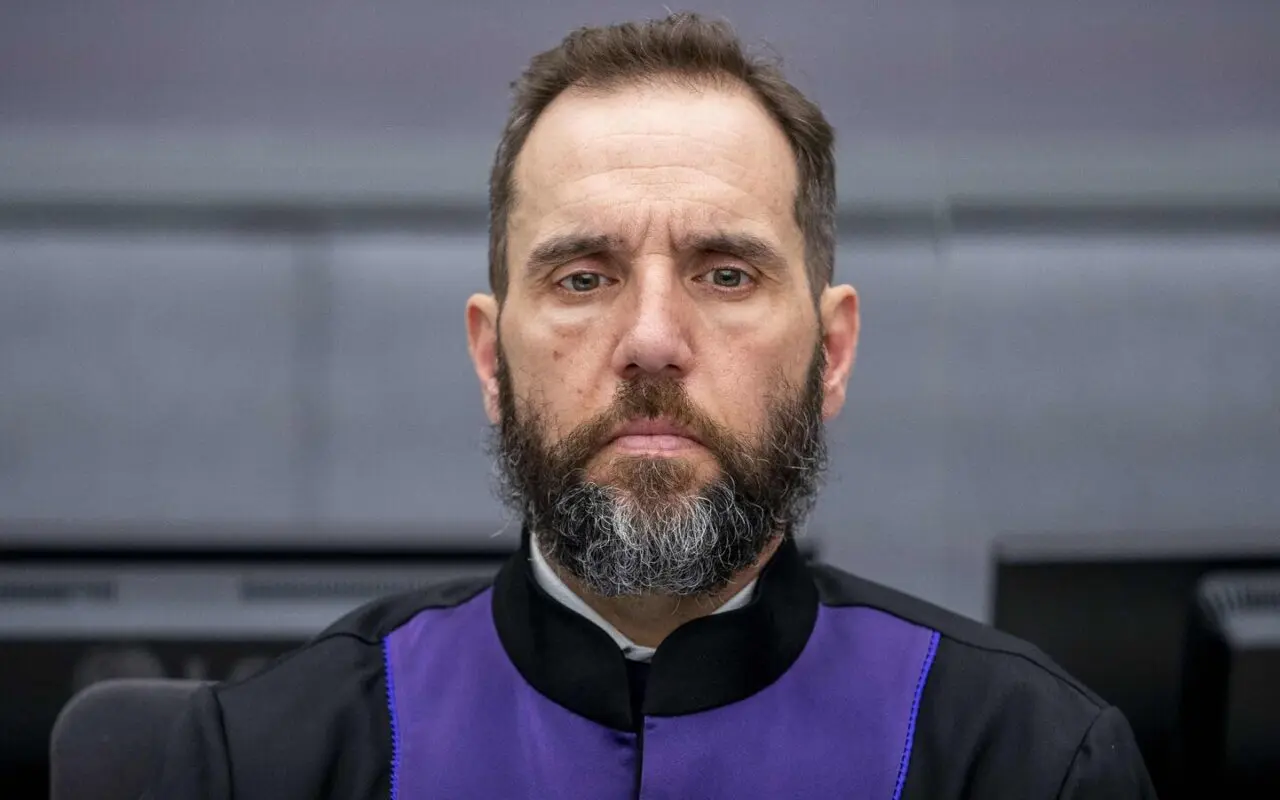
Five years ago today, a violent mob stormed the United States Capitol in an attempt to overturn a free and fair election. The man who incited them has since been re-elected president, which scuppered the investigation into him by Special CounselJack Smith. If that whiplash isn’t enough to give you vertigo, consider this: we now have sworn testimony, under oath, from the prosecutor who investigated Trump laying out exactly why his office believed they could convict Trump for breaking the law—and why they were stopped.
Former Special Counsel Jack Smith’s December testimony before the House Judiciary Committee is the closest thing we’ll get to the trial that should have happened. In it, Smith methodically dismantles every defense Trump and his allies have offered, explains how the case was built on testimony from Republicans willing to put country over party, and makes clear that the evidence of Trump’s guilt wasn’t circumstantial—it was direct.
In this post, I’m breaking down the key takeaways from Smith’s testimony, sharing one of my AI#MiniHistory videos marking the anniversary, and giving you a way to interrogate the evidence yourself through an interactive NotebookLM bot. Because if there’s one thing the incoming administration is counting on, it’s that you won’t have time to read 255 pages of testimony. Let’s make sure they’re wrong.
January 6 in 40 seconds
But first, a J6 refresher course — again, for busy folks.
I’ve been into making these little AI #MiniHistory videos with Glif agents, trying to tease out important signposts along our road to dictatorship and other interesting moments in history to highlight. Here’s the one I did for today and the 5th anniversary of January 6, 2021:
There’s something conspicuously absent from American political discourse: actual discussion of values and the morals, ethical choices, and beliefs that go into the creation of good government policy.
Think about the last major political debate you watched, or the last campaign ad that stuck with you. How much of it was about what government should do versus who you should hate? How much was articulating a vision for society versus performing dominance over the out-group?
This isn’t an accident. It’s a strategy.
When your policy positions are wildly unpopular — when majorities oppose you on healthcare, taxation, abortion, climate change, guns, and wages — you don’t engage on the substance. You change the subject. You make politics about identity, grievance, and tribal belonging. You turn every election into a referendum on vibes rather than vision.
The American right has become extraordinarily sophisticated at this evasion. They’ve built an entire media ecosystem designed not to argue for right-wing values, but to ensure those values never have to be argued for at all. And the Trump administration is chock full of people from that media ecosystem.
The Polling Problem
Here’s the uncomfortable reality the modern right has to navigate, and we need to trumpet: their actual policy preferences are not popular.
Exposed to the individual provisions of the Affordable Care Act, majorities supported them — even among Republicans. Majorities support raising taxes on the wealthy, protecting Social Security and Medicare, acting on climate change, keeping abortion legal in most cases, and implementing universal background checks for gun purchases. On issue after issue, when you strip away the partisan framing and ask people what they actually want government to do, the “conservative” position loses.
This creates a strategic problem. You can’t win elections by articulating positions most people reject. So you articulate… something else.
The Retreat from Argument
Meanwhile, the right-wing has indefensible values, which is why they no longer even bother to try to articulate them. Instead, they express them obliquely through “memes” and mores that evince cruelty, bigotry, narcissism, domination, supremacy, greed, selfishness, and contempt for vulnerability — all while maintaining plausible deniability through irony, “just asking questions,” and the ever-ready accusation that anyone who names the pattern is being hysterical or unfair.
This is the function of the perpetual rhetorical shell game: you can’t pin down a position that’s never stated plainly. The cruelty gets expressed through policy and aesthetic, but when challenged, retreats behind procedural objections or “economic anxiety.” The bigotry shows up in who gets mocked and who gets protected, but is never admitted as such — it’s always reframed as “common sense” or “tradition.”
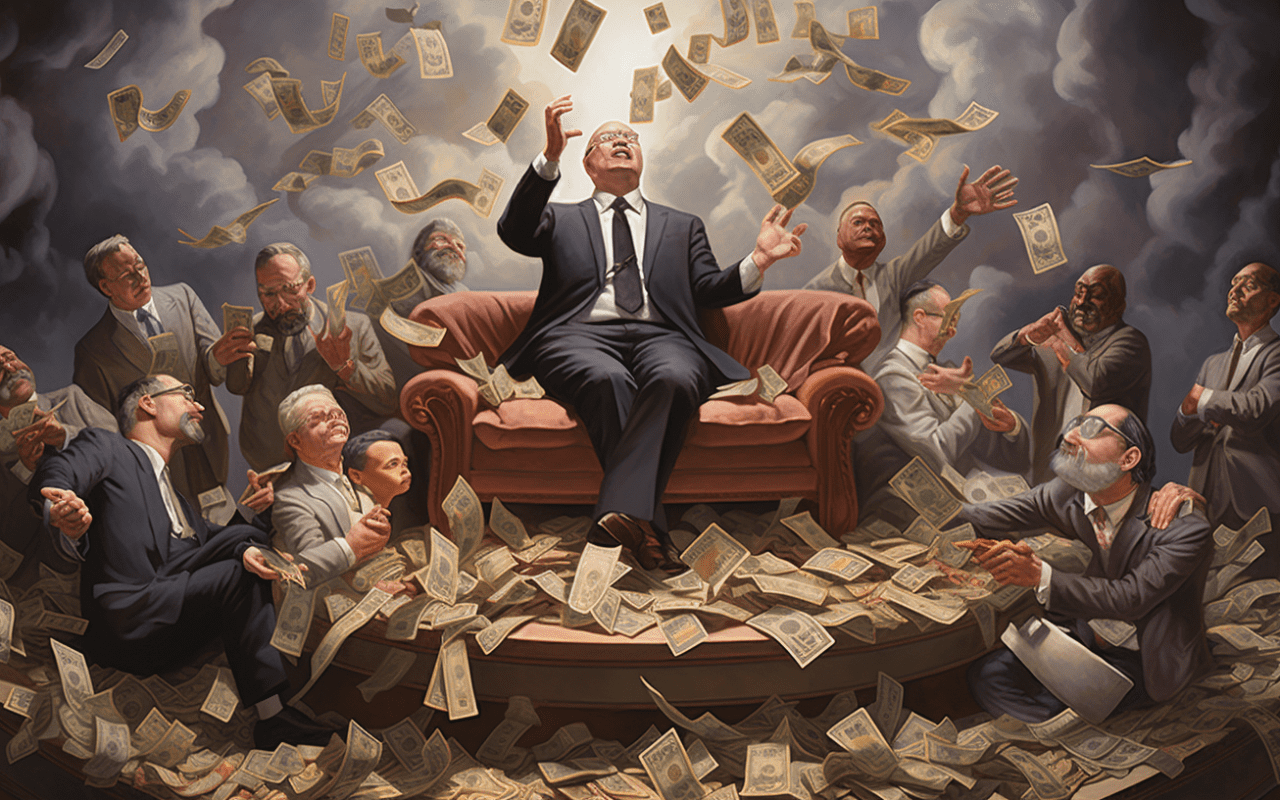
A network of exceedingly wealthy individuals and organizations have channeled their vast fortunes into influencing American politics, policy, and public opinion — they’ve formed a wealth cult. And they’ve leveraged that cult and its considerable fortune to influence and in many ways dramatically transform American politics.
The most succinct way I have come up with to explain American politics is that the wealthy are dividing us over race and religion. Today far more openly than in the past, where much oligarch shadow influence was delivered via dark money kept intentionally untraceable back to its origins.
The term “dark money” refers to political spending meant to influence the decision-making and critical thinking of the public and lawmakers where the source of the money is not disclosed. This lack of transparency makes it challenging to trace the influence back to its origins, hence the term “dark.”
The wealth cult has funded disinformation campaigns, the spread of conspiracy theories, created fake social movements through astroturfing, enabled violent extremists to attack their country’s capitol, aided and abetted a convicted felon, cruelly deprived vulnerable people (especially immigrants, poor people, and women) of the kind of state aid granted generously throughout the developed world, bribed regulators, rigged elections, crashed economies, and on and on in service of their extremist free market ideology beliefs (which, by the way, have resulted in catastrophic market crashes every single time).
They believe in “makers and takers,” or Mudsill Theory, as it was once called by pedophile and racist Senator and slavery enthusiast James Henry Hammond. Some people were born to serve others, they say. Hierarchies are natural, they claim. Wealthy men should make all the decisions — because that’s what’s best for everyone, they say in paternalistic tones.
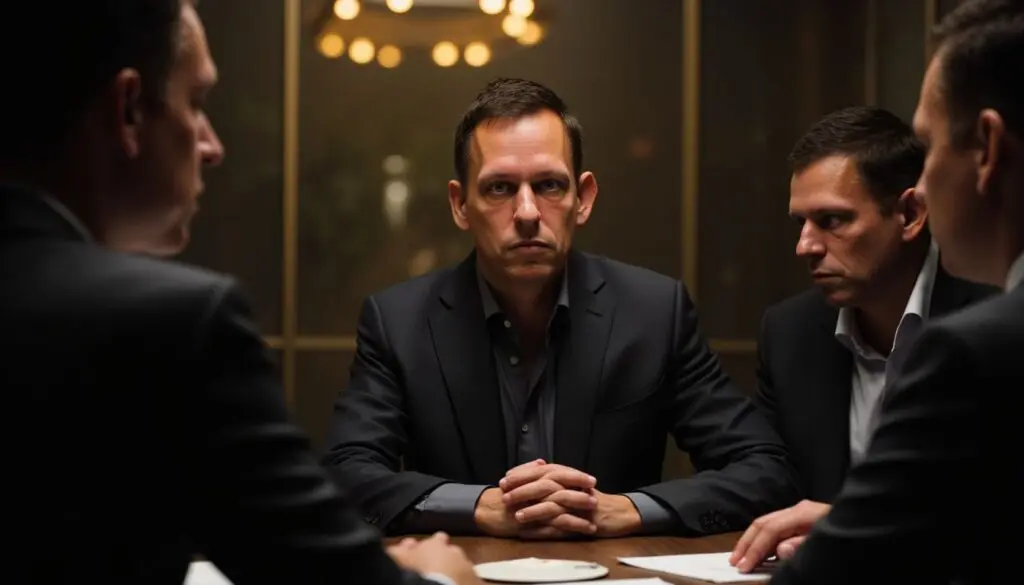
Born in Frankfurt and raised in California, Thiel studied philosophy at Stanford, where he was captivated by the writings of Leo Strauss and René Girard. These thinkers — one obsessed with the hidden logic of political elites, the other with the contagious nature of human desire — shaped Thiel’s enduring worldview: that civilization is locked in cycles of envy and collapse, and only an enlightened few can see beyond the herd. In this sense, Thiel has always seen himself less as a businessman and more as a philosopher of power.
His ventures, from PayPal to Palantir, form a kind of metaphysical architecture of control. PayPal, the proto-financial infrastructure of the internet, made Thiel his fortune. Palantir, as explored deeper in What Is Palantir?, has monetized the surveillance state. In between, Thiel cultivated a cadre of disciples — the so-called PayPal Mafia — that went on to dominate Silicon Valley. His investments in companies like Facebook gave him not only wealth but leverage: a front-row seat in the grand experiment of data-driven social engineering.
What is fascism, and what are the signs of fascism? The fascist form of government is a complex and multi-faceted ideology that can manifest in various ways, making it challenging to pin down with a single definition.
Fascism resists simple definition precisely because it’s a syncretic ideology—adaptable to different contexts while maintaining core structural features. Rather than a fixed doctrine, it operates as a political methodology characterized by specific power dynamics, rhetorical strategies, and institutional patterns.
Structural characteristics of fascism
These are the ideological foundations and belief systems that define fascist movements—not merely policy positions but the fundamental orientations toward power, identity, and social organization that shape how fascism understands the world and its place in it.
Authoritarian Consolidation: Fascism centralizes power through the dismantling of horizontal accountability structures, typically concentrating authority in a charismatic executive who positions themselves above institutional constraints.
Ethno-Nationalism and Boundary Enforcement: Xenophobia operating through strict in-group/out-group categorization, often targeting immigrants, religious minorities, or racialized “others.”
Reactionary Temporal Orientation: Deployment of a mythologized past as political program—the promise to restore a golden age that never existed, weaponizing nostalgia against pluralism.
Anti-Leftist Mobilization: Positioning communism, socialism, and progressive movements as existential threats, often conflating disparate left ideologies to create a unified enemy.
The Us vs. Them Architecture: In-group/Out-group dynamics as core infrastructure
Fascism doesn’t just exploit social divisions—it requires their constant production and intensification as its primary source of political energy. While most political movements contain some degree of group identity, fascism is structurally dependent on a stark binary between insiders and outsiders, making this dynamic its foundational operating system rather than an incidental feature. The movement coheres not around shared policy goals or governance philosophy, but around the ongoing project of boundary maintenance: defining, defending, and purifying the “us” against an ever-present “them.”
The Founders knew acutely the pains of centuries of religious warfare in modern Europe and resoundingly did not want that for their new nation. Many of them moreover knew religious persecution intimately — some whose families fled the Church of England for fear of being imprisoned, burned at the stake, or worse. Is America a Christian nation? Although many Christians certainly have come here, in a legal and political sense the nation’s founders wanted precisely the opposite of the “Christian nation” they were breaking with by pursuing independence from the British.
Contrary to the disinformation spread by Christian nationalists today, the people who founded the United States explicitly saw religious zealotry as one of the primary dangers to a democratic republic. They feared demagoguery and the abuse of power that tilts public apparatus towards corrupt private interest. The Founders knew that religion could be a source of strife for the fledgling nation as easily as it could be a strength, and they took great pains to carefully balance the needs of religious expression and secular interests in architecting the country.
The main impetus for a large percentage of the early colonists who came to the Americas was the quest for a home where they could enjoy the free exercise of religion. The Protestant Reformation had begun in Europe about a century before the first American colonies were founded, and a number of new religious sects were straining at the bonds of the Catholic Church’s continued hegemony. Puritans, Mennonites, Quakers, Jesuits, Huguenots, Dunkers, Jews, Amish, Lutherans, Moravians, Schwenkfeldians, and more escaped the sometimes deadly persecutions of the churches of Europe to seek a place to worship God in their own chosen ways.
By the late 18th century when Thomas Jefferson wrote the Declaration of Independence, many religious flowers were blooming within the 13 colonies. He had seen for himself the pitfalls of the experiments in which a unitary control of religion by one church or sect led to conflict, injustice, and violence. Jefferson and the nation’s other founders were staunchly against the idea of establishing a theocracy in America:
The founding fathers made a conscious break from the European tradition of a national state church.
The words Bible, Christianity, Jesus, and God do not appear in our founding documents.
The handful of states who who supported “established churches” abandoned the practice by the mid-19th century.
Thomas Jefferson wrote that his Virginia Statute on Religious Freedom was written on behalf of “the Jew and the gentile, the Christian and the Mahometan, the Hindu and the infidel of every denomination.” In the text he responds negatively to VA’s harassment of Baptist preachers — one of many occasions on which he spoke out sharply against the encroachment of religion upon political power.
The Constitution explicitly forbids a religious test for holding foreign office.
The First Amendment in the Bill of Rights guarantees that “Congress shall make no law respecting the establishment of religion, or prohibiting the free exercise thereof.”
There is a right-wing conspiracy theory aiming to discredit the phrase “wall of separation between church and state” by claiming that those exact words aren’t found in the Constitution.
The phrase comes from Thomas Jefferson’s 1802 letter to the Danbury Baptists, wherein he is describing the thinking of the Founders about the meaning of the First Amendment’s Establishment Clause, which Jefferson contemplates “with sovereign reverence.”
The phrase is echoed by James Madison in an 1803 letter opposing the building of churches on government land: “The purpose of separation of Church and State is to keep forever from these shores the ceaseless strife that has soaked the soil of Europe with blood for centuries.”
The 1796 Treaty of Tripoli states in Article 11: “As the government of the United States of America is not in any sense founded on the Christian Religion,-as it has in itself no character of enmity against the laws, religion or tranquility of Musselmen,-and as the said States never have entered into any war or act of hostility against any Mehomitan nation, it is declared by the parties that no pretext arising from religious opinions shall ever produce an interruption of the harmony existing between the two countries.” — President George Washington first ordered the negotiation of a treaty in 1795, and President John Adams sent the treaty to the Senate for ratification in 1797, with this article widely interpreted to mean a reiteration of the purpose of the Establishment Clause to create a secular state, i.e. one that would not ever be going to holy war with Tripoli.
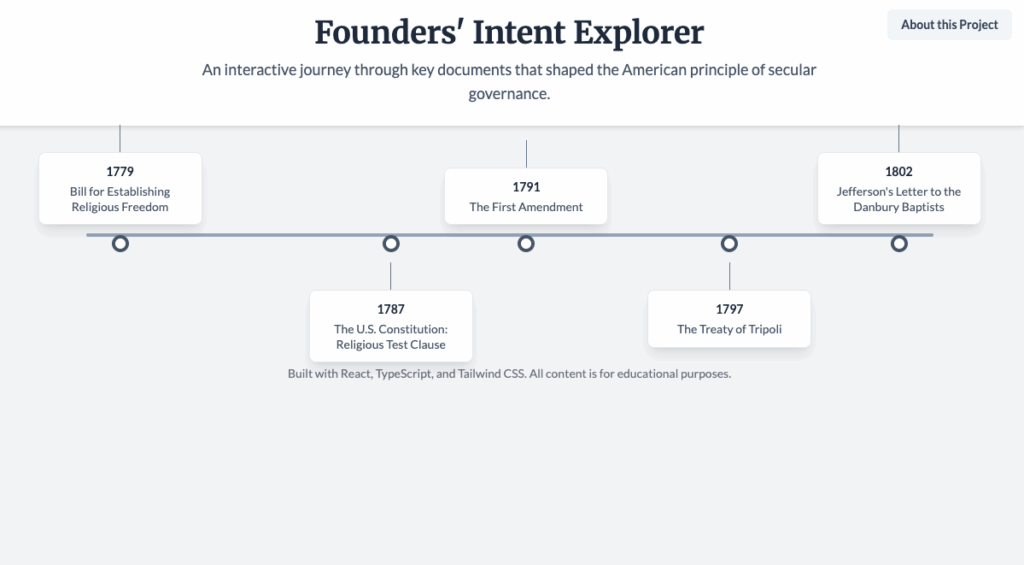
Critical Dates for Religious Freedom in America
From the very beginning the Founders made clear they did not want to repeat the mistakes of Old Europe. They established a secular government that offered religious freedom to many who had felt persecuted in their homelands — for generations to come.
Get a quick overview of some of the most important moments in American history and its founding documents with our interactive timeline below.
The Founders were deists
Moreover, the majority of the prominent Founders were deists — they recognized the long tradition of Judeo-Christian order in society, but consciously broke from it in their creation of the legal entity of the United States, via the Establishment Clause and numerous other devices. The founders were creatures of The Enlightenment, and were very much influenced by the latest developments of their day including statistics, empiricism, numerous scientific advancements, and the pursuit of knowledge and logical decision-making.
What Deism Actually Meant: Deism in the 18th century was a rationalist religious philosophy that accepted the existence of a creator God based on reason and observation of the natural world, but rejected supernatural revelation, miracles, and divine intervention in human affairs. Think of it as “God as clockmaker” — God designed the universe with rational laws, set it in motion, and then stepped back. This was a radical departure from traditional Christianity.
Empiricism over revelation — knowledge comes from observation and reason, not scripture
Natural rights derived from human nature and reason, not divine command
Social contract theory — government legitimacy comes from consent of the governed, not God’s anointing
Scientific method — Newton’s physics showed that the universe operated by discoverable natural laws
This was a revolutionary shift. They were designing a government based on Enlightenment principles in an era when most of the world still operated under divine-right monarchy.
The European Church-State Problem They Rejected:
The Founders had vivid historical examples of why mixing religion and state power was dangerous:
The Thirty Years’ War (1618-1648) killed roughly 8 million Europeans in religious conflict
The Spanish Inquisition showed what happens when church and state merge
Various European states still had official churches that persecuted religious minorities — prompting many of them to consider a new line in the American colonies
They saw how “established” (government-sponsored) religions inevitably led to:
Paine went even further than most Founders. In “The Age of Reason” (1794), he argued:
All national churches are “human inventions set up to terrify and enslave mankind”
Revelation is meaningless — “it is revelation to the first person only, and hearsay to every other”
True religion is simply “to do justice, love mercy, and endeavor to make our fellow-creatures happy”
He predicted that as education and reason spread, traditional organized religion would wither
This was considered extremely radical — even scandalous — at the time. Yet Paine was celebrated as a hero of the Revolution and widely read. He once lamented that “Persecution is not an original feature in any religion; but it is always the strongly marked feature of all religions established by law.”
The Structural Safeguards They Built:
This wasn’t just philosophy — they built specific mechanisms:
No religious test for office (Article VI)
Establishment Clause — no official national religion
Free Exercise Clause — no prohibition of religious practice
Disestablishment at state level — states gradually abandoned their established churches (Massachusetts was last in 1833)
The framers of our Constitution who established this nation distrusted the concept of divine right of kings that existed in Europe under its historical monarchies. We fought a revolution to leave all that behind for good reason. They were adamantly against the idea of a national church, and were clear and insistent about the necessity of keeping the realms of religion and politics independent of each other.
It is the Christian nationalists who have it backwards — America was never a Christian nation that lost its way. Rather, the United States was founded as a secular nation and has become truer to fulfilling that mission over the centuries. It is the Project 2025 folks who are engaging in revisionist history, inventing a mythical past for the country that simply didn’t exist.
Who is selling the Christian-nation myth? Find out on Civics vs. Oligarchy
Civics vs. Oligarchy, the free Doctor Paradox wiki, maps the writers, groups and politicians behind it:
Sometimes our minds play tricks on us. They can convince us that untrue things are true, or vice versa.
Cognitive distortions are bad mental habits. They’re patterns of thinking that tend to be negatively slanted, inaccurate, and often repetitive — the very opposite of healthy, critical thinking.
These unhelpful ways of thinking can limit one’s ability to function and excel in the world. Cognitive distortions are linked to anxiety, depression, addiction, and eating disorders. They reinforce negative thinking loops, which tend to compound and worsen over time.
Irrational thinking: And how to counter it
Every day, our minds take shortcuts to process the overwhelming amount of information we encounter. These shortcuts—cognitive distortions—helped our ancestors survive in environments where quick judgments meant the difference between life and death. But in today’s complex world, where we’re making decisions about careers, relationships, investments, and strategy, these same mental patterns can systematically lead us astray.
Cognitive distortions are systematic patterns of thought that can lead to inaccurate or irrational conclusions. These distortions often serve as mental traps, skewing our perception of reality and affecting our emotional well-being.
The good news? Simply knowing these distortions (as well as other common psychological biases) exist makes you a better thinker. Research in metacognition shows that awareness is the first step toward correction. You can’t debug code you don’t know is buggy, and you can’t fix thinking patterns you can’t see.
Here’s the hard truth: everyone experiences these distortions. The difference between mediocre and exceptional decision-makers isn’t that one group never falls into these traps—it’s that they’ve trained themselves to spot the patterns, pause, and course-correct. They’ve built systems to counteract their brain’s default programming.
Types of cognitive distortion
What types of cognitive distortion should we be aware of? Let’s delve into three common types: emotional reasoning, counterfactual thinking, and catastrophizing.
Emotional Reasoning: This distortion involves using one’s emotions as a barometer for truth. For example, if you feel anxious, you might conclude that something bad is going to happen, even if there’s no objective evidence to support that belief. Emotional reasoning can create a self-perpetuating cycle: your emotions validate your distorted thoughts, which in turn intensify your emotions.
Counterfactual Thinking: This involves imagining alternative scenarios that could have occurred but didn’t. While this can be useful for problem-solving and learning, it becomes a cognitive distortion when it leads to excessive rumination and regret. For instance, thinking “If only I had done X, then Y wouldn’t have happened” can make you stuck in a loop of what-ifs, preventing you from moving forward.
Catastrophizing: This is the tendency to imagine the worst possible outcome in any given situation. It’s like always expecting a minor stumble to turn into a catastrophic fall. This distortion can lead to heightened stress and anxiety, as you’re constantly bracing for disaster.
But there are many more mental pitfalls to watch out for besides just these 3. The table below catalogues some of the most common cognitive distortions that shape (and warp) human thinking. As you read through them, you’ll likely recognize patterns from your own mental habits. That moment of recognition isn’t a weakness—it’s the beginning of cognitive sovereignty. The path to better decisions starts with knowing when your brain is trying to take shortcuts, and choosing to think deliberately instead.
Consider this your debugging toolkit for the most important software you’ll ever run: your own mind.
Cognitive distortions list
Cognitive distortion
Explanation
Example
all-or-nothing thinking
viewing everything in absolute and extremely polarized terms
“nothing good ever happens” or “I’m always behind”
blaming
focusing on other people as source of your negative feelings, & refusing to take responsibility for changing yourself; or conversely, blaming yourself harshly for things that were out of your control
“It’s my boss’s fault I’m always stressed at work, or conversely, “It’s all my fault that the project failed, even though I had no control over the budget cuts.”
catastrophizing
belief that disaster will strike no matter what, and that what will happen will be too awful to bear
If I don’t get this promotion, my life will be ruined and I’ll end up homeless.
counterfactual thinking
A kind of mental bargaining or longing to live in the alternate timeline where one had made a different decision
If only I had studied harder for that exam, I wouldn’t be in this situation now.
dichotomous thinking
viewing events or people in all-or-nothing terms
“If I don’t get a perfect score on this test, then I’m a complete failure.”
discounting positives
claiming that positive things you or others do are trivial, or ignoring good things that have happened to you
“I got a promotion, but it’s not a big deal; anyone could have done it.”
emotional reasoning
letting feelings guide interpretation of reality; a way of judging yourself or your circumstances based on your emotions
“I feel like a failure, so I must be one.”
filtering
mentally “filters out” the positive aspects of a situation while magnifying the negative aspects
Even though I got a promotion and a raise, I can’t stop thinking about the one negative comment my boss made during my performance review.
fortune-telling
predicting the future negatively
I just know I’m going to fail this test, even though I’ve studied for weeks.
framing effects
tendency for decisions to be shaped by inconsequential features of choice problems
Choosing the “90% fat-free” yogurt over the “10% fat” yogurt, even though they are nutritionally identical, because the positive framing sounds healthier.
halo effect
belief that one’s success in a domain automagically qualifies them to have skills and expertise in other areas
Because someone is a successful actor, I assume they must also be a brilliant political commentator.
illusory correlation
tendency to perceive a relationship between two variables when no relation exists
Every time I wash my car, it rains, so I must be causing the rain.
inability to disconfirm
reject any evidence or arguments that might contradict negative thoughts
Despite being shown evidence of her good work, she clung to the belief that she was incompetent.
intuitive heuristics
tendency when faced with a difficult question of answering an easier question instead, typically without noticing the substitution
When asked if they are a happy person, someone might answer if they are happy right now, instead of considering their overall happiness.
just-world hypothesis
belief that good things tend to happen to good people, while bad things tend to happen to bad people
She believes that because she works hard and is a good person, she is guaranteed to win the lottery, while bad things only happen to those who deserve it.
labeling
assigning global negative traits to self & others; making a judgment about yourself or someone else as a person, versus seeing the behavior as something they did that doesn’t define them as an individual
“I’m a complete idiot for making that mistake,” instead of “I made a mistake.”
ludic fallacy
in assessing the potential amount of risk in a system or decision, mistaking the real randomness of life for the well-defined risk of casinos
A gambler believes that since a roulette wheel has landed on red five times in a row, it’s more likely to land on black next, mistaking the independent probability of each spin for a predictable pattern.
a way of imagining you can wish reality into existence through the sheer force of your mind. Part of a child developmental phase that not everyone grows out of.
If I just wish hard enough, I can make my dream job appear without applying for it.
magnification
exaggerating the importance of flaws and problems while minimizing the impact of desirable qualities and achievements
Even though I successfully completed the complex project, I can’t stop focusing on the minor typo I made in one email.
mind reading
assuming what someone is thinking w/o sufficient evidence; jumping to conclusions
My boss didn’t say good morning, so she must be angry with me.
negative filtering
focusing exclusively on negatives & ignoring positives
Even after receiving a glowing performance review, she could only dwell on the one minor suggestion for improvement.
nominal realism
child development phase where names of objects aren’t just symbols but intrinsic parts of the objects. Sometimes called word realism, and related to magical thinking
A child believing that if you call a dog a “cat,” it will actually become a cat, demonstrates nominal realism.
overgeneralizing
making a rule or predicting globally negative patterns on the basis of single incident
Because I tripped on the sidewalk today, I know it’s going to be a terrible week.
projection
attributing qualities to external actors or forces that one feels within and either a) wishes to promote and have echoed back to onself, or b) eradicate or squelch from oneself by believing that the quality exists elsewhere, in others, but not in oneself
He accused his coworker of being lazy, when in reality, he was struggling with his own motivation.
provincialism
the tendency to see things only from the point of view of those in charge of our immediate in-groups
She couldn’t understand why anyone would disagree with her team’s strategy, assuming their way was the only correct approach because it’s what her superiors believed.
shoulds
a list of ironclad rules one lives and punishes oneself by
“I should always be perfect, and if I’m not, I’m a complete failure.”
teleological fallacy
illusion that you know exactly where you’re going, knew exactly where you were going in the past, & that others have succeeded in the past by knowing where they were going
I always knew I would become a successful entrepreneur because every step I took, even the detours, perfectly led me to this point.
what if?
keep asking series of ?s on prospective events & being unsatisfied with any answers
What if I fail the exam, and what if that means I’ll never get into college, and what if my whole future is ruined because of this one test?