
The Hunter Standard, Part 1. Trump’s son-in-law Jared Kushner is negotiating two wars as a “volunteer,” which means nobody gets to see what he owns. Reporters found out anyway.
Republicans “nearly wore out the subpoena machine investigating Hunter Biden’s foreign relationships” and “should not unplug it now.” — Sen. John Curtis (R-Utah), letter to the Senate Judiciary Committee, Sept. 22, 2026
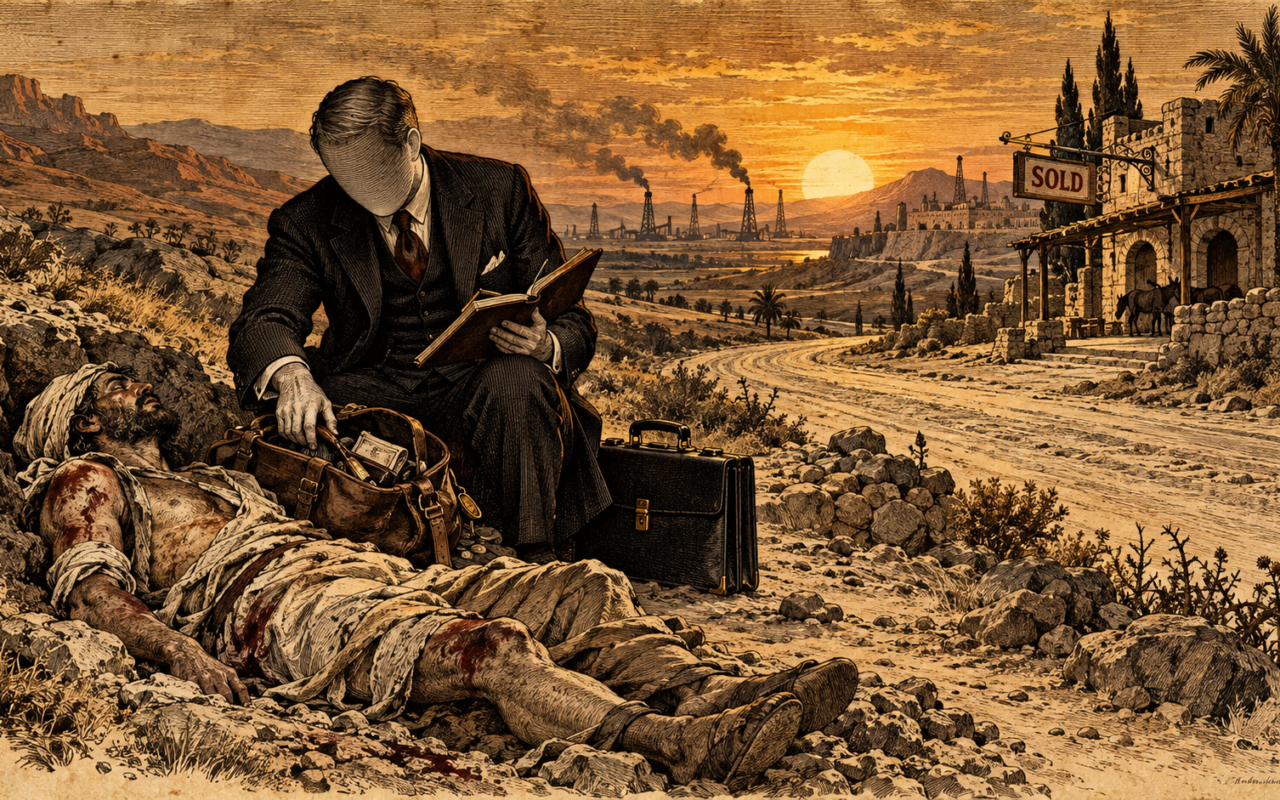
Even people who have never cracked a Bible know the story of the Good Samaritan. A man traveling the road from Jerusalem to Jericho gets jumped by robbers, stripped, beaten, and left half dead in a ditch. A priest comes along and crosses to the other side of the road. So does a Levite. Then a Samaritan, a member of a group the story’s audience despised, stops, bandages the man’s wounds, puts him on his own animal, hauls him to an inn, and pays the innkeeper two silver coins out of his own pocket, promising to cover whatever else it costs.
The point of the parable is that being a neighbor costs you something.
The road from Jerusalem to Jericho is still there. It runs through the West Bank. And the man the President of the United States sent to bind up the wounds of the region has worked out a much better arrangement with the innkeeper.
The volunteer
Jared Kushner holds no government job. He has spent the second Trump term negotiating over Gaza, Iran, and now Ukraine alongside special envoy Steve Witkoff, the President’s longtime friend and fellow real-estate developer. Kushner does it as an unpaid “volunteer.”
It sounds selfless. It’s actually the whole trick. Government officials file financial disclosures — volunteers don’t.
All 50 states have Good Samaritan laws that shield people who stop to help in an emergency from liability for whatever happens next. Kushner’s volunteer status works like a Good Samaritan law for his portfolio: it shields him from having to tell anyone what he owns while he decides how wars end.
So reporters had to find out the hard way. In the first week of October, they found two things.
Table one: Gaza
On October 1, CNN reported that while Kushner was negotiating an end to the war in Gaza, his private equity firm, Affinity Partners, was the largest shareholder in Phoenix, one of Israel’s biggest insurers and asset managers. Affinity held 7.4% of the company, a stake worth more than $1 billion.
Phoenix, in turn, had put hundreds of millions of dollars into at least nine companies that supply the Israeli military, among them the weapons maker Elbit Systems. All nine saw their share prices rise over the past year, and several of them credited the war in Gaza.
In July, Affinity sold a quarter of its Phoenix stake for more than $340 million, a return of more than five times its original investment.
To be fair to the man (more than fair, really): CNN found no sign that Kushner’s diplomacy directly shaped Phoenix’s investments. Kushner called the report “deeply misleading” and said he has “no role in deciding what Phoenix buys or sells.” In September 2025, he told Forbes that he meets Phoenix’s leadership every few weeks and keeps “a very active dialogue” with them. His lawyer says that contact has dropped off significantly since then.
But the problem was never whether Jared personally picks Phoenix’s stocks. The problem is that the man helping decide when a war ends held a billion-dollar slice of a company whose defense holdings did well while it kept going. And we only know because CNN went digging.
And whose money is it? According to figures cited by Steven Rattner, roughly 99% of Affinity’s assets come from investors outside the United States, overwhelmingly tied to Saudi Arabia, the UAE, and Qatar. Those are governments with stakes of their own in how Gaza turns out, and all three sit across the negotiating table from Kushner.
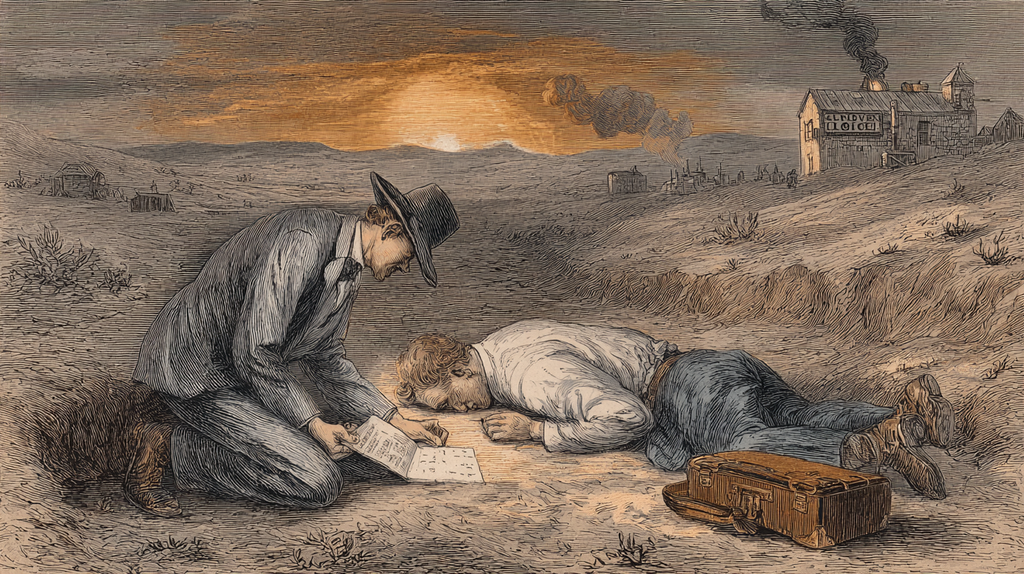
Table two: Ukraine
Two days later, Anton Troianovski and Eric Lipton of The New York Times reported that on September 5, Vladimir Putin personally pitched Kushner and Witkoff on an American-led group buying the overseas assets of Lukoil. That’s a package of oil fields, refineries, and filling stations in roughly 30 countries, valued at around $20 billion to $22 billion.
Here is where the paradox gets its teeth. Lukoil’s foreign assets are cheap because the United States sanctioned the company in October 2025. A U.S.-approved sale would take those assets out from under sanctions, and their value would jump the moment it closed. The discount and the windfall come from the same place: the United States government. And the people negotiating the terms are the President’s son-in-law and his golf-partner envoy.
The named buyers:
- Todd Boehly, co-owner of the Los Angeles Dodgers, who gave $2 million to Trump political projects
- The Al-Khayyat brothers Syrian-born, Qatar-based billionaires whose company is building a resort in Albania backed by Jared and Ivanka
- Sheikh Tahnoon bin Zayed of Abu Dhabi, the UAE president’s brother, who has invested in ventures with Kushner, Witkoff, and Trump’s sons
The U.S. Development Finance Corporation is also seeking a government stake in the deal, with Kushner and Witkoff negotiating its terms. Historian Heather Cox Richardson summed up the arrangement: the deal would benefit “Middle Eastern investors tied to the Trump family and the Witkoffs.”
The empty seat
Lindsey Graham, the Senate’s most reliable Ukraine hawk and one of Trump’s closest allies, died on July 11. Putin made his pitch eight weeks later. “It was likely not coincidental,” Richardson wrote, “that the offer came after Senator Lindsey Graham (R-SC) died on July 11.”
That’s her read, and it’s a reasonable one. But the timeline has a twist.
Congress passed Graham’s long-stalled Russia sanctions bill after his death, and Trump signed the Lindsey O. Graham Sanctioning Russia and Iran Act on September 18. That was thirteen days after Putin’s offer. So in September, the U.S. government was writing tougher Russia sanctions into law in a dead senator’s name. At the same time, through two men who don’t have to disclose anything, it was discussing how to sell a sanctioned Russian company’s crown jewels to investors close to the President’s family.
The law hands the President a national-interest waiver, and most of its provisions take effect October 18. On October 7, Sens. Jeanne Shaheen (D-N.H.) and Roger Wicker (R-Miss.) wrote to Secretary of State Marco Rubio and Treasury Secretary Scott Bessent asking for clear guidance before that date, “including in connection with publicly reported negotiations involving Lukoil’s international assets.” When the Republican chairman of the Senate Armed Services Committee signs a letter like that, it means even he would like to know what the son-in-law is up to.
Both sides of the road
Put the two tables side by side. In the Middle East, Kushner’s firm held a big slice of a company whose military-supplier holdings climbed during the war. In Eastern Europe, the price of peace might be a discount oil empire for his friends and partners. War pays, peace pays, and the volunteer is positioned to collect either way.
None of this is new. It’s a pattern with a long paper trail:
- In December 2016, Kushner met with Sergei Gorkov, head of the sanctioned Russian state bank Vnesheconombank.
- In 2018, his family’s drowning bet on 666 Fifth Avenue got rescued by Brookfield, a firm with Qatari sovereign money in its investor base.
- After he left the White House, Saudi Arabia’s sovereign wealth fund handed his brand-new firm $2 billion, over the objections of the fund’s own screening panel.
Whoever needs something from Jared Kushner tends to end up holding something of his.
The Hunter Standard
Which brings us to the man whose name the right turned into a synonym for corruption.
Let’s start with what’s true, because it matters. Hunter Biden sat on the board of the Ukrainian gas company Burisma from 2014 to 2019 while his father was vice president, reportedly earning up to $50,000 a month. That was a genuine conflict of interest, and he was plainly trading on his name. He was convicted by a jury on federal gun charges and pleaded guilty on taxes. His father then pardoned him, after saying publicly, more than once, that he wouldn’t. Democrats should own all of that.
Now look at what Republicans built on top of it. James Comer’s impeachment inquiry ended with no charges against Joe Biden. Its marquee evidence was a claim that Burisma paid Joe and Hunter $5 million apiece. That claim turned out to be invented by an FBI informant named Alexander Smirnov, who pleaded guilty and is serving six years in federal prison.
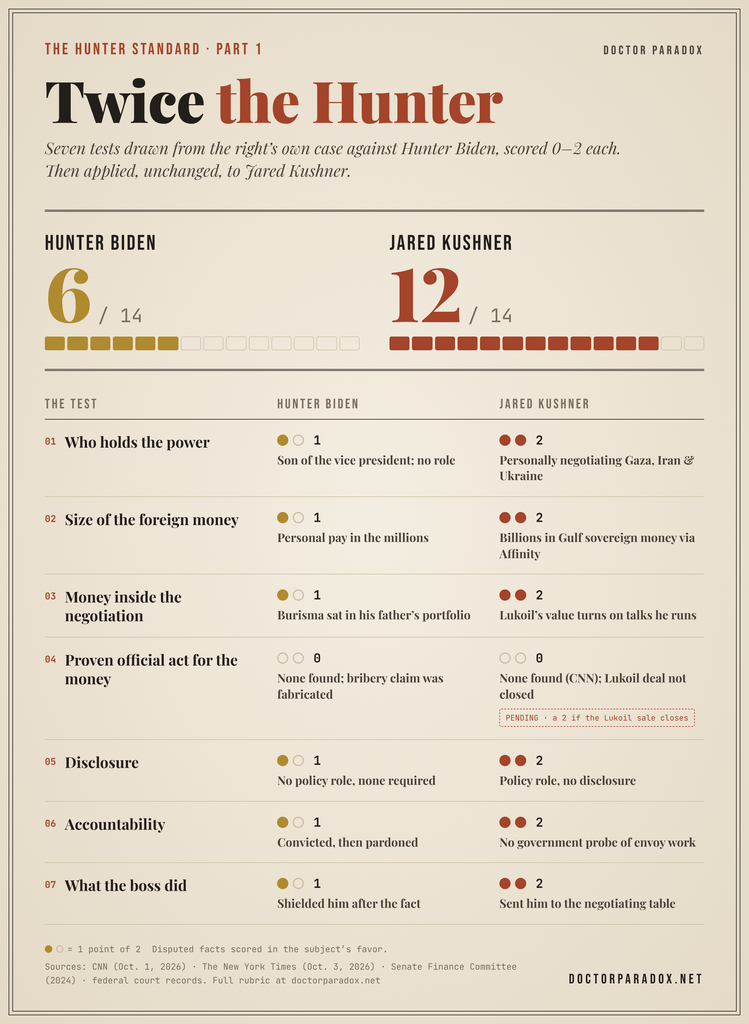
So apply the Hunter Standard. Hunter held no government job and set no policy. Kushner holds no government job and is negotiating two wars. At the reported rate, five years on Burisma’s board comes to about $3 million at most. A 2024 Senate Finance Committee investigation found that Affinity had collected as much as $157 million in fees, mostly from foreign investors, without yet returning a profit to them. One partial sale of one Israeli holding brought in more than $340 million.
Score it on seven tests drawn from the right’s own case against Hunter (the full rubric is below), and Hunter Biden comes out at 6 out of 14. Jared Kushner scores 12. The only test he doesn’t max out is a proven official act that benefited the money, and that one is still pending.
At least one Republican senator can still do this math. When a Putin-linked oligarch named Umar Kremlev paid for a private island and fireworks for Don Jr.’s wedding after-party, John Curtis called it what it is (“It’s corruption. I don’t like it”) and asked Judiciary to subpoena the President’s son. Even The Wall Street Journal‘s editorial board, not exactly a hotbed of the resistance, warned that the Trump family businesses “will be in the spotlight on Capitol Hill for the next two years.” Its advice: “Better lawyer up.”
Don Jr. and Eric get their own chapters next.
Go and do likewise
The parable ends with Jesus asking which of the three travelers was a neighbor to the man who fell among the robbers. The answer is obvious: the one who showed mercy. “Go,” Jesus says, “and do likewise.”
Two thousand years later, a new traveler is on the road to Jericho, with a volunteer badge and a sovereign-wealth checkbook. He isn’t crossing to the other side like the priest. He’s stopping. He kneels beside the wounded man, checks what he’s carrying, and makes an offer on the inn.
Hunter Biden sold the appearance of access. The Trump family sells the real thing, and the volunteer badge means nobody ever has to sign for it.
That isn’t a conflict of interest. It’s the business model.
The Hunter Standard scorecard
“Go and do likewise.”
Comments are closed.