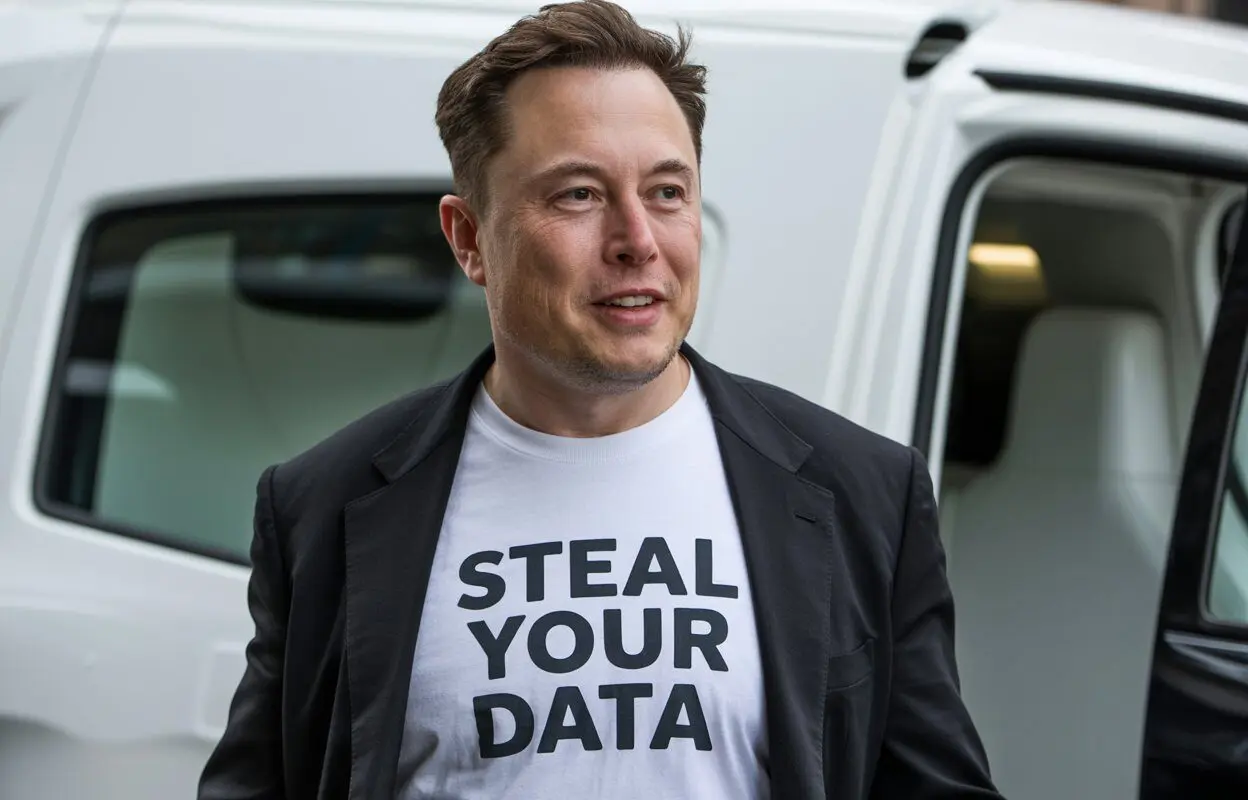

How Frederick Taylor became Elon Musk’s intellectual great-granddaddy
In the summer of 1911, molders at the Watertown Arsenal outside Boston looked up from the foundry floor and found a man timing them with a stopwatch. They walked out. Their protest letter called the method “un-American in principle.” Congress investigated, Frederick Winslow Taylor himself testified, and the federal government ended up barring the stopwatch from its own workplaces.
Hold that thought. We’re coming back to it.
Taylor was the original efficiency guru. His Principles of Scientific Management (1911) broke every job into its smallest motions, timed each one, found the “one best way,” and set a quota. The core idea fits in a sentence: management plans, workers execute. Knowledge moves out of the worker’s hands and into an office full of engineers.
Sooner or later somebody was going to ask the obvious next question. If engineers can run a factory, why not a country?
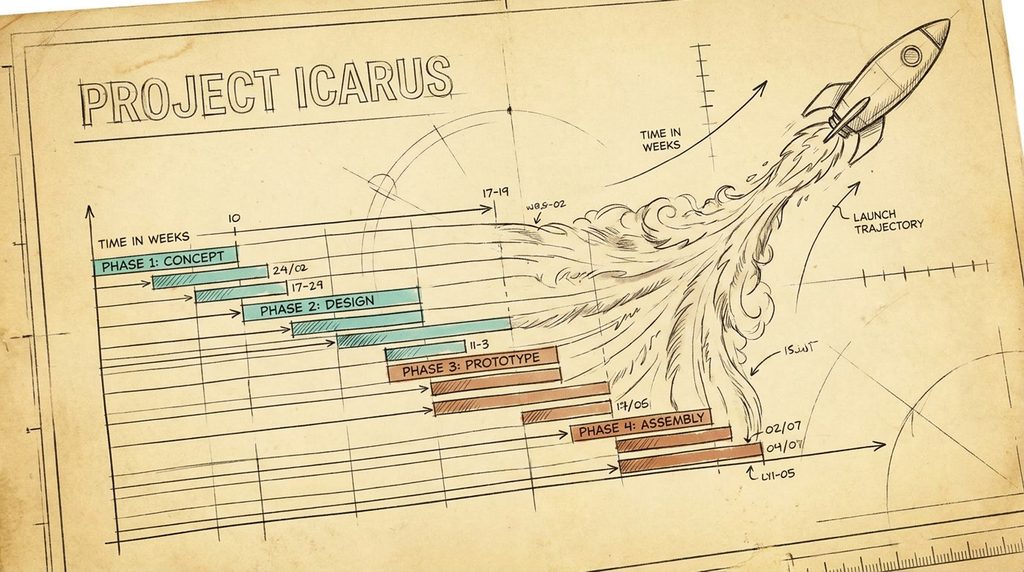
Taylor’s disciple Henry Gantt (yes, the chart guy) founded The New Machine in 1916 to apply “the criteria of industrial efficiency to the political process.” Thorstein Veblen called for a “soviet of technicians.” Then Howard Scott, a self-styled engineer whose own credentials didn’t survive scrutiny, packaged it all as Technocracy. Britannica traces the movement’s origins straight back to Taylor.
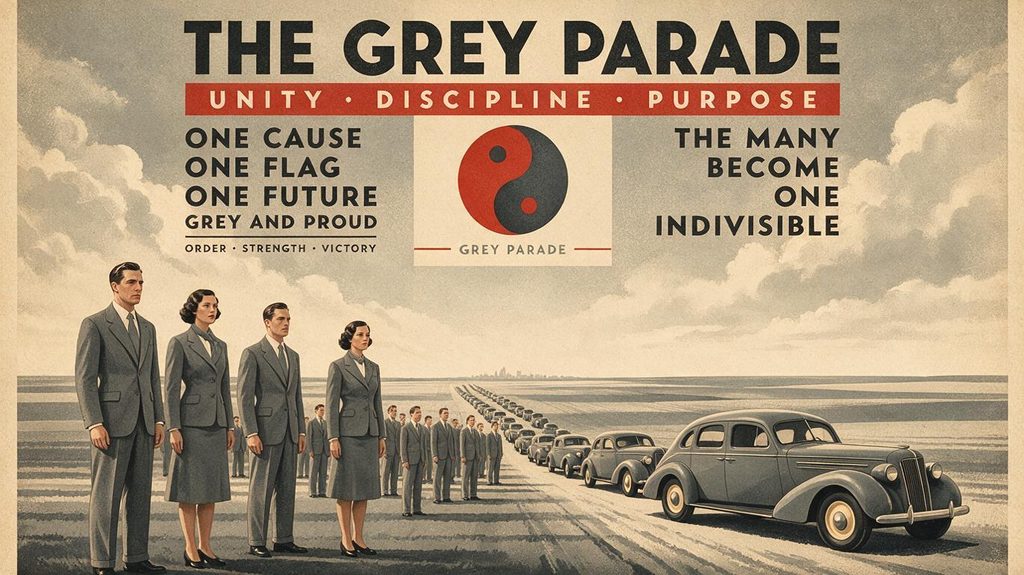
Scott’s Technocracy Incorporated launched in 1933, in the pit of the Depression, with a program that was breathtaking in its tidiness. Abolish politicians. Abolish business. Abolish money. Replace it all with a continental “Technate” run by engineers, and pay everyone in energy certificates that expire before you can save them. Members wore grey suits and drove grey cars. Members were known by numbers.
Enter Joshua Haldeman, a chiropractor in Regina, Saskatchewan, and a leader of Technocracy Inc. in Canada from 1936 to 1941. He was technocrat No. 10450-1. Canada banned the group in 1940, and Haldeman was arrested that October. He went on to chair the Social Credit Party. In 1950 he moved his family to apartheid South Africa, which he praised as a bulwark of “White Christian Civilization.” He also defended The Protocols of the Elders of Zion.
His daughter is Maye Musk. His grandson, born in Pretoria in 1971, is Elon.
So yes, the line runs from Taylor’s stopwatch to Musk. But it’s a lineage, not a handshake. Taylor died in 1915 and never heard of Haldeman. No one has documented Musk crediting his grandfather’s movement. The historian Jill Lepore has drawn the parallel in the New York Times: Haldeman’s proposed efficiency agency, Musk’s DOGE.
You don’t need a confession when the behavior does the talking.
On February 22, 2025, every federal employee got an email asking them to list roughly five things they had accomplished the previous week. Musk announced that failing to answer would be treated as a resignation.
A century after Congress kicked the stopwatch out of the federal workplace, the grandson of a technocrat walked it right back in.
And here’s the paradox. Technocracy always sells itself as the end of politics: no more grubby deal-making, just the cool arithmetic of experts. It never is. Scott’s “engineers” were led by a man who wasn’t really one. Haldeman’s rational utopia ran straight into the Protocols. The efficiency pitch doesn’t remove power from politics. It removes the people who were supposed to be able to say no.
A movement founded to abolish the businessman produced, two generations later, the richest one on Earth.
The machine was never neutral. It was always somebody’s machine.
Comments are closed.