Kleptocracy

The special grand jury in Georgia that investigated efforts to overturn the state’s 2020 presidential election results in favor of loser Donald Trump has recommended indictments against 39 individuals, a number significantly higher than the 19 people ultimately charged by prosecutors. Among those recommended for indictment in the Georgia RICO case but who were not charged were South Carolina Sen. Lindsey Graham, former U.S. Senators Kelly Loeffler and David Perdue of Georgia, and former Trump national security adviser Mike Flynn.

The report suggests that Fulton County District Attorney Fani Willis exercised discretion in streamlining the case, possibly due to factors like immunity deals, federal protections, or insufficient evidence. The grand jury accused the individuals of various offenses, including racketeering, conspiracy to defraud the state, false statements, perjury, and criminal solicitation to commit election fraud.

39 Georgia co-conspirators recommended for indictment
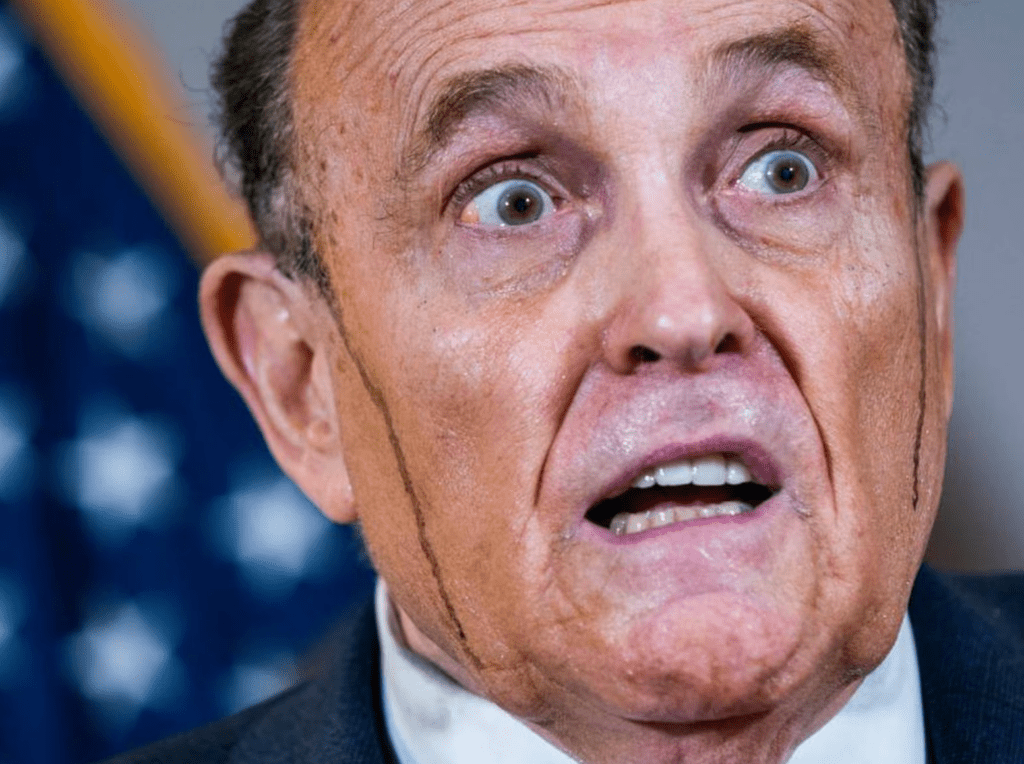
Rudy Giuliani with a hair dye problem
  1. Rudy Giuliani — Rudy Giuliani is an American attorney and politician, best known for serving as the Mayor of New York City from 1994 to 2001. He gained national prominence for his leadership during the 9/11 terrorist attacks. Later, he became a personal lawyer to Donald Trump and was involved in various legal challenges related to the 2020 U.S. Presidential election.
  2. John Eastman — John Eastman is a constitutional law scholar and attorney. He gained attention for advising former President Donald Trump on legal matters, particularly concerning the 2020 election. Eastman has been criticized for promoting theories that questioned the election’s integrity.
  3. Kenneth Chesebro — Kenneth Chesebro is a less-publicized figure, primarily known as a Harvard Law School lecturer. He specializes in legal writing and research, but has not been prominently involved in mainstream political or legal events.
  4. Donald Trump — Businessman and television personality. His presidency was marked by a polarized political climate, economic highs and lows, and two impeachments. He remains a highly influential figure in American politics.
  5. Cleta Mitchell — Cleta Mitchell is an American lawyer specializing in election law and campaign finance. She gained attention for representing Donald Trump in matters related to the 2020 presidential election and has been a vocal critic of its outcome.
  6. Jenna Ellis — Jenna Ellis is an American attorney and author. She served as a legal advisor to Donald Trump during his presidency and was involved in legal challenges concerning the 2020 election. Ellis is known for her conservative viewpoints.
  7. Mark Meadows — Mark Meadows is an American politician who served as the White House Chief of Staff under Donald Trump. Prior to that, he was a U.S. Representative from North Carolina. Meadows is a founding member of the Freedom Caucus in the House of Representatives.
  8. David Shafer — David Shafer is a Republican politician from Georgia, serving as the Chairman of the Georgia Republican Party. He has been involved in state politics for years and was a vocal supporter of Donald Trump during the 2020 election.
  9. Ray Smith III — Ray Smith is a Georgia-based attorney who gained attention for representing the Trump campaign in legal matters related to the 2020 election in Georgia. He specializes in civil litigation and business law. He is accused of making false claims of election fraud at legislative hearings in December 2020.
  10. Lin Wood — Lin Wood is an American attorney known for high-profile defamation cases. He became a controversial figure for his involvement in legal challenges related to the 2020 U.S. Presidential election and his promotion of conspiracy theories.
  11. Lindsey Graham — Lindsey Graham is a U.S. Senator from South Carolina, serving since 2003. A member of the Republican Party, Graham is known for his conservative stance on issues like national security and his close relationship with Donald Trump.
  12. Sidney Powell — Sidney Powell is an American attorney and author. She gained national attention for her involvement in legal challenges related to the 2020 presidential election, promoting theories that have been widely discredited.
  13. Robert Cheeley — Robert Cheeley is a Georgia-based attorney specializing in personal injury law. He gained attention for his association with Lin Wood in various legal matters but is not a mainstream political figure. He is accused of making false claims of election fraud at legislative hearings in December 2020.
  14. Mike Flynn — Michael Flynn is a retired U.S. Army Lieutenant General who briefly served as National Security Advisor under Donald Trump. He was convicted of lying to the FBI but was later pardoned by Trump.
  15. William Ligon — William Ligon is a Republican politician who serves as a State Senator in Georgia. He gained attention for his efforts to challenge the results of the 2020 presidential election in Georgia.
  16. David Perdue — David Perdue is an American businessman and politician who served as a U.S. Senator from Georgia from 2015 to 2021. A member of the Republican Party, Perdue was a close ally of former President Donald Trump. He lost his re-election bid in the 2021 Georgia runoff to Democrat Jon Ossoff.
  17. Kelly Loeffler — Kelly Loeffler is an American businesswoman and politician who served as a U.S. Senator from Georgia. Appointed in 2019, she lost her seat to Democrat Raphael Warnock in the 2021 Georgia runoff. Loeffler is co-owner of the Atlanta Dream, a WNBA team.
  18. Cathy Latham — A previously lesser known figure in Georgia politics.
  19. Misty Hampton — A previously lesser known figure in Georgia politics.
  20. Scott Hall — A previously lesser known figure in Georgia politics.
  21. Boris Epshteyn — Boris Epshteyn is a Russian-American political strategist and commentator. He served as a special assistant to President Donald Trump and has been a vocal supporter of Trump’s policies.
  22. Jeffrey Clark — Jeff Clark is an American attorney who served as the Assistant Attorney General for the Environment and Natural Resources Division under the Trump administration. He gained attention for his role in Trump’s efforts to overturn the 2020 election results.
  23. Kurt Hilbert — Kurt Hilbert is an American attorney based in Georgia. He gained attention for his involvement in legal challenges related to the 2020 U.S. Presidential election, particularly in Georgia.
  24. Stephen Lee — A previously lesser known figure in Georgia politics.
  25. Trevian Kutti — Trevian Kutti is a public relations consultant who has worked with high-profile clients, including politicians and celebrities. She is not a mainstream political figure but has some influence in the PR world.
  26. Harrison Floyd — Harrison Floyd is a military veteran and political activist. He has been involved in conservative political campaigns and organizations but is not a mainstream political figure.
  27. Alex Kaufman — Alex Kaufman is an American attorney based in Georgia. He specializes in election law and has been involved in various legal matters related to elections, although he is not a widely recognized public figure.
  28. Joseph Brannan — A previously lesser known figure in Georgia politics.
  29. Vikki Consiglio — Vikki Consiglio is a Georgia-based political activist and member of the Republican Party. She has been involved in local politics and grassroots organizing but is not a mainstream political figure.
  30. Carolyn Fisher — A previously lesser known figure in Georgia politics.
  31. Burt Jones — Burt Jones is an American businessman and politician serving as a Republican State Senator in Georgia. He has been in office since 2013 and is known for his conservative stances on issues like healthcare and education. Jones was a vocal supporter of Donald Trump and has been involved in efforts to challenge the 2020 election results in Georgia.
  32. Gloria Godwin — A previously lesser known figure in Georgia politics.
  33. Mark Hennessy — A previously lesser known figure in Georgia politics.
  34. Mark Amick — A previously lesser known figure in Georgia politics.
  35. John Downey — A previously lesser known figure in Georgia politics.
  36. Brad Carver — Brad Carver is an American attorney and political strategist based in Georgia. He is a partner at Hall Booth Smith, P.C., and specializes in governmental affairs. Carver has been involved in Republican politics and has served as a delegate to the Republican National Convention.
  37. Shawn Still — A previously lesser known figure in Georgia politics.
  38. C. B. Yadav — C. B. Yadav is a businessman and community leader based in Georgia. While not a mainstream political figure, Yadav has been involved in local community initiatives and has received recognition for his philanthropic efforts.
  39. Jacki Pick — Jacki Pick is an American attorney and conservative commentator. She has appeared on various media platforms to discuss legal and political issues. Pick is known for her conservative viewpoints and has been a guest speaker at several conservative events.

What is RICO?
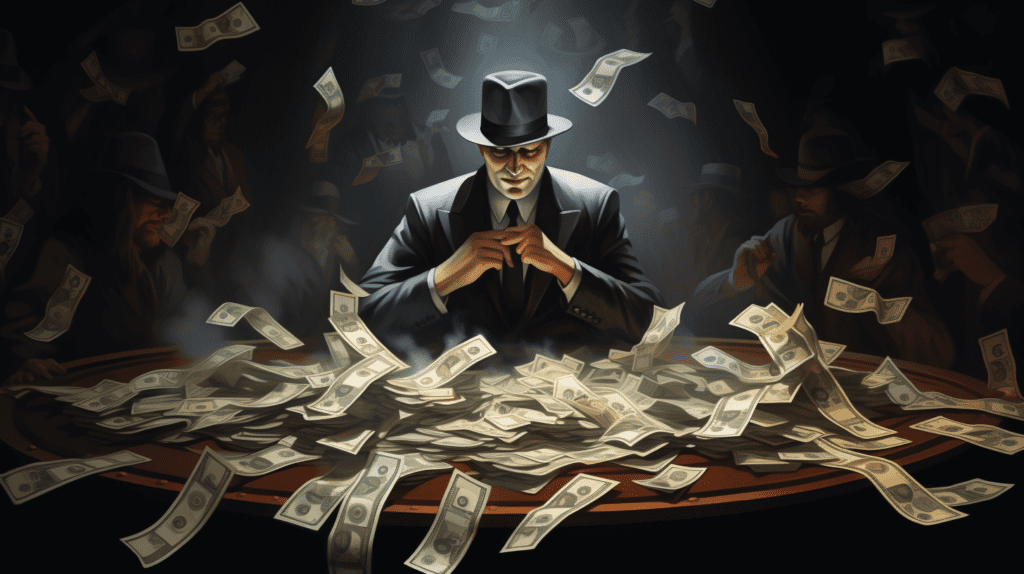
Georgia RICO brings racketeering to the fore, by Midjourney

The Racketeer Influenced and Corrupt Organizations Act (RICO) is a U.S. federal law enacted in 1970, designed to combat organized crime. Initially aimed at dismantling the Mafia, RICO has evolved to address a broad range of illegal activities carried out by enterprises, which can include businesses, gangs, and even political organizations. The law targets patterns of racketeering, which may involve activities like money laundering, drug trafficking, and fraud.

In the legal profession, RICO cases are approached with meticulous care due to their complexity. Prosecutors must prove four key elements: the existence of an “enterprise,” a pattern of racketeering activity, a connection between the enterprise and the criminal conduct, and the defendant’s participation in the enterprise through the pattern of racketeering. Establishing a “pattern” usually requires at least two acts of racketeering activity within a 10-year period.

Defense strategies often focus on dismantling one or more of these elements. For instance, they may argue that the alleged activities do not constitute a “pattern” or that the defendant was not sufficiently involved in the enterprise. Given the severe penalties, which can include hefty fines and up to 20 years in prison per racketeering count, both sides often rely on extensive documentation, expert testimonies, and intricate legal arguments.

Trials are usually long-drawn affairs, involving multiple parties and numerous charges. The prosecution may use tools like wiretaps, surveillance, and informants to build their case, while the defense may scrutinize the validity and legality of such evidence. Due to the high stakes, RICO cases are typically handled by attorneys with specialized expertise in this area of law.

TL;DR: RICO is a powerful tool for prosecuting organized criminal activities, but its cases are complex and require a nuanced legal approach.

Read more

The Stanford Prison Experiment is a seminal study in the field of social psychology, offering profound insights into the dynamics of power, authority, and human behavior. Conducted in 1971 by psychologist Philip Zimbardo, the experiment aimed to investigate the psychological effects of perceived power and authority within a simulated prison environment. Zimbardo’s Stanford Prison Experiment set the stage for deeper explorations of the ways in which individualist doctrines of western nations tend to overweight the role of the individual (dispensational attribution) while underweighting the role in the situation and social milieu of the setting.

The Experiment Setup

Zimbardo and his team transformed the basement of Stanford University’s psychology building into a mock prison. Participants, who were college students, were randomly assigned roles as either “guards” or “prisoners.” The guards were given uniforms, sunglasses to prevent eye contact, and batons, while the prisoners were stripped of personal identity, referred to by numbers, and subjected to various forms of psychological manipulation and humiliation designed to dehumanize them in the eyes of their faux captors.

Zimbardo's Stanford Prison Experiment, by Midjourney

The Unfolding

The Zimbardo’s Stanford Prison Experiment was initially planned to last two weeks but had to be terminated after just six days due to the extreme and disturbing behavior exhibited by the participants. The guards became increasingly sadistic, employing psychological torture techniques, and the prisoners showed signs of extreme stress, depression, and helplessness. The environment became so toxic that some prisoners had to be released early due to emotional breakdowns.

Ethical Concerns

The study has been widely criticized for its ethical shortcomings. Zimbardo himself acted as the “prison superintendent,” and his failure to intervene has been seen as a significant ethical lapse (he shares this sentiment, and has been vocal about examining his own role in the profoundly disturbing results of his experiment). The lack of informed consent and the emotional and psychological harm caused to the participants have also been points of contention in the academic community.

Before this study, though, I think it was counterintuitive to assume that otherwise decent, law-abiding good people could be turned into snarling sadists so quickly, in the right circumstances. And the reality of that truth disturbs us and the field of social psychology to this day.

Social Psychological Learnings

Despite its ethical issues, the Zimbardo’s Stanford Prison Experiment offers invaluable insights into human behavior and social psychology:

  • Deindividuation: The guards’ uniforms and sunglasses served to deindividuate them, making it easier for them to engage in cruel behavior without feeling personally responsible.
  • Social Roles and Conformity: Both guards and prisoners conformed to their assigned roles to a disturbing extent, highlighting the power of social roles in shaping behavior.
conformity, by Midjourney
  • Authority and Obedience: The experiment showed how ordinary people could commit atrocious acts when they perceive themselves to be following authoritative commands.
  • Situational vs. Dispositional Factors: The study emphasized the influence of situational factors over dispositional ones in determining behavior. It argued that the environment could significantly impact how individuals act, as opposed to inherent personality traits.
  • Ethical Considerations in Research: The study serves as a cautionary tale for ethical considerations in psychological experiments, leading to stricter guidelines and review boards for research involving human subjects.

Implications and Legacy

The Zimbardo Stanford Prison Experiment has had a lasting impact on psychology, ethics, and our understanding of human behavior. It has been cited in various contexts, from understanding the abuses at Abu Ghraib prison to corporate misconduct a la Enron, et al. While the study’s ethical lapses have led to ongoing debates, its findings remain a crucial part of social psychology curricula and continue to inform our understanding of the human psyche.

Zimbardo’s Stanford Prison Experiment serves as both a revealing exploration of the dark corners of human behavior and a cautionary tale for ethical conduct in scientific research. It provides a complex, multifaceted look into the social psychological mechanisms that can lead ordinary people to commit extraordinary acts of cruelty or submission.

Read more

phobia indoctrination, illustrated

Phobia indoctrination is one of the principle ways a charismatic leader will lull potential followers into his thrall, by putting them into a state of perpetual fear and anxiety. They know, either instinctively or through training (or both), that people can be induced into a prolonged state of confusion easily, and that many people in states of confusion act quite irrationally. Abusers, cult leaders, and other controllers use demagoguery and other tricks to hide in plain sight and continue to accrue power while passing themselves off as harmless or extremely patriotic.

These chaos agents use emotional manipulation and other tactics of emotional predators as a tool of control. They whip followers up into a fear frenzy frequently enough to instill a set of phobia-like instinctual reactions to chosen stimuli. In addition to stoking fears of the enemies at the gates, they also inculcate irrational fears of the consequences of questioning their authority — invoking authoritarianism. Any doubts expressed about the leadership or its doctrine are subject to terrifying negative results. Cults use this formula to wield undue influence over followers, and prevent them from questioning or leaving the group.

Phobia indoctrination is a tool of cults

As part of a larger overall program of brainwashing or mind control, cults and destructive organizations use imaginary extremes (going to hell, being possessed by demons, failing miserably at life, race war, Leftist apocalypse, etc.) to shock followers into refusing to examine any evidence whatsoever. A form of unethical hypnosis, phobia indoctrination can now be carried out on a mass scale thanks to the internet and our massive media apparatus. Be sure to be on the lookout for any cult warning signs in groups and messaging all around you.

Sociopaths and other types of emotional predators are taking ample advantage of their advantage in time and distance over the slow pace of justice. The wielding of fear as a cudgel in American politics has reached a fever pitch, with anti-Critical Race Theory hysteria, anti-vaxxers, anti-government types, anti-science, Lost Cause-revival zombie MAGA footsoldiers screeching about the “freedom!!!” they wish the government to provide them for persecuting their enemies, and other social horrors are merely the tip of the climate changing iceberg.

phobia indoctrination, illustrated

Phobia indoctrination tactics

Strategies of phobia indoctrination include Repetition and Conditioning, where fears are built through constant exposure; Misinformation and Propaganda, using false information to paint something as dangerous; Utilizing Existing Fears, exaggerating known fears or anxieties; and Social Pressure and Group Dynamics, leveraging social influences to convince others that irrational fears are common.

Other tactics include Authority and Expert Manipulation, where false credentials are used to lend legitimacy; Emotional Manipulation, appealing directly to emotions; Isolation and Control, where a person’s environment is manipulated; and Media Manipulation, using media to provoke fear.

Phobia indoctrination and cults book list:

Or, support local bookstores instead of Jeff Bezos:

Related to phobia indoctrination:

Cult Dictionary β†—

We had better get familiar with the lexicon and vocabulary of the coming era, so we can fight the creeping scourge of thought control roiling the land.

Jim Jones toasting his cult members with a cup of cyanide, by Midjourney

Disinformation Dictionary β†—

Disinformation is meant to confuse, throw off, distract, polarize, and otherwise create conflict within and between target populations.

Disinformation, by Midjourney

Cult Warning Signs: How to recognize cultish groups β†—

Recognizing cult warning signs can be vital in identifying and understanding the risk before getting involved with a group who may not have your best interests in mind.

cult warning signs, by Midjourney
Read more

RICO Financial crimes and organized crime figure

The Financial Crimes Enforcement Network (FinCEN) is a bureau of the U.S. Department of the Treasury. It was established in 1990 to provide a government-wide, multi-source intelligence and analytical network to support the detection, investigation, and prosecution of domestic and international money laundering and other financial crimes.

FinCEN is a key player in the fight against money laundering and other financial crimes. It serves as the Financial Intelligence Unit (FIU) for the United States and is part of an international network of FIUs known as the Egmont Group, and maintains FBAR filings from US persons holding in excess of $10,000 in foreign banks.

RICO Financial crimes and organized crime figure

FinCEN’s main roles

  1. Collecting and analyzing information about financial transactions in order to combat domestic and international money laundering, terrorist financing, and other financial crimes.
  2. Coordinating with domestic and international policy and enforcement agencies.
  3. Administering the Bank Secrecy Act (BSA), which requires financial institutions to assist U.S. government agencies in detecting and preventing money laundering.
  4. Issuing advisories and guidance to alert financial institutions about methods, trends, and typologies of money laundering and other financial crimes.
  5. Enforcing compliance with the BSA and its implementing regulations.

Financial institutions are required to report suspicious transactions to FinCEN via Suspicious Activity Reports (SARs), and also report transactions over $10,000 via Currency Transaction Reports (CTRs).

While FinCEN is based in the U.S., it is an important player in global efforts to fight financial crime, working closely with other FIUs around the world to share information and collaborate on investigations.

Read more

authoritarians gather for a witch hunt

Many people around the world were shocked in the aftermath of World War II. How could “polite” society break down so utterly, so swiftly, and so zealously? Why did authoritarian personality traits come to dominate human affairs, seemingly out of nowhere? How thin is this veneer of civilization, really?

The authoritarian personality is characterized by excessive strictness and a propensity to exhibit oppressive behavior towards perceived subordinates. On the flip side, they treat authority figures with mindless obedience and unquestioning compliance. They also have an aversion to difference, ambiguity, complexity, and diversity.

How did they get this way? Are people born with authoritarian personalities, or is the authoritarian “made” predominately by circumstance?

Authoritarian personality studies

A braintrust of scholars, public servants, authors, psychologists, and others have been analyzing these questions ever since. Some of the most prominent thinkers on the subject of authoritarianism were either themselves affected by the Nazi regime, or lived through the war in some capacity. Other more recent contributions have built on those original foundations, refining and extending them as more new history continues to unfold with right-wing behavior to observe.

Continue reading Essential thinkers on authoritarian personality theory
Read more

Conspiracy theories are not new. Covid-related conspiracies may be new, but conspiracy theories about pandemics and contagious diseases have been around for centuries. Anti-vaccination hysteria goes back decades. The QAnon conspiracy theory may be new (or maybe not really?!), but conspiracy theories themselves are a tale(s) as old as time — or at least time as we know it, from the start of recorded history.

What is a conspiracy theory?

Conspiracy theories are simple explanations for complex phenomena, that often involve a secret group (often some type of global cabal) who are pulling the strings of world events behind the scenes. There is most commonly little to no credible evidence supporting the beliefs of the conspiracy theory, instead relying on superstition, speculation, coincidence, or simple rumor to back up their claims.

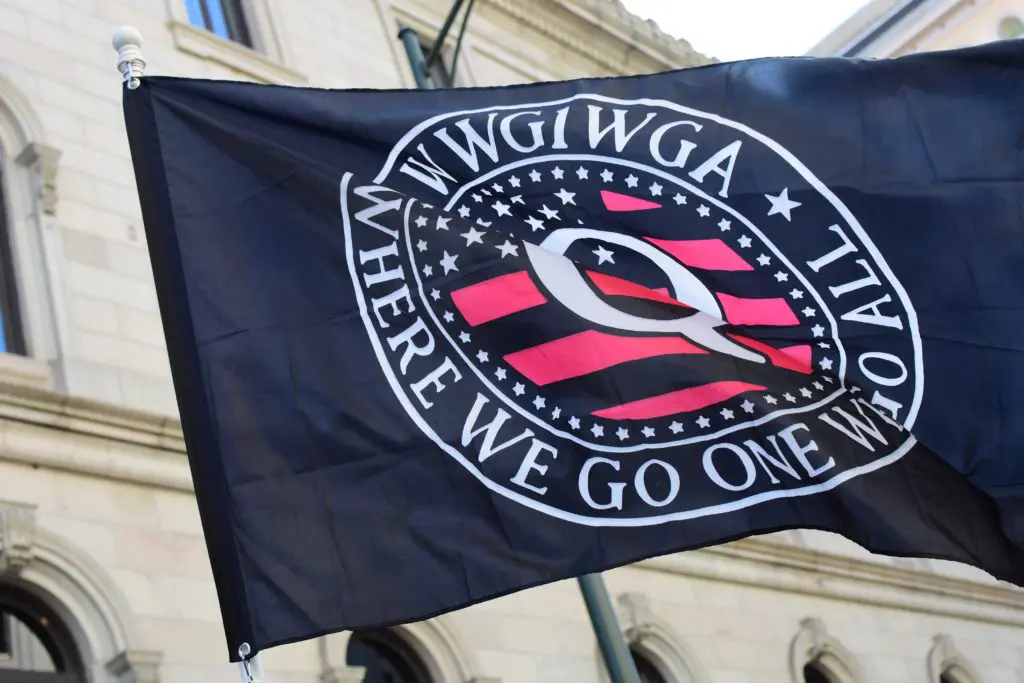
QAnon flag epitomizes modern-day conspiracy theories
Image credit: Anthony Crider

A large body of psychological research has shown that there are some deep cognitive reasons that conspiracy theories tend to resonate with us, and especially in particular types of people, or people in certain types of circumstances.

We are fundamentally wired to be storytellers. It’s intuitive why this ability might be hard-coded into our brains, as it so clearly relates to survival, self-preservation, and our ability to navigate and succeed in a complex world. We need to be able to understand cause and effect in an environment of many rapidly shifting variables, and storytelling is a framework for weaving coherent narratives that reduce our anxiety about the great uncertainties in the environment around us.

Conspiracy theories tap into psychological needs

Conspiratorial thinking is far more common than we think, and can ebb and flow in populations based on prevailing conditions. Our ability to see patterns in randomness and dissemble stories on the spot, along with numerous other cognitive and psychological biases, make us vulnerable to belief in conspiracy theories.

Continue reading Why do people believe conspiracy theories?
Read more

Some of us have been boning up on this topic for about 6 years already, while others are just tuning in now based on the horrors of recent events. It can be overwhelming to come in cold, so here — don’t go it alone! Take this:

Putin’s war against the west

President Biden “declassified” an intelligence analysis many of us had arrived at some time ago: Russian president Vladimir Putin is a cruel revanchist leader who will stop at nothing to claw out a larger legacy before he dies. His goal is nothing less than reconstituting the former Soviet Union and restoring the “glory” of the Russian empire of yesteryear. And for some reason he thinks the world community is going to let him get away with his delusional fever dreams of conquest — as if fever dreams of Mongol domination are still de rigueur.

The attacks on the 2016 election and on the American Capitol in 2021 are related — both are Russian hybrid warfare operations. Russia also is the cold beating heart of the right-wing authoritarianism movement around the world, via financial, political, psychological, economic, and other means of government and regulatory capture.

Putin has hated democracy for a long time — since before the Berlin Wall fell where he was stationed in East Berlin as a young KGB agent, taking the news hard. Now, he has many fifth column confederates aiding and abetting him from within the United States — a number of them brazenly, and openly. It is getting harder and harder for those treasonous types to “hide out” in the folds of disinformation, misinformation, and plausible deniability. The play is being called — and everyone will need to decide if they’re for democracy or authoritarianism.

Further reading:

Media Resources

Twitter Lists

Read more

How to detect fake from real

It is going to become increasingly more difficult to discern from fact from fiction, here in this world that seemingly quickly flipped from a world of The Enlightenment to a world of dark disinformation. From artificial intelligence to vast propaganda machines, from deep fakes to fake lives — it’s going to require more from us to be able to detect what’s real.

Already we can’t rely on old cues, signposts, and tropes anymore. We’re less credulous about credentials, and trust isn’t automatic based on caste, title, or familiar status markers.

Go slow and look for mimics

Here’s one key to more accurate reality detection: take more time to spot the fake. Don’t judge too quickly, because it can take time to weed out the fakesters and the hucksters — some are decent mimics and can fool people who are in a hurry, not paying much attention, or attracted to some irrelevant other quality about the ersatz knockoff and thus forms an affinity with them based on something else entirely. Some drink the Kool-Aid for various reasons.

Clues of fraud

Those who cling absurdly to abstract symbols are often fakes. And in general, any folks who feel like they are just trying a little bit too hard might be fake. Then, of course, there are the full-on zealots and religious nutbags. These theocrats are definitely faux compassionate Jesus-lovers. What better cloak than the robes of a religious man (or, less frequently, woman)? It’s the perfect disguise.

No wonder so many child abusers hide out in churches of all kinds, from famously the Catholic to the more recently-outed (though not surprising) Evangelical Southern Baptist Church. No one will ever suspect them, or want to confront them if they do. Plus, they have Democrats to absurdly try and pin the blame on repeatedly, despite a lack of a shred of evidence.

Read more

We need to know what our opponents are up to. There is much to learn.

Much more to come — stay tuned!

BehaviorTypeDefinition
ad baculumrhetoricalAppeal to violence
ad hominemrhetoricalAttack the person instead of their ideas.
aggressiontacticalIssue threats and/or violate boundaries.
argumentum ad passionesemotional"I feel it (or I feel *strongly* about it), therefore it must be true."
assaulttactical
Assert the opposite of realityrhetoricalSimply state the opposite of what is true
banning bookslegislativeBook banning is a form of censorship in which government officials or organizations remove books from libraries, school reading lists, or bookstore shelves because of objections to content, ideas, or themes.
Believes oneself to be superior and requiring of association with high-status peoplepathologicalRelated to supremacy and collective narcissism, this worldview is one of extreme entitlement and expected deference.
Black & white thinkingcognitiveA pattern of thought characterized by polar extremes, sometimes flip-flopping very rapidly from one extreme view to its opposite. A symptom of many personality disorders.
Blame Democratsrhetorical"I'm not responsible for my bad behaviors: DEMOCRATS ARE!"
bullyingemotionalIntimidating, harming, or coercing -- usually of someone who is perceived as vulnerable.
charismaemotionalCloying, often superficial or fake charm
charmemotionalCompelling attractiveness that fascinates, allures, or delights
closed mindcognitivenot open to an argument from facts
Cognitive dissonancecognitiveHaving an incongruent value system, or believing mutually exclusive things -- as well as behaving without consistent ethical principles; a sense of randomness to one's approach to life.
cognitive distortion
Communicate by emotional contagionbehavior
Communication is difficult or impossiblebehavior
confusion
Consistent inconsistency
conspiracy theories
contempt
counterattack
Creating unnecessary chaosemotionalCreate conflict to get attention and get a chance to get what you want.
Crocodile tearsemotional
DARVOtactical
Deception
demagogueryemotionalSeeks support through an appeal to desires and prejudices of voters instead of rational arguments.
Demand mirroring of their emotionsbehavior
Denying plain facts
Diverting attention
Do not perform emotional workbehavior
emotional abuse
Emotional manipulationemotional
Envious of others and believes others are enviouspathological
Exaggerating one's achievements and talentspathological
Expecting special favors and unquestioning compliance with your expectationspathological
extortion
fears changeweakness
fears differenceweakness
flying monkeys
fraud
frivolous lawsuits
GaslightingCause you to question your own sanity -- very dangerous to do this to people. The effects are long-lasting and difficult to do; it can take many years to heal from this kind of insidious abuse.
Grandiose sense of self-importancepathological
grandiosity
grooming
Hard to give to; reject efforts to give helpbehavior
high need for closurePrefers to resolve situations quickly and reduce uncertainty as immediately as possible
hypocrisyConsistently fail to live up to their own stated ideals, and the things they demand of others.
idealize, devalue, discardThe narcissistic abuse cycle
Interpsonally exploitative; takes advantage of otherspathological
irrational anger
Lacks empathy; unwillingness to recognize the needs and feelings of otherspathological
lawsuits
Love to play victim and heroemotionalThey want your emotions oscillating all over the place, because it gives them more opportunities to swoop in and capture you at a vulnerable moment and earn your trust -- so they can violate it.
Lying
Malignant envy
Masters of deceptive and misleading storiesrhetorical
Mind gamesemotional
Motivated ReasoningcognitiveThey start with the premise they want and work from there -- they are bad scientists, but good lawyers.
Moving the goalpoststactical
narcissistic rage
narcissistic supply
One-way streetExpect loyalty from you while offering none in return
oppression
panem et circuses
ParanoiaemotionalNurturing and maintaining enemies
Passive-aggressionemotional
PerjurylegalLying under oath, in court or in a deposition
PhobicemotionalTheir main aspect is fear, from bouts of phobia indoctrination
Play the victimemotional
Preoccupied with fantasies of unlimited successpathological
ProjectioncognitiveAccusing your opponent of doing the thing that you yourself are doing.
Provoking angerbehavior
repression
Requires excessive admirationpathological
Resist repairing relationshipsbehavior
retconning
rewriting history
rigidity
sadismemotional
scapegoatingtacticalJust blame Democrats, no matter how absurd
secrecyCovert actions; lack of transparency
See roles as sacred and inviolablebehavior
Seek enmeshment, not emotional intimacybehavior
Selective Exposure
self-aggrandizementemotional
Sense of entitlement; expects others to make unreasonable sacrificespathological
shameemotional
Shows arrogant, haughty behaviors and attitudespathological
SplittingcognitiveSee the world as with them or against them (splitting)
stonewalling
stubbornness
supremacyemotional
Take a thing and turn it into its moral oppositeLabel a good thing bad so you can smear it, or a bad thing good so you can support it
tergiversateto evade; speak circularly
Their self-esteem relies on your compliancebehavior
threats
tyranny
verbal defensiveness
weasel wordsleveraged ambiguity
whataboutism
whitewashing
Word gamestacticalWords are used primarily as weapons
Word saladcognitive
Read more

President Biden and Vice President Harris commemorated the 1 year anniversary of the January 6 attack on our democracy with morning speeches and a day of remembrance inside the Capitol rotunda with Representatives and Senators giving a number of moving speeches in their respective chambers. The tone on TV news and blue check Twitter was somber and reflective. The President referred to the violent events of Jan 6, 2021 as a terrorist attack on our democracy, and said that the threat was not yet over — that the perpetrators of that event still hold a “dagger at the throat of America.”

Only two Republicans were present in chambers when the moment of silence was held for the nation’s traumatic experience one year ago — Representative Liz Cheney and her father, Dick Cheney, the former VP and evil villain of the George W. Bush years. That this man — a cartoonish devil from my formative years as a young activist — was, along with his steel-spined force of nature daughter, one half of the lone pair that remained of the pathetic tatters of the once great party of Lincoln.

What do you do if you’re in a 2-party system and one of the parties is just sitting on the sidelines, heckling (and worse!?)? How do you restore confidence in a system that so many people love to hate, to the point of obsession? Will we be able to re-establish a sense of fair play, as Biden called on us to do today in his speech?

The Big Lie is about rewriting history

We don’t need to spend a ton of time peering deeply into discerning motive with seditionists — we can instead understand that for all of them, serving the Big Lie serves a function for them in their lives. It binds them to their tribe, it signals a piece of their “identity,” and it signals loyalty within a tight hierarchy that rewards it — all while managing to serve their highest goal of all: to annoy and intimidate liberals. Like all bullies, their primary animating drive is a self-righteous conviction that “I am RIGHT!” at all times and about all things, and that disagreement is largely punishable by death or, in lieu of that, dark twisted fantasies of death passed off lamely and pathetically as “just joking, coworker!”

Continue reading January 6 Attack: A “dagger at the throat of America”
Read more

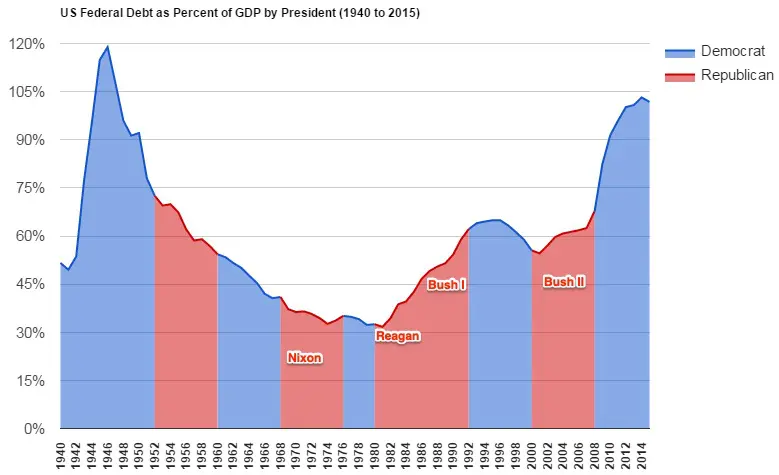
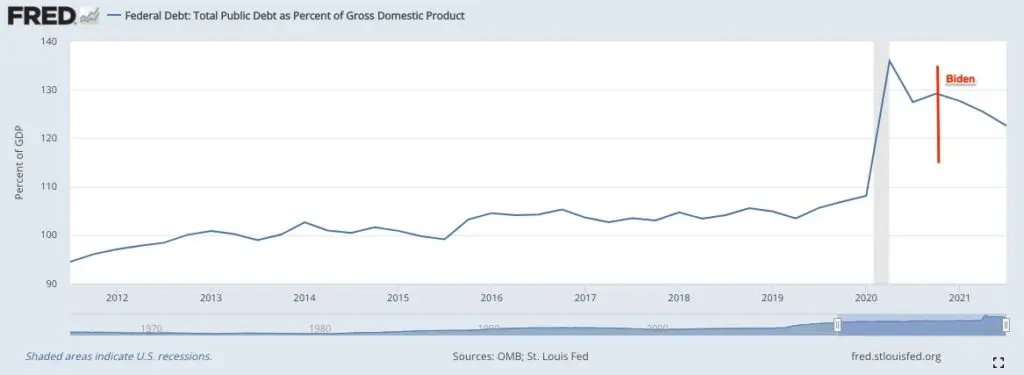
Mythology has it that “reckless Democratic spending” is to blame for the ballooning of the national debt — though the historical record shows otherwise.

In fact, the conservatives‘ beloved demi-god Ronald Reagan was the first President to skyrocket the debt, thanks to some bunk ideas from an old cocktail napkin that linger to this day — the Republican monetary theory in a nutshell is (I shit you not) that we should take all our pooled tax money and give it to… billionaires. Because, you know, they’re clearly the most qualified people to make decisions affecting the 99% poor people. Supposedly they’re the smartest folks to entrust with our money.

Trickle down, debt up

Except it’s not true, as year after year and study after study shows. Nor for all their finger-waggling at Democrats over the national debt has the GOP turned in a balanced budget since Nixon. Republicans are the most gigantic hypocrites on economics writ large, but particularly so for the national debt — with Reagan, Bush I, Bush II, and Trump all turning in record debt increases, primarily through tax cuts for the wealthy and the Gulf and Afghanistan wars.

Meanwhile, Bill Clinton balanced the budget, created a surplus, and reduced the debt during his 8 years in office, and Obama inherited the deepest recession since the 1929 Great Depression.

The financial crisis of 2008-09, itself caused by the reckless Republican zeal for deregulation — this time of financial derivatives — was a wholly GOP-owned debacle that the next president paid for politically. Nevertheless, President Obama had the debt again on a reduction path as a percentage of GDP — but then Donald “I bankrupted a series of casinos!” Trump oozed his way into the highest office in the land.

It’s weird how “reckless Democratic spending” always happens under Republican administrations!

During the Trump administration, Republicans patted themselves on the back for giving a $2.7 trillion tax cut to billionaires for no reason, while the economy was relatively hot already (after being rescued by Obama). Not only was no progress made on diminishing the debt, but the national debt actually increased (both nominally and as a percentage of GDP) under Trump’s first term even before the sudden arrival of a novel coronavirus caused it to leap into the stratosphere like a 21st century American tech oligarch.

Only when President Biden arrived on the scene and took the helm of fiscal and monetary policy did the national debt begin cooling off once again — all while dramatically and quickly scaling up covid-19 vaccine production and distribution and passing over $3 trillion in Keynesian legislation meant to get the dregs of the middle class reoriented to a place on the map vis-a-vis the 1% once again.

Republican national debt bullshit

I am hereby calling bullshit on Republicans’ crocodile tears over the national debt, which they suddenly remember only when a Democrat is in town and summarily ignore while their guy is in the hot seat burning through cash like it’s going out of style.

We need to have a better collective narrative for Democratic success on the economy. The Republicans are no longer the kings of the economic world — if they ever were. It feels more like smoke and mirrors each passing day, with climate change denial, the Inflationary Boogeyman, and other GOP Greatest Hits playing ad nauseum on the AM social media waves.

Here are at least a few things to remember about the national debt, that Republicans generally get wrong:

  • wars are very expensive
  • booms in social services are expensive too; but not as expensive as wars
  • there is not any perceivable truth in the old GOP party line that Democrats always overspend and Republicans are always thrifty
    • Reagan and both Bushes presided over two of the biggest spikes in public debt in recorded history, outside of FDR who had both the Great Depression and WWII to contend with
    • Clinton, Carter, Johnson, Kennedy, and Truman all decreased the debt
  • be wary of graphs that don’t β€œnormalize” to GNP β€” it’s an attempt to β€œlie with statistics” by obfuscating the roles of inflation and the growth of the economy itself
  • there is more than one way to look at and evaluate the level of public debt

National Debt by President since the 20th century

PresidentNational Debt ChangeTotal National Debt
Taft+$210 million$2.13 billion
Wilson+$21.5 billion$23.5 billion
Harding/Coolidge+$7.9 billion$22.3 billion
Hoover+$7.3 billion$29.7 billion
F.D. Roosevelt+$218.9 billion$260.1 billion
Truman+$7.5 billion$256.6 billion
Eisenhower+$23.2 billion$272.8 billion
Kennedy/Johnson+$54.9 billion$311.9 billion
Nixon/Ford+$371 billion$698.1 billion
Carter+$299 billion$997.9 billion
Reagan+$1.86 trillion$2.86 trillion
G.H.W. Bush+$1.55 trillion$4.42 trillion
Clinton+$1.40 trillion$5.81 trillion
G.W. Bush+$5.85 trillion$10.71 trillion
Obama+$8.59 trillion$19.30 trillion
Trump+$7.80 trillion$27.10 trillion
Biden (as of March 2023)+$3.00 trillion (projected)$30.10 trillion (projected)
Read more

seditious conspiracy folks working to undermine the united states

It may have seemed like the election of 2016 came out nowhere, and the January 6, 2021 attempted coup event was another deep gash to the fabric of assumption — but in reality, the authoritarian movement to dismantle America has been working diligently for a long time. Depending on how you count, the current war against the government began in the 1970s after Roe v. Wade, or in the 1960s after the Civil Rights Act, or in the 1950s with the John Birch Society, or in the 1930s with the American fascists, or in the 1870s with the Redemption and Lost Cause Religion, or in the 1840s with the Southern Baptist split, or in the 1790s when we emerged from the Articles of Confederation.

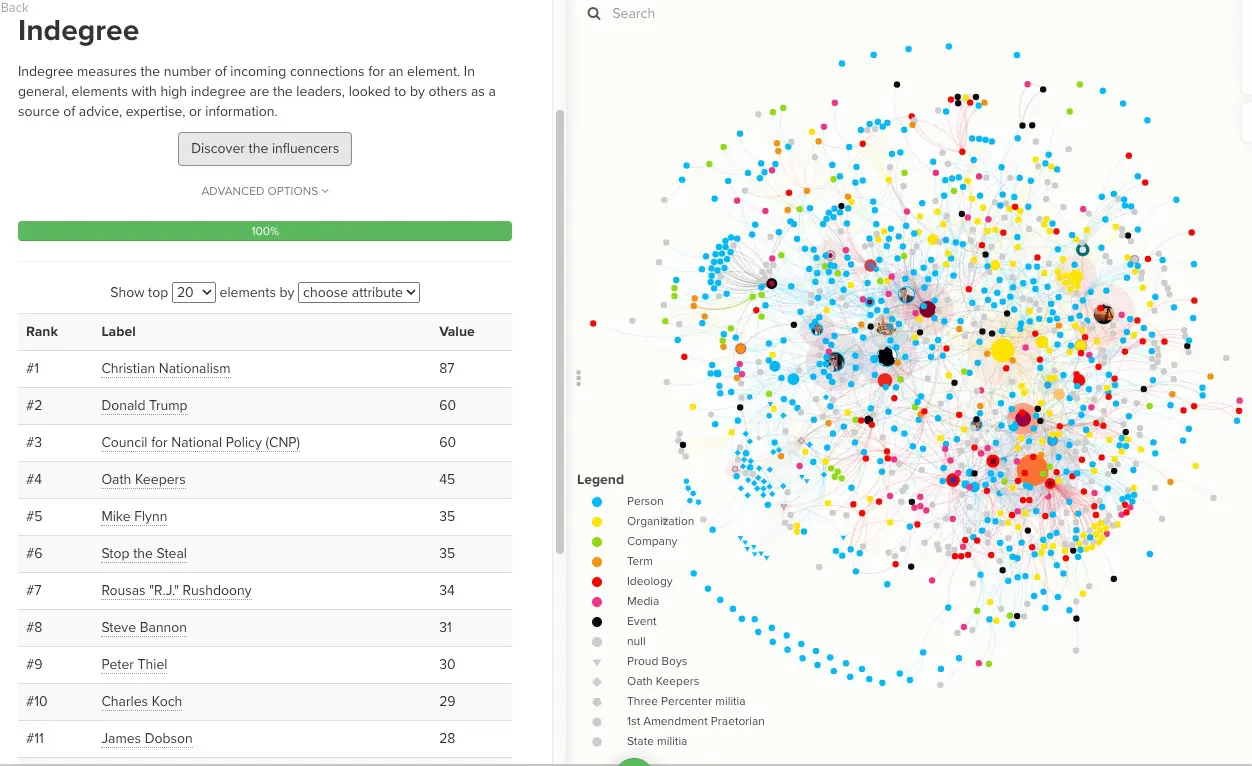
We are facing an unprecedented crisis of democracy under attack by the most current roster of these extremists, hardliners, theocrats, plutocrats, and others of their ilk. The following mind map diagrams the suspects and perpetrators of the Jan 6 coup as we know so far — including the Council for National Policy, the Koch network, Trump and his merry band of organized criminals, the Oath Keepers, Proud Boys, and other right-wing groups — from militia convicted of seditious conspiracy, to rioters who have been arrested in the January 6th probe, to persons of interest who have been subpoena’d by the January 6 Committee in the House, to anyone and anything else connected to the ongoing plot to kill America whether near or far in relation. The map extends to include coverage of the basic factions at work in the confusing melodrama of American politics, and their historical precedents.

Mind map of the seditious conspiracy

I’ll be continuing to work on this as information comes out of the various investigations and inquiries into the attempted coup to prevent the peaceful transfer of power, from the January 6 Committee to Merrick’s DOJ, the GA district attorney, NY district attorney, various civil suits, and probably more we don’t even know about yet. You can navigate the full mind map as it grows here:

Head onward into “Continue Reading” to see the same mind map through a geographic perspective:

Continue reading Koup Klux Klan: The authoritarian movement trying to take over America
Read more

Or capital vs. labor, oligarchs vs. plebes, plutocrats vs. proles, rich vs. poor — however you want to narrate it, the property vs. people struggle continues on in new and old ways, each and ere day.

Here in America, the plutocrats have devised many clever methods of hiding the class struggle behind a race war smokescreen, that is both real and manufactured — instigated, exacerbated, agitated by the likes of schlubby wife abusers like Sloppy Steve Bannon, wrinkly old Palpatines like Rupert Murdoch, and shady kleptocrats like Trump and Putin.

The United States has nursed an underground Confederacy slow burning for centuries, for sociopathic demagogues to tap into and rekindle for cheap and dangerous political power. Like The Terminator, racist and supremacist troglodytes seem always to reconstitute themselves into strange and twisted new forms, from slavery to the Black Codes to sharecropping to convict leasing to Jim Crow to Jim Crow 2.0 — the psychopaths want their homeland.

The political left loves people, and our extremists for the most part destroy capital or property that insurance companies will pay to make shiny and new again — unlike the right wing extremists who bomb federal buildings, killing hundreds of people and costing taxpayers’ money to replace.

Meanwhile, the right wing claims to be the righteous party for its extreme fixation on life before birth, yet its regulation-allergic capitalists destroy people and the natural world more broadly, from factory farming to deforestation, the destruction of habitats, strip-mining and other toxic extraction practices, and on into climate change itself. Being in fact the chief architects of manmade atmospheric devastation, they have managed to make themselves invisible from the deed by simply (wink wink!) denying it exists.

WWJD?!

Certainly, not anything the Republican Party is up to. Jesus would be sad.

Read more

A national banking crisis in America that eventually spread to threaten economies around the globe, the economic crisis of 2007-8 was precipitated by the financial industry getting deeper and deeper into highly leveraged risk with a specific type of financial product called a subprime mortgage.

The loans were not of very high quality, due to the effects of predatory lending and of companies β€œpushing their luck” in a deregulated market by knowingly offering mortgage credit to Americans who couldn’t really afford to buy the homes they were encouraged to purchase. Mortgage underwriters were often incentivized with large bonuses for subprime signups, and even relatively well-off home buyers were often shepherded into subprime loans with worse terms than the traditional 30-year mortgages they would have qualified for.

Financial β€œhot potato”

The mortgages were securitized as complicated new types of assets, re-packaged into large bundles of derivatives to better obscure the sources, and rated far more favorably than warranted by the nation’s credit rating agencies. Sold swiftly around the world and especially here in the U.S. to institutional investors (who manage, among other securities, the pensions and retirement funds of the country), the game of financial β€œhot potato” ensured that almost no one in the complex chain of exchange had any incentive to take responsibility for the actual solvency of the underlying loans.

Eventually, the bubble popped and the house of cards came tumbling down. The downturn is widely regarded as the worst economic disaster in American history since the Great Depression of the 1930s, brought on by the stock market crash of 1929.

Moral hazard: Does commercial and investment banking under one roof create the wrong incentive?

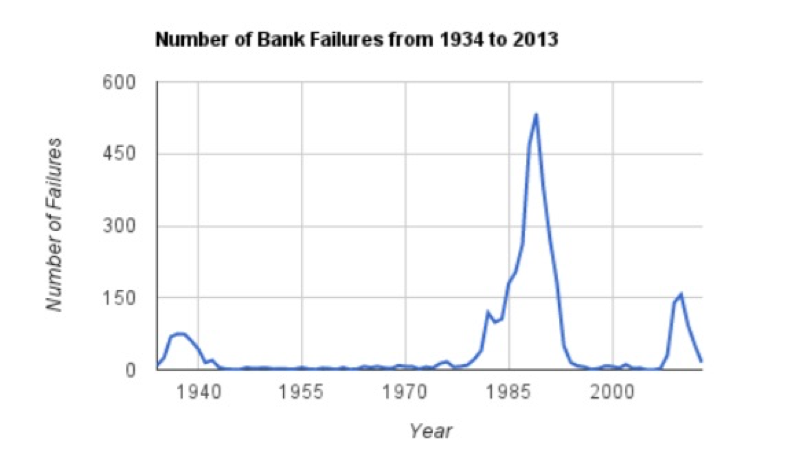
In post-recovery, much scrutiny remains over the question of whether one specific law β€” the Glass-Steagall Act of 1933 which separated commercial banking from investment banking in response to the Great Depression β€” should be reinstated. Following its passage, the U.S. was able to stop the previous historical cycle of banking crises with regularity about every ~15 years:

…Until β€œstagflation” (high inflation coupled with stagnant growth) plagued the American economy in the 1970s, and the political establishment began to adopt policies heavily influenced by Milton Friedman and the Chicago School of economic thought, which borrowed heavily from an earlier wave of economic philosophy in the 1930s loosely congealed under the term β€œneoliberalism.” Widespread financial deregulation ensued, leading to the full repeal of Glass-Steagall in 1999. Many economists now point to the deregulation spree as the ultimate cause of the 2007-8 financial crash.


For a great resource on this, check out Matt Taibbi (of Rolling Stone fame)’s book Griftopia: A Story of Bankers, Politicians, and the Most Audacious Power Grab in American History

Read more