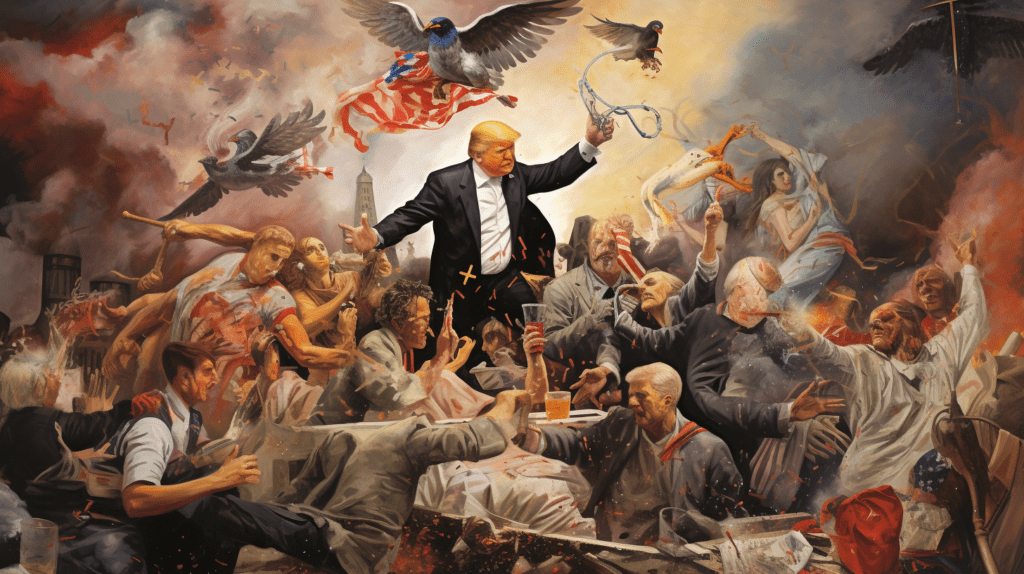
There was a weird controversy that set in after the events of the white nationalist Unite the Right rally in Charlottesville, VA in which a neo-Nazi 8chan bottomfeeder killed Heather Heyer by running her over with his car, while injuring 19 others. It was a shocking moment for the nation and all Trump had to say about it was they condemned violence “on many sides, on many sides” — though there were only two sides, and only one of those two sides had killed someone.
A couple of days later he managed to get through a scripted teleprompter statement explicitly condemning white supremacists and neo-Nazis only to walk it back again and then double down on it the following day, saying “The statement I made on Saturday, the first statement, was a fine statement… What I’m saying is this: You had a group on one side and you had a group on the other, and they came at each other with clubs—and it was vicious and it was horrible. You had some very bad people in that group, but you also had people that were very fine people, on both sides.”
First of all, both sides did not have clubs. One side had tiki torches and a car that killed someone while the other side was armed with hymnals and homemade signage. Secondly — where were those “other” fine people? The vagueness allows for almost any interpretation — were some of the people with clubs “very fine” despite beating others about the head? Were some of the people who didn’t have clubs themselves but were cheering on the people with clubs “fine people”? Maybe there was a gathering of small invisible fairies merely caught up in the shuffle and Trump wanted to just make sure that possibility didn’t get overlooked and this innocent group of delicate souls unnecessarily besmirched?
The primary chosen “debunk” that detractors ended up going with from the wet clay of Trump’s stilted statement alleges that the *other* side Trump meant by “both” were simply innocent local townsfolk objecting to the removal of a statue of their beloved hero Robert E. Lee. Besides the fact that the right-wing has failed to this day to produce a shred of evidence that such people were even there, and the inconvenient reality that the rally was openly marketed as a white supremacist event, organized by avowed white nationalist organizations, it doesn’t even matter if they could produce such evidence — because those people are still not very fine! Robert E. Lee was a traitor to the United States and exalting him is not good!
Robert E. Lee Was Not a Fine People
In fact, Robert E. Lee was a terrible human being whose noble cause was maintaining his ownership of other human beings — as well as a shitty general who paid zero attention to the battle after giving a set of static orders and hoping God would sort out the rest. All he had to do was defend the borders of his baby white homeland, but he was an arrogant showboat who couldn’t keep it in his pants and had to go attacking Pennsylvania for no good reason.
He was also a senseless butcher who had the highest casualty rate of the entire war, being so reckless with his soldiers’ lives that he may as well have fed them into a woodchipper. He chewed through his entire army of 100,000 only 14 months into the campaign and by the war’s end had effectively annihilated his original army multiple times over through cumulative losses, as well as obliterating a whopping 30% of the total Confederate forces overall despite leading only one army in one theater.
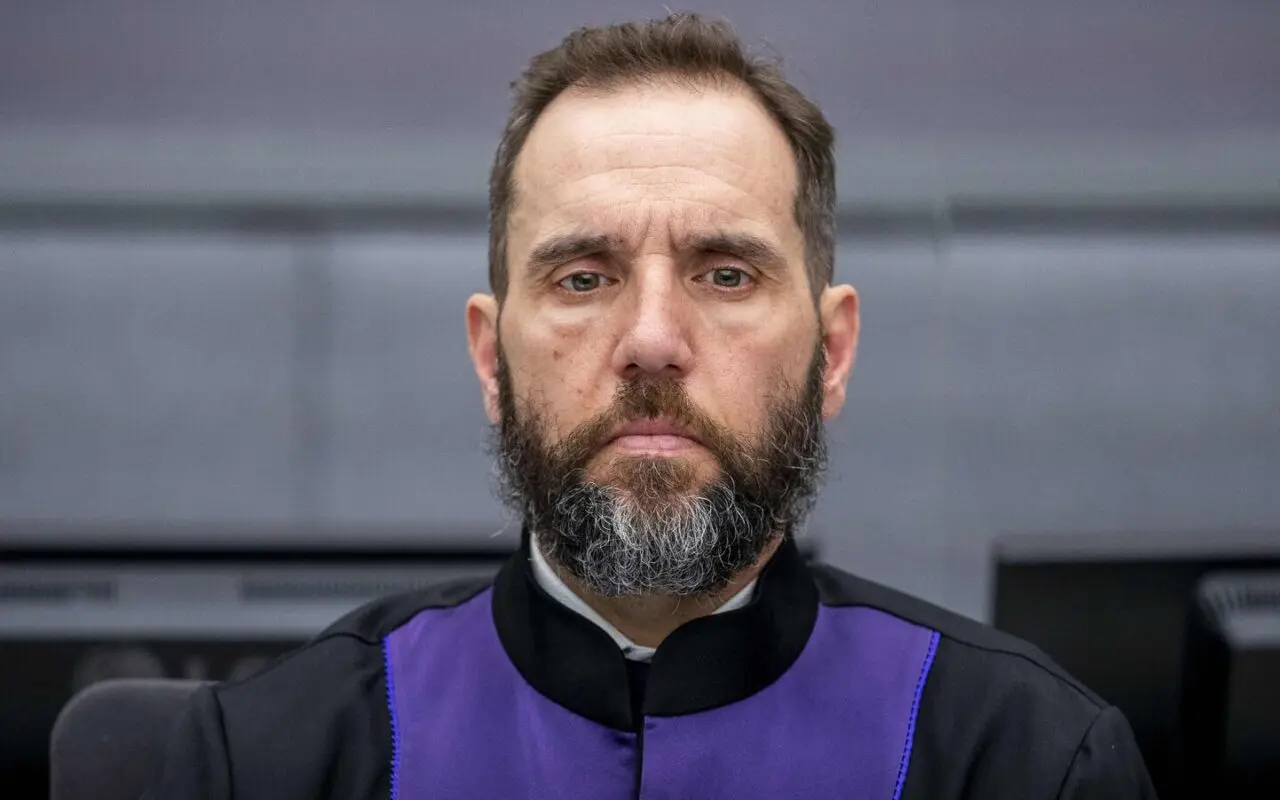
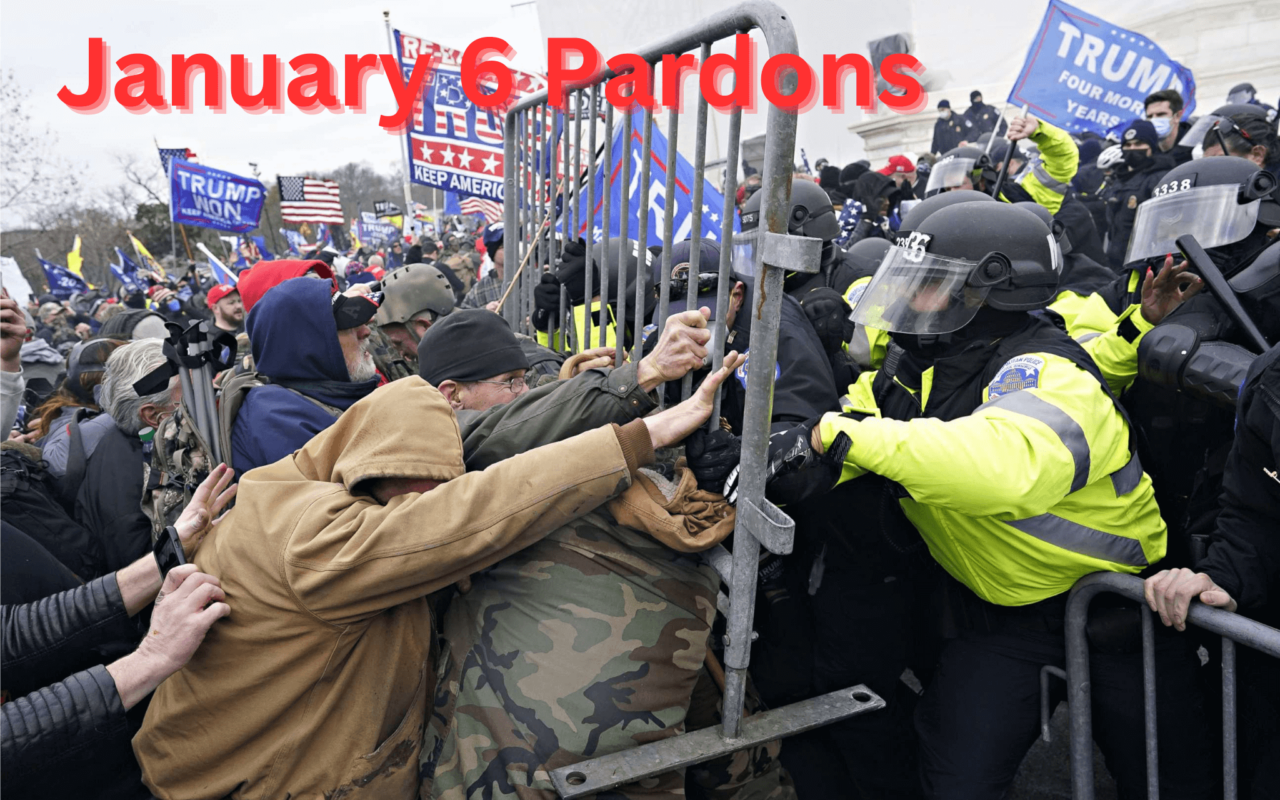
Five years ago today, a violent mob stormed the United States Capitol in an attempt to overturn a free and fair election. The man who incited them has since been re-elected president, which scuppered the investigation into him by Special Counsel Jack Smith. If that whiplash isn’t enough to give you vertigo, consider this: we now have sworn testimony, under oath, from the prosecutor who investigated Trump laying out exactly why his office believed they could convict Trump for breaking the law—and why they were stopped.
Former Special Counsel Jack Smith’s December testimony before the House Judiciary Committee is the closest thing we’ll get to the trial that should have happened. In it, Smith methodically dismantles every defense Trump and his allies have offered, explains how the case was built on testimony from Republicans willing to put country over party, and makes clear that the evidence of Trump’s guilt wasn’t circumstantial—it was direct.
In this post, I’m breaking down the key takeaways from Smith’s testimony, sharing one of my AI#MiniHistory videos marking the anniversary, and giving you a way to interrogate the evidence yourself through an interactive NotebookLM bot. Because if there’s one thing the incoming administration is counting on, it’s that you won’t have time to read 255 pages of testimony. Let’s make sure they’re wrong.
January 6 in 40 seconds
But first, a J6 refresher course — again, for busy folks.
I’ve been into making these little AI #MiniHistory videos with Glif agents, trying to tease out important signposts along our road to dictatorship and other interesting moments in history to highlight. Here’s the one I did for today and the 5th anniversary of January 6, 2021:
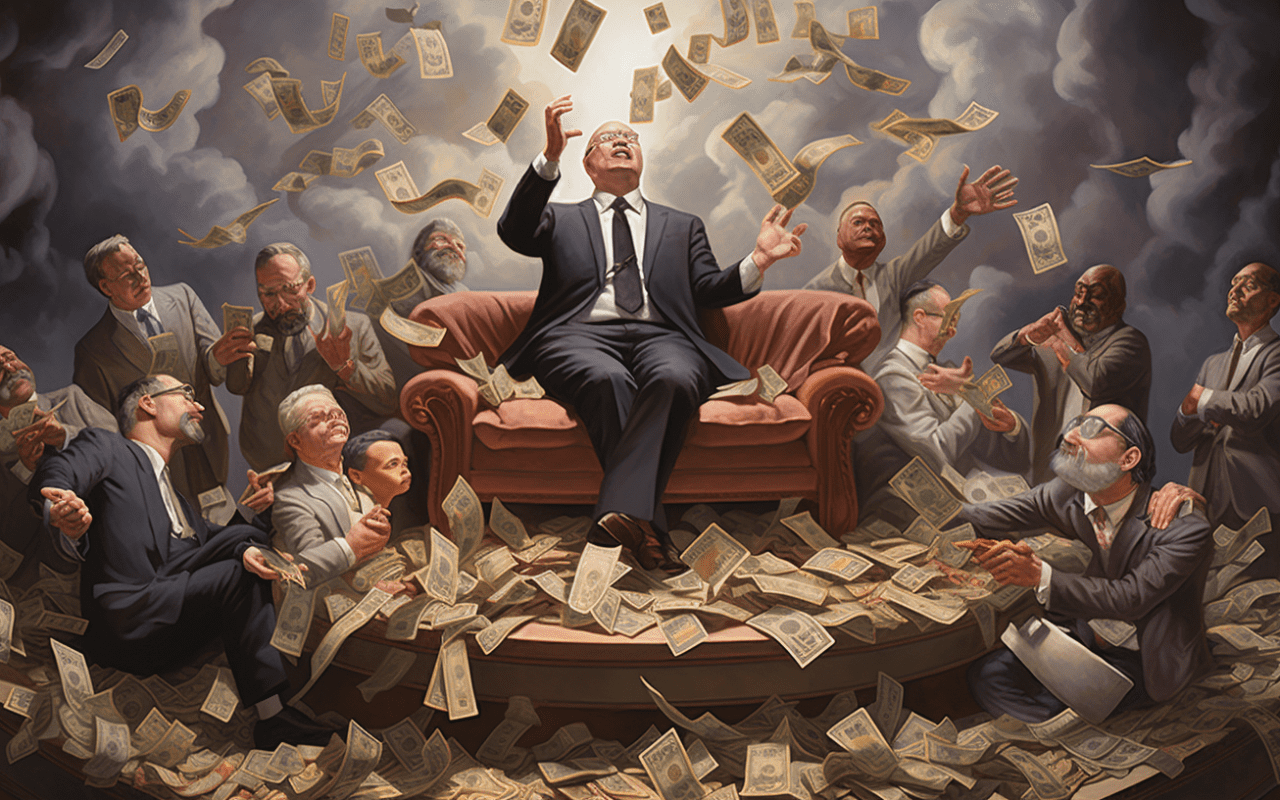
A network of exceedingly wealthy individuals and organizations have channeled their vast fortunes into influencing American politics, policy, and public opinion — they’ve formed a wealth cult. And they’ve leveraged that cult and its considerable fortune to influence and in many ways dramatically transform American politics.
The most succinct way I have come up with to explain American politics is that the wealthy are dividing us over race and religion. Today far more openly than in the past, where much oligarch shadow influence was delivered via dark money kept intentionally untraceable back to its origins.
The term “dark money” refers to political spending meant to influence the decision-making and critical thinking of the public and lawmakers where the source of the money is not disclosed. This lack of transparency makes it challenging to trace the influence back to its origins, hence the term “dark.”
The wealth cult has funded disinformation campaigns, the spread of conspiracy theories, created fake social movements through astroturfing, enabled violent extremists to attack their country’s capitol, aided and abetted a convicted felon, cruelly deprived vulnerable people (especially immigrants, poor people, and women) of the kind of state aid granted generously throughout the developed world, bribed regulators, rigged elections, crashed economies, and on and on in service of their extremist free market ideology beliefs (which, by the way, have resulted in catastrophic market crashes every single time).
They believe in “makers and takers,” or Mudsill Theory, as it was once called by pedophile and racist Senator and slavery enthusiast James Henry Hammond. Some people were born to serve others, they say. Hierarchies are natural, they claim. Wealthy men should make all the decisions — because that’s what’s best for everyone, they say in paternalistic tones.
What is fascism, and what are the signs of fascism? The fascist form of government is a complex and multi-faceted ideology that can manifest in various ways, making it challenging to pin down with a single definition.
Fascism resists simple definition precisely because it’s a syncretic ideology—adaptable to different contexts while maintaining core structural features. Rather than a fixed doctrine, it operates as a political methodology characterized by specific power dynamics, rhetorical strategies, and institutional patterns.
Structural characteristics of fascism
These are the ideological foundations and belief systems that define fascist movements—not merely policy positions but the fundamental orientations toward power, identity, and social organization that shape how fascism understands the world and its place in it.
Authoritarian Consolidation: Fascism centralizes power through the dismantling of horizontal accountability structures, typically concentrating authority in a charismatic executive who positions themselves above institutional constraints.
Ultranationalism as Identity Politics: Goes beyond patriotism to assert inherent civilizational superiority or racial supremacy, often manifesting as collective narcissism where national mythmaking replaces historical accuracy.
Anti-Intellectualism and Epistemic Closure: Systematic devaluation of expertise, academic inquiry, and empirical reasoning in favor of intuition, emotion, and revealed truth. The “coastal elite” or “ivory tower” becomes a rhetorical enemy.
Ethno-Nationalism and Boundary Enforcement: Xenophobia operating through strict in-group/out-group categorization, often targeting immigrants, religious minorities, or racialized “others.”
Reactionary Temporal Orientation: Deployment of a mythologized past as political program—the promise to restore a golden age that never existed, weaponizing nostalgia against pluralism.
Anti-Leftist Mobilization: Positioning communism, socialism, and progressive movements as existential threats, often conflating disparate left ideologies to create a unified enemy.
The Us vs. Them Architecture: In-group/Out-group dynamics as core infrastructure
Fascism doesn’t just exploit social divisions—it requires their constant production and intensification as its primary source of political energy. While most political movements contain some degree of group identity, fascism is structurally dependent on a stark binary between insiders and outsiders, making this dynamic its foundational operating system rather than an incidental feature. The movement coheres not around shared policy goals or governance philosophy, but around the ongoing project of boundary maintenance: defining, defending, and purifying the “us” against an ever-present “them.”
In the shadows of Washington’s policy debates, a quiet technological revolution is taking shape—one that could fundamentally alter how the federal government collects, analyzes, and potentially weaponizes data on American citizens. At the heart of this transformation sits Palantir Technologies, the secretive data analytics firm co-founded by tech billionaire Peter Thiel that has become the Trump administration’s go-to contractor for an ambitious plan to merge information across federal agencies into what critics fear could become an unprecedented surveillance apparatus.
The push represents the culmination of Thiel’s decades-long influence campaign within both Silicon Valley and right-wing politics, where he has emerged as the “godfather” of a powerful network of tech billionaires who have shifted dramatically rightward. Once the sole major Silicon Valley figure to back Trump in 2016, Thiel has watched his political philosophy spread throughout the tech elite, with former PayPal colleagues like Elon Musk and proteges like Vice President J.D. Vance now occupying the highest levels of government. This so-called “PayPal Mafia“—a group of billionaires with overlapping business interests and shared anti-regulatory fervor—has become integral to the second Trump administration, with at least three former Palantir employees now working within Musk’s Department of Government Efficiency (DOGE).
Since Trump’s March executive order calling for expanded data sharing across government agencies, Palantir has quietly embedded itself deeper into the federal bureaucracy than ever before. The company has secured over $113 million in new federal contracts and expanded its flagship Foundry platform into at least four major agencies, including the Department of Homeland Security, Health and Human Services, and most recently, the Internal Revenue Service. This technological infrastructure could enable the administration to create detailed digital portraits of Americans by combining bank records, medical claims, student debt information, and disability status—all accessible through a single, searchable database.
The expansion reflects Thiel’s long-standing belief that “freedom and democracy are not compatible,” a philosophy that has guided his investments and political activities for over a decade. While Thiel maintains no official government position, he has direct access to the president, vice president, and virtually every tech figure in Trump’s inner circle, recently hosting an inauguration party at his Washington mansion for the “crème de la crème of the tech world.” As one journalist noted during the 2024 Republican National Convention, “It’s Peter Thiel’s party now”—a sentiment validated by the presence of his handpicked protege as vice president and his former colleagues running key government efficiency initiatives.
But the expansion has also triggered alarm bells within Palantir itself, where current and former employees worry about their company becoming the public face of Trump’s political agenda. Thirteen former employees recently signed a public letter urging the company to reconsider its role, while at least one strategist has resigned over the expanded ICE contracts, calling the work a “red line” she won’t cross.
As privacy advocates file lawsuits and Democratic lawmakers sound warnings about potential abuse, Palantir finds itself at the center of a national debate about the balance between government efficiency and civil liberties. To understand how we arrived at this moment—and what it might mean for American privacy—we need to examine the company behind the technology and the controversial figures who built it.
What is Palantir?
And once again I turned to Perplexity Labs to help me tell the story of Palantir in an interactive way. I am a little bit addicted to this new featureset — it is miraculous. It can build incredibly sophisticated things in a very short amount of time. To view the presentation, simply click the image below to launch it in a new Lightbox window:
And once again, the methodology and the full response are below.
David Sacks: Silicon Valley’s Political Power Player
At the intersection of technology, venture capital, and right-wing politics, the star of tech mogul David Sacks has risen prominently in recent years. From PayPal executive to Trump’s AI & Crypto Czar, Sacks represents a new breed of tech tycoon whose influence extends far beyond Silicon Valley boardrooms into the corridors of political power.
From South Africa to Silicon Valley
Born on May 25, 1972, in Cape Town, South Africa, Sacks followed a path that would eventually lead him to become one of the most influential entrepreneurs in American tech. After immigrating to the United States, he received his education at the University of Chicago Law School, graduating in 1998.
His Silicon Valley journey began in earnest when he joined PayPal in 1999 as Chief Operating Officer. At PayPal, Sacks was instrumental in building key teams and oversaw product management, sales, and marketing functions. This early chapter placed him squarely within what would later be known as the “PayPal Mafia” – a legendary group of executives including Peter Thiel and Elon Musk who went on to found and fund numerous successful tech ventures.
Entrepreneurial Success
Following PayPal’s $1.5 billion acquisition by eBay in 2002, Sacks embarked on a remarkable entrepreneurial journey:
He briefly ventured into Hollywood, producing the critically acclaimed film “Thank You for Smoking” and later “Dalíland”
In 2008, he founded Yammer, an enterprise social networking service that was acquired by Microsoft for $1.2 billion just four years later
As an angel investor, he made early bets on Facebook, Uber, SpaceX, and Airbnb, cementing his reputation for identifying transformative companies
In 2017, Sacks co-founded Craft Ventures, a venture capital firm focused on SaaS and marketplace models that has become a significant player in tech investing
His entrepreneurial success positioned him as a respected voice in Silicon Valley, with insights that extended from product development to company building and investment strategy.
The terse portmanteus are blunt and blocky, like a brutalist architecture vocabulary. Their simplicity indicates appeal to the small-minded masses for easily digested pablum.
Table of Contents
What is Newspeak?
Newspeak is a fictional language created by George Orwell for his dystopian novel 1984, published in 1949. The language serves as an essential tool for the oppressive regime, known as The Party, to control and manipulate the population of Oceania. Newspeak is intentionally designed to restrict the range of thought, eliminate words that convey dissent or rebellion, and enforce political orthodoxy. The language accomplishes this by reducing the complexity of Newspeak vocabulary and grammar, condensing words into simplified forms, and eliminating synonyms and antonyms. The Party aims to eliminate the potential for subversive thoughts by ensuring that the language itself lacks the necessary words and expressions to articulate them.
In Orwell’s world, Newspeak works hand in hand with the concept of “doublethink,” which requires individuals to accept contradictory beliefs simultaneously. This manipulation of language and thought is central to maintaining the Party’s power and control over the populace. Newspeak translation is often the exact opposite of the meaning of the words said.
Newspeak’s ultimate goal is to render dissent and rebellion impossible by making the very thoughts of these actions linguistically unexpressable. As a result, Newspeak serves as a chilling representation of how language can be weaponized to restrict personal freedoms, suppress independent thought, and perpetuate an authoritarian regime.
Newspeak Rises Again
Those boots ring out again, from Belarus to Hungary to the United States. There are book burnings and the defunding of libraries in multiple states. From Ron DeSantis to Trumpian anti-intellectualism to the rampant proliferation of conspiracy theories, It’s a good time to brush up on the brutalism still actively struggling to take hold.
The following is a list of all Newspeak words from 1984.
Newspeak 1984 Dictionary
Newspeak term
Definition
ante
The prefix that replaces before
artsem
Artificial insemination
bb
Big Brother
bellyfeel
The blind, enthusiastic acceptance of an idea
blackwhite
To accept whatever one is told, regardless of the facts. In the novel, it is described as “…to say that black is white when [the Party says so]” and “…to believe that black is white, and more, to know that black is white, and to forget that one has ever believed the contrary”.
crimestop
To rid oneself of unorthodox thoughts that go against Ingsoc’s ideology
crimethink
Thoughts and concepts that go against Ingsoc, frequently referred to by the standard English “thoughtcrime”, such as liberty, equality, and privacy, and also the criminal act of holding such thoughts
dayorder
Order of the day
dep
Department
doubleplusgood
The word that replaced Oldspeak words meaning “superlatively good”, such as excellent, fabulous, and fantastic
doubleplusungood
The word that replaced Oldspeak words meaning “superlatively bad”, such as terrible and horrible
doublethink
The act of simultaneously believing two, mutually contradictory ideas
duckspeak
Automatic, vocal support of political orthodoxies
facecrime
A facial expression which reveals that one has committed thoughtcrime
Ficdep
The Ministry of Truth’s Fiction Department
free
The absence and the lack of something. “Intellectually free” and “politically free” have been replaced by crimethinkful.
–ful
The suffix for forming an adjective
fullwise
The word that replaces words such as fully, completely, and totally
goodthink
A synonym for “political orthodoxy” and “a politically orthodox thought” as defined by the Party
goodsex
Sexual intercourse only for procreation, without any physical pleasure on the part of the woman, and strictly within marriage
goodwise
The word that replaced well as an adverb
Ingsoc
The English Socialist Party (i.e. The Party)
joycamp
Labour camp
malquoted
Inaccurate representations of the words of Big Brother and of the Party
Miniluv
The Ministry of Love, where the secret police interrogate and torture the enemies of Oceania (torture and brainwashing)
Minipax
The Ministry of Peace, who wage war for Oceania
Minitrue
The Ministry of Truth, who manufacture consent by way of lies, propaganda, and distorted historical records, while supplying the proles (proletariat) with synthetic culture and entertainment
Miniplenty
The Ministry of Plenty, who keep the population in continual economic hardship (starvation and rationing)
Oldspeak
Standard English
oldthink
Ideas from the time before the Party’s revolution, such as objectivity and rationalism
ownlife
A person’s anti-social tendency to enjoy solitude and individualism
plusgood
The word that replaced Oldspeak words meaning “very good”, such as great
plusungood
The word that replaced “very bad”
Pornosec
The pornography production section (Porno sector) of the Ministry of Truth’s Fiction Department
prolefeed
Popular culture for entertaining Oceania’s working class
Recdep
The Ministry of Truth’s Records Department, where Winston Smith rewrites historical records so they conform to the Party’s agenda
rectify
The Ministry of Truth’s euphemism for manipulating a historical record
ref
To refer (to someone or something)
sec
Sector
sexcrime
A sexual immorality, such as fornication, adultery, oral sex, and homosexuality; any sex act that deviates from Party directives to use sex only for procreation
speakwrite
A machine that transcribes speech into text
Teledep
The Ministry of Truth’s Telecommunications Department
telescreen
A two-way television set with which the Party spy upon Oceania’s population
thinkpol
The Thought Police, the secret police force of Oceania’s government
unperson
An executed person whose existence is erased from history and memory
upsub
An upwards submission to higher authority
–wise
The only suffix for forming an adverb
Newspeak Dictionary Quiz
Claude Artifacts made this in one prompt. Imagine this power to generate study aids for a wide variety of students at all levels. If I had had this as a kid…
Newspeak Quiz: Test Your Ingsoc Vocabulary
Welcome to the interactive Newspeak quiz! This quiz will help you learn the terminology of Oceania’s official language through fun repetition. Demonstrate your goodthink by mastering these terms – your commitment to linguistic purity will surely be recognized by the Party.
Beginner
Intermediate
Advanced
Term → Definition
Definition → Term
Score: 0/0
Quiz Complete!
Your final score: 0/0
Review Your Answers
Creation of New Words in Newspeak
One of the most fascinating and insidious aspects of Newspeak is the methodical creation of new words. This process is not only about inventing new terms but also about streamlining and simplifying the language to ensure it serves the purposes of the Party. Here’s how this process works:
1. Compounding Words
In Newspeak, many new words are created by combining existing ones. This technique, known as compounding, helps to streamline communication by reducing longer phrases into single, concise terms. For example:
Goodthink: A compound of “good” and “think,” meaning orthodox thought, or thoughts that align with Party doctrine.
Oldthink: A combination of “old” and “think,” referring to thoughts that are based on outdated, pre-revolutionary beliefs and values.
By merging words in this manner, Newspeak eliminates the need for descriptive phrases, thereby simplifying language and controlling thought.
2. Prefixes and Suffixes
Newspeak employs prefixes and suffixes to create new words and alter the meanings of existing ones. This method ensures that language remains efficient and devoid of any unnecessary complexity. Some common prefixes and suffixes include:
Un-: This prefix is used to form the negative of any word, thereby eliminating the need for antonyms. For example, “unhappy” replaces “sad.”
Plus- and Doubleplus-: These prefixes intensify the meaning of words. “Plusgood” means very good, while “doubleplusgood” means excellent or extremely good.
-wise: This suffix is used to form adverbs. For instance, “speedwise” means quickly.
Through these prefixes and suffixes, Newspeak ensures that language remains consistent and simplified, reinforcing the Party’s control over thought.
3. Simplification of Grammar
The creation of new words in Newspeak is also characterized by the simplification of grammar. Irregular verbs and noun forms are abolished, making all words conform to a delimited list of regular patterns. For example:
Think: In Newspeak, the past tense of “think” would simply be “thinked,” and the past participle would also be “thinked,” eliminating irregular forms like “thought.”
Knife: Plural forms are regularized, so “knife” becomes “knifes” instead of “knives.”
This grammatical regularization reduces the cognitive load required to learn and use the language, further limiting the scope for complex or critical thought.
4. Abolition of Synonyms and Antonyms
Newspeak systematically removes synonyms and antonyms to narrow the range of meaning, engendering black and white thinking. Each concept is reduced to a single, unambiguous word, eliminating nuances and shades of meaning:
Good: The word “good” stands alone without synonyms like “excellent,” “great,” or “superb.” Intensifiers like “plus-” and “doubleplus-” are used instead.
Bad: Instead of having a separate word like “bad,” Newspeak uses “ungood.” This not only simplifies vocabulary but also imposes a binary way of thinking.
By removing synonyms and antonyms, Newspeak reduces the complexity of language, ensuring that only Party-approved ideas can be easily communicated.
5. Creation of Euphemisms
In Newspeak, euphemisms are crafted to mask the true nature of unpleasant or controversial realities, aligning language with Party propaganda. For instance:
Joycamp: A euphemism for forced labor camps, designed to make the concept seem more palatable and less threatening.
Minipax: Short for the Ministry of Peace, which actually oversees war. The euphemistic name helps to disguise its true function.
These euphemisms help to distort reality, making it easier for the Party to maintain control over the population’s perceptions and beliefs.
Pathocracy is a relatively lesser-known concept in political science and psychology, which refers to a system of government in which individuals with personality disorders, particularly those who exhibit psychopathic, narcissistic, and similar traits (i.e. the “evil of Cluster B“), hold significant power.
Apparently a spur of the moment decision without much thought behind it, Trump hoped to get the specter of the January 6 coup behind him — only to Streisand Effect himself into a wave of negative attention. Meanwhile, after months (and years) of slander against immigrants and supposedly violent criminal immigrants rampaging across the country, it is in fact Donald Trump himself who unleashed hundreds of convicted violent offenders back onto the streets — where they are already actively plotting revenge.
I’m old enough to remember when the GOP was supposedly the “party of law and order,” and now they are a brazenly and recklessly lawless bunch. One of few upsides is that a wave of discontent is brewing.
Federal judges slam January 6 pardons
Several federal judges who presided over multiple criminal trials of the January 6 rioters weighed in on the official record about the judiciary’s outrage over the January 6 pardons, including Tanya Chutkan, Colleen Kollar-Kotelly, Amy Berman Jackson, and Beryl Howell.
US District Judge Colleen Kollar-Kotelly had scathing words about the pardons:
“Dismissal of charges, pardons after convictions, and commutations of sentences will not change the truth of what happened on January 6, 2021. What occurred that day is preserved for the future through thousands of contemporaneous videos, transcripts of trials, jury verdicts, and judicial opinions analyzing and recounting the evidence through a neutral lens. Those records are immutable and represent the truth, no matter how the events of January 6 are described by those charged or their allies.”
Judge Amy Berman Jackson agreed that nothing could wipe away the truth about the events of that terrible day:
“No stroke of a pen and no proclamation can alter the facts of what took place on January 6, 2021.”
Judge Tanya Chutkan had strong words as well, as she dismissed without prejudice a pending case still before her:
“The dismissal of this case cannot undo the ‘rampage [that] left multiple people dead, injured more than 140 people, and inflicted millions of dollars in damage.”
Original Sources: Judges clap back to January 6 pardons
I’ve been wanting to do more of a consistent focus on going back to the original sources of the news beyond just the media coverage or commentary about them. This experiment with NotebookLM‘s curiously compelling audio generation feature provides the best of both worlds: audio commentary on the original court filings referenced by the PBS story about strident judicial warnings attached to the January 6 pardons. Let me know what you think in the YouTube comments — I’m really still just experimenting with the channel.
What is a dictator, and what drives the allure of absolute power? How do dictators reshape the political and social landscapes they dominate? This post explores the intricate systems of control underpinning authoritarian governance, tracing its evolution from historical precedents to modern manifestations, and examining the far-reaching consequences for societies caught in its grip.
Dictators: Unraveling the Complexity of Authoritarian Governance
Political power represents a profound and intricate spectrum of human organizational capability, with dictatorships emerging as one of its most complex and destructive manifestations. The journey of understanding dictatorships requires a nuanced exploration that transcends simple categorizations, delving deep into the historical, sociological, and psychological landscapes that enable and sustain authoritarian control.
The Essence of Dictatorial Power
At its core, a dictator represents far more than a mere political leader. These individuals — often demagogues — are architects of comprehensive systems of control, systematically dismantling institutional safeguards and reconstructing societal frameworks to serve their singular vision of governance. Unlike democratically elected leaders constrained by robust institutional checks and balances, a dictatorship operates through a sophisticated network of power consolidation that penetrates every aspect of social and political life.
The hallmark of dictatorial governance lies not just in the concentration of power, but in the systematic elimination of alternative power structures. These leaders do not simply rule; they fundamentally reshape the entire landscape of political possibility, creating environments where opposition becomes not just difficult, but potentially life-threatening.
Kakistocracy—a term that may sound esoteric but is disturbingly relevant today—refers to governance by the least qualified or most unscrupulous individuals. Derived from the Greek words “kakistos” (κάκιστος), meaning “worst,” and “kratos” (κράτος), meaning “rule,” it literally translates to “government by the worst people.”
Historical context of kakistocracy
The concept of kakistocracy isn’t new. It first appeared in the 17th century, notably in a 1644 sermon by Paul Gosnold, who lamented the transformation of a well-tempered monarchy into a “mad kinde of Kakistocracy.”
Later, in 1829, English author Thomas Love Peacock used the term in his novel “The Misfortunes of Elphin,” contrasting it with aristocracy. By 1876, American poet James Russell Lowell expressed his dismay over the “degradation of the moral tone,” questioning whether democracy had devolved into a kakistocracy.
Modern resonance
Fast forward to the 21st century, and the term has resurfaced in political discourse. Critics have applied it to various governments, from Russia under Vladimir Putin to Egypt under Abdel Fattah Al-Sisi, and notably to the United States during Donald Trump‘s presidency (the Trump corruption managed to get even worse during the convicted felon’s second term). The term gained traction as commentators highlighted perceived incompetence and corruption within these administrations.
Defining traits of kakistocracy
A kakistocracy is marked by several alarming characteristics:
Incompetence: Leaders lack the necessary skills or qualifications for their roles.
Corruption: Officials prioritize personal gain over public interest. The term kleptocracy also often applies to kakistocracies.
Nepotism: Appointments are based on personal connections rather than merit.
Disregard for Expertise: Scientific or expert advice is often ignored or dismissed.
Erosion of Institutions: Democratic norms and institutions are weakened or undermined.
Consequences
The ramifications of a kakistocracy are profound:
Moral Degradation: A decline in societal ethical standards.
Resource Mismanagement: Public resources are squandered or exploited.
Erosion of Trust: Public confidence in governmental institutions diminishes.
Structural Damage: Long-term harm to political, economic, and social frameworks.
Guarding Against Kakistocracy
To prevent or remedy such governance, several measures are essential:
Strengthening Democratic Institutions: Ensuring robust checks and balances.
Promoting Education and Civic Engagement: Empowering citizens to participate actively in governance.
Enhancing Transparency and Accountability: Holding officials responsible for their actions.
Supporting Independent Media: Encouraging investigative journalism and protecting whistleblowers.
In an era where the quality of leadership is under intense scrutiny, understanding and recognizing the signs of kakistocracy is crucial. By fostering informed and active citizenry, we can strive to uphold the principles of competent and ethical governance.
What is fascism? Fascism is a far-right political ideology that emerged in the early 20th century, primarily in Italy under Benito Mussolini. It advocates for a centralized, authoritarian government, often led by a dictatorial figure, and places a strong emphasis on nationalism and, sometimes, racial purity. Fascism rejects liberal democracy, socialism, and communism, instead promoting a form of radical authoritarian ultranationalism. It often involves the suppression of dissent, the glorification of war and violence, and the demonization of perceived enemies, whether they be internal or external.
Historical context of fascism
Fascism gained prominence in the aftermath of World War I, a period marked by social upheaval, economic instability, and a crisis of traditional values. Mussolini’s Italy was the birthplace of fascism, but the ideology found its most extreme and devastating expression in Nazi Germany under Adolf Hitler. The Holocaust, the invasion of multiple countries, and the atrocities committed during World War II, including genocide, are dark chapters directly associated with fascist ideology. After the war, fascism was discredited but not eradicated. Various forms of neo-fascism, far-right, and alt-right ideologies have emerged in different parts of the world, although they often avoid the label of “fascism” due to its historical baggage.
Psychology of adherents
Understanding the psychology of those who adhere to fascist ideologies can be challenging but is crucial for a comprehensive view. Several factors contribute to the appeal of fascism:
Social Identity: People often gravitate towards ideologies that offer a strong sense of community and identity. Fascism’s emphasis on nationalism and often ethnocentrism can be attractive to those feeling alienated or marginalized.
Economic Insecurity: Fascism often gains traction during times of economic uncertainty. The promise of stability and prosperity can be enticing to those who feel left behind by other political systems.
Fear and Prejudice: Fascist ideologies often exploit existing prejudices, whether they be racial (like white nationalism), religious (like Christian nationalism), or otherwise, to create an “us versus them” mentality.
Desire for Order: The authoritarian nature of fascism can appeal to those who value social order and are willing to trade off democratic freedoms for promised or perceived safety and stability.
Charismatic Leadership: Fascist movements often rely on charismatic leaders who can galvanize public sentiment and offer simplistic solutions to complex problems. So do cults.
Core Ideological Pillars of Fascism
Ultranationalism At the heart of fascism lies a rabid nationalism that elevates the nation above all else, often cloaked in exclusionary rhetoric that defines “the nation” by narrow ethnic, racial, or cultural terms.
Authoritarianism Fascist regimes hinge on the power of a singular, dictatorial leader who positions himself as the embodiment of the national will.
Totalitarian Control A fascist state doesn’t just seek influence; it seeks control over every corner of public and private life, leaving no room for dissent.
Rejection of Democracy Inherently hostile to liberal democracy, fascism dismantles pluralism, erodes individual rights, and scorns any notion of democratic checks.
Cult of the Leader Charismatic, “infallible,” and above reproach, the fascist leader becomes a central figure to be idolized and obeyed without question.
Social and Cultural Machinery of Fascism
Militarism Fascism lionizes military power, often celebrating conflict and expansionism as tools for national rejuvenation.
Social Darwinism Fascist ideology thrives on a belief in social hierarchies, arguing that the strong must dominate the weak in a brutal, zero-sum worldview.
Anti-intellectualism Ideas and arts that challenge fascist ideals are often met with disdain or outright suppression. Thought and expression are sacrificed on the altar of ideology.
Sexism and Rigid Gender Roles Fascist movements are overwhelmingly male-dominated and sexist, perpetuating restrictive gender norms and relegating women to traditional roles.
Scapegoating A classic tool: fascism thrives on the creation of enemies, identifying scapegoats—whether minorities, intellectuals, or political dissidents—as a unifying target for the masses.
In-Group/Out-Group Polarization
Fascist movements masterfully exploit humanity’s tribal instincts by constructing rigid boundaries between “us” (the pure, virtuous, authentic people) and “them” (the corrupted, dangerous, foreign others). This binary “us vs. them” worldview transforms complex social realities into simplified moral battlegrounds where compromise becomes betrayal, dialogue becomes weakness, and the out-group is systematically dehumanized. By constantly reinforcing these divisions through rhetoric, symbolism, and policy, fascist leaders ensure that followers’ primary loyalty shifts from universal human values to exclusive group membership, making previously unthinkable actions against the “other” not only acceptable but morally imperative.
Political and Economic Playbook of Fascism
Corporatism Fascism tends to ally with powerful business interests, intertwining the state with corporate power to mutually reinforce each other’s agendas.
Suppression of Labor Labor unions and workers’ rights are among the first casualties, often stifled or eradicated in a fascist regime’s march to consolidate power.
Media Domination Fascists aim to monopolize information, using propaganda and disinformation to construct a controlled narrative that drowns out dissent.
Obsession with Security Fear is weaponized. Fascists often amplify threats, real or imagined, to justify repressive measures under the banner of “national security.”
Methods and Tactics of Fascism
Violence as a Political Tool Organized violence isn’t just incidental to fascism—it’s woven into the strategy, deployed to silence opposition and enforce control.
Manipulation of Truth Fascism operates in a realm where facts are malleable. Myths, lies, and distorted realities are crafted to serve political ends.
Populist Rhetoric Fascist leaders often adopt populist language to appear as champions of “the people,” casting themselves as saviors from elites or corrupt institutions.
While not all these elements must be present to identify fascism, a critical mass of these characteristics—especially the core ideological traits—serves as a clear signal of fascist leanings. Fascism’s true face is layered, but its essence is unmistakably authoritarian, divisive, and repressive.
What is fascism? Fascism is a far-right ideology that has had a profound impact on global history and continues to exist in various forms today. Its appeal lies in its ability to offer simple solutions to complex problems, often at the expense of individual freedoms and ethical considerations. Understanding the historical and psychological factors that contribute to the rise of fascism is crucial for recognizing and combating it in the modern world — where it is once again on the rise.
When evaluating a candidate for a role, you would be wise to consider what those who have worked with them in the past think of them — that’s why we ask for references during a job interview process. Unfortunately for Donald Trump, a majority of his closest advisors don’t support him and cannot recommend him as being fit for the presidency — and in fact many are actively campaigning against him and supporting the Harris-Walz ticket in the 2024 election.
And these aren’t just people out at the edges of a sprawling administration — these folks are from the inner circle, the cabinet, the military’s top brass, and other high-level officials in or near the White House who routinely interacted with the then-President.
Trump bragged about hiring all the best people — but then proceeded to fire a huge swath of them for having the audacity of disagreeing with him, or other trivial reason. Of those that remained, an unusually large number resigned from his administration in protest over whatever they saw as their personal last straw — many on January 6. And of that whole set, a conspicuously large number are now actively speaking out against the former president and working to prevent him from ascending to a second term.
I’ve been a voter for 30 years. And never have I seen the outpouring of “duty to warn” from former officials of someone seeking re-election. Never has this many of the president’s closest advisors refused to support him for a second term. Let’s hear why, in their own words.
Mike Pence
Former Vice President
“It should come as no surprise that I will not be endorsing Donald Trump this year,” he said to Fox News — an extraordinary historical moment when a VP cannot in good conscience support their own former President. Of course, when that former President tried to murder to you — or at the very least looked the other way while it happened in front of him on TV — it might be more difficult to get over than the usual spat between political cronies.
Mark Esper
Former Secretary of Defense and Secretary of the Army
Another rare moment: when a former cabinet member goes on national television weeks before an election to warn the American public about the dangers of their former boss. I have definitely never seen this in my lifetime and my 30 years of voting.
“I think he’s unfit for the presidency. As somebody who worked directly for him — I don’t think he’s the right person for our country. And so I will not be supporting him.” — to CNN, April 16
“Trump is not fit for office because he puts himself first and I think anybody running for office should put the country first.”
“Yes, I think we should take those words seriously,” former Trump Defense Secretary Mark Esper says after Trump suggesting using the U.S. military against the “enemy from within.” pic.twitter.com/oXOlaU7tnZ
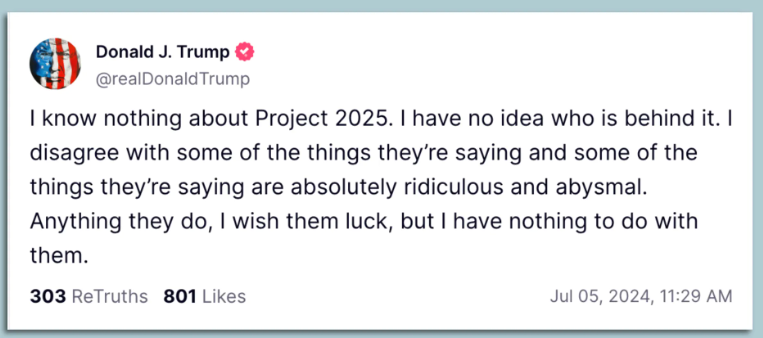
The Former Guy has been continuously proclaiming to know nothing about Project 2025, the plan whose authors include 70% current and former Trump officials. In that he doth protest too much — does Trump support Project 2025? You bet your bippy he does!
What is Project 2025? Think of it as a vast plan, close to the former president, to feverishly establish Christofascism in America starting with Day 1 of a second Trump presidency. It is a 920-page document, and 1000-employee project, to “supercharge” another Trump term with an infusion of Christian nationalism.
More than 100 Christian nationalist organizations and groups are involved in drafting the blueprint for Trump’s next term, should that horrorscape come to pass. One core problem they have, however, is the extreme unpopularity of their ideas. Most Americans are recoiling from the draconian measures Project 2025 wishes to bestow upon the nation, unasked for and unwanted — including banning abortion nationwide, restricting IVF, defunding education, pulling out of NATO, etc.
Who is behind Project 2025?
Project 2025 is so toxic in fact that Donald Trump tried to disavow it on Truth Social:
But despite his pathetic attempt to disclaim knowledge about Project 2025, Trump’s current and former staff make up the majority of the group’s architects. Trump’s name appears 312 times in their document. It’s simply not credible that the GOP presumptive nominee is unaware of his loudest allies and advocates — and even if you take the known liar at his word, it constitutes malpractice for a political candidate to be so uninformed.
So allegedly, Donald Trump doesn’t know anyone behind Project 2025. Let’s have a look at the amazing Venn Diagram between Trump officials and Project 2025, shall we?
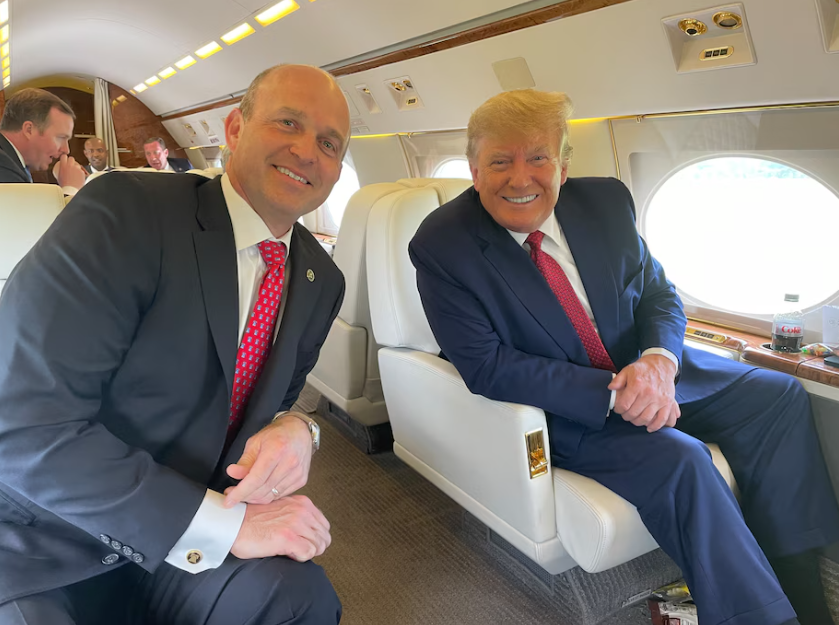
Kevin Roberts and Trump on a plane
Heritage Foundation president and leader of the organization behind Project 2025, Kevin Roberts, grins with Trump on a private plane in 2022, on the way to a Heritage conference in which Trump gave a keynote address about the project and its policy proposals.
In April 2024 Roberts told the Washington Post first hand that “I personally have talked to President Trump about Project 2025.” Apparently then, at least one of the two men is lying.
Today, we’re diving into the labyrinthine tale of Gamergate—an episode that unfolded in 2014 but echoes into today’s digital sociology. What was Gamergate? It was a kind of canary in the coalmine — a tale of online intrigue, cultural upheaval, and for some, an awakening to the virulent undercurrents of internet anonymity.
I. Origins and Triggering Events: The Spark That Lit the Fire
In August 2014, an unassuming blog post titled “The Zoe Post” by Eron Gjoni set off a chain reaction that few could have foreseen. Through this post, which detailed his personal grievances against Zoe Quinn, a game developer, the seed of misinformation was sown. The post falsely implicated Quinn in an unethical affair with Nathan Grayson, a gaming journalist, suggesting she had manipulated him for favorable coverage of her game Depression Quest. This unfounded claim was the initial spark that ignited the raging internet inferno of Gamergate.
The allegations quickly spread across forums like 4chan, a breeding ground for anonymity and chaos. Here, the narrative morphed into a menacing campaign that took aim at Quinn and other women in the gaming industry. The escalation was not just rapid—it was coordinated, a harbinger of the kind of internet and meme warfare that has since become all too familiar.
II. Targets of Harassment: The Human Cost of Online Fury
What followed was an onslaught of harassment against women at the heart of the gaming industry. Zoe Quinn wasn’t alone in this; Anita Sarkeesian and Brianna Wu also bore the brunt of this vicious campaign. This wasn’t just trolling or mean tweets—it was a barrage of rape threats, death threats, and doxing attempts, creating a reality where digital assault became a daily occurrence.
Others got caught in the crossfire, too—individuals like Jenn Frank and Mattie Brice, who dared to defend the victims or criticize Gamergate, found themselves subject to the same malevolent noise. Even Phil Fish, a game developer, saw his private data leaked in a cruel display of digital vigilantism.
III. Nature of the Harassment: When Digital Attacks Go Beyond the Screen
Gamergate painted a harrowing picture of the scope and scale of online harassment. Orchestrated attacks didn’t stop at vitriolic tweets; they extended to doxing, where victims’ personal information was broadcast publicly, and “swatting,” a dangerous “prank” that involves making false police reports to provoke a SWAT team response.
Platforms like Twitter, 4chan, and its notorious sibling 8chan were the stages upon which this drama played out. Here, an army of “sockpuppet” accounts created an overwhelming maelstrom, blurring the lines between dissent and digital terrorism.
IV. Motivations and Ideology: Misogyny and Political Underpinnings
At its core, Gamergate was more than just a gamers’ revolt; it was a flashpoint in a broader cultural war, defined by misogyny and anti-feminism. This was a resistance against the shifting dynamics within the gaming world—a refusal to accept the increasing roles women were assuming.
Moreover, Gamergate was entangled with the burgeoning alt-right movement. Figures like Milo Yiannopoulos latched onto the controversy, using platforms like Breitbart News as megaphones for their ideas. Here, Gamergate served as both a symptom and a gateway, introducing many to the alt-right’s narrative of disenchantment and defiance against progressive change.
Gamergate’s Lasting Legacy and the “Great Meme War”
Gamergate wasn’t just a flashpoint in the world of gaming; it was the breeding ground for a new kind of online warfare. The tactics honed during Gamergate—coordinated harassment, the use of memes as cultural weapons, and the manipulation of platforms like Twitter and 4chan—became the playbook for a much larger, more consequential battle: the so-called “Great Meme War” that helped fuel Donald Trump’s 2016 presidential campaign.
The very same troll armies that harassed women in the gaming industry turned their attention toward mainstream politics, using the lessons learned in Gamergate to spread disinformation, amplify division, and create chaos. Memes became more than just jokes; they became political tools wielded with precision, reaching millions and shaping narratives in ways traditional media struggled to keep up with. What began as a seemingly insular controversy in the gaming world would go on to sow the seeds of a far more disruptive force, one that reshaped modern political discourse.
The influence of these tactics is still felt today, as the digital landscape continues to be a battleground where information warfare is waged daily. Gamergate was the first tremor in a cultural earthquake that has redefined how power, politics, and identity are contested in the digital age. As we move forward, understanding its origins and its impact on today’s sociopolitical environment is essential if we hope to navigate—and counter—the dark currents of digital extremism.
In retrospect, Gamergate wasn’t an isolated incident but a prelude, a trial run for the troll armies that would soon storm the gates of political power. Its legacy, while grim, offers critical insights into the fragility and volatility of our online spaces—and the urgent need for vigilance in the face of future campaigns of digital manipulation.