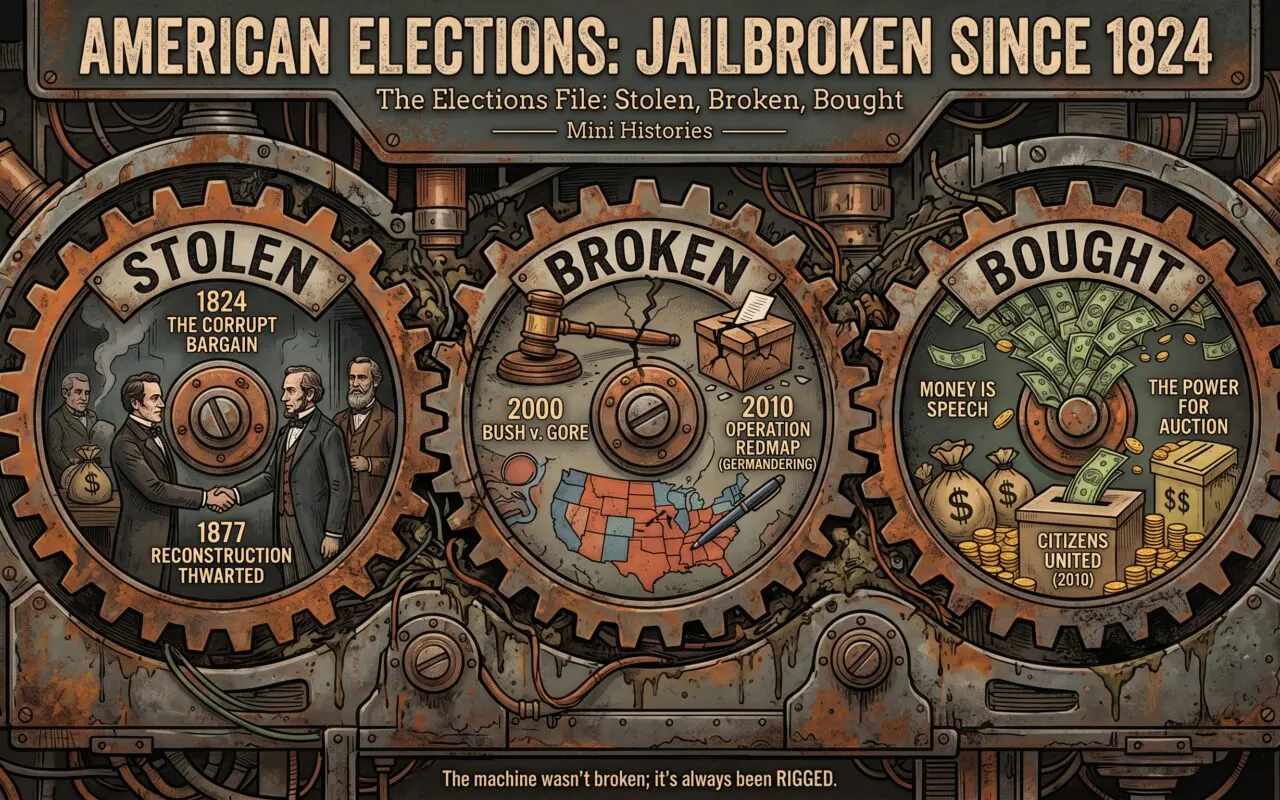

You learned the fairy tale in civics class. The ballot box is the one clean machine — the sacred mechanism, the great equalizer, the place where the powerful and the powerless cancel each other out one vote at a time. The peaceful transfer of power is American scripture. We even built a little ritual around it: the concession call, the inauguration, the loser standing on the dais clapping for the winner.
It’s a lovely story. The documentary record just doesn’t back it up — especially after the 2020 election and the events of January 6, 2021.
This is part of my daily Mini Histories series — 40-second tilt-shift AI-created video dives into the moments American memory conveniently misplaced, each one built around a thesis that runs against the grain of what you were taught. (You can find the whole archive on the channel.)
And the elections file is one of the thickest, because the thing the fairy tale leaves out is that American elections don’t get stolen on election day, via so-called voter fraud. They get stolen before it, broken around it, or bought after it — by the very elites who cry big crocodile tears about the unfairness of elections as they rig them in their favor (sometimes, with the blessing of SCOTUS including recently). Election denial becomes a whole grift in itself for the unpopular party that cheats. Using three failure modes, over two hundred years, one remarkably consistent cast of beneficiaries emerges again and again to wield power against the will of the people.
Let’s go to the tape.
Stolen: the backroom
Long before anyone “stopped the steal,” the steal was a gentleman’s arrangement — the proverbial smoke-filled back rooms where deals were made amongst men of influence.
The Corrupt Bargain (1824)
The first stolen presidential election happened earlier than you think — Andrew Jackson won the most votes and the most electors, and still walked away with nothing after the contest got thrown to the House and the runners-up cut a deal.
Reconstruction, Thwarted (1877)
A half-century later they did it again, only this time the price was an entire people’s freedom. To settle a disputed election, the parties traded away Reconstruction itself — federal troops out of the South, the door held open for Jim Crow.
Continue reading Stolen, Broken, Bought: A Short History of the American Election