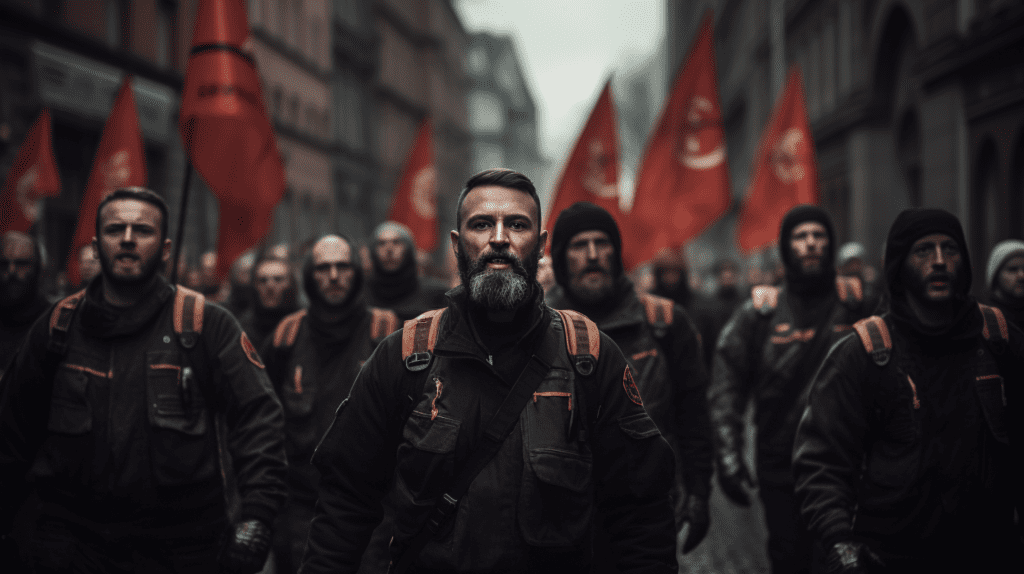
A Comprehensive Timeline of Russian Electoral Interference: From Imperial Russia to the Digital Age
Russian election interference around the globe has a much longer history than most people realize, extending back centuries rather than decades. This interference has evolved alongside Russia‘s own political transformations, from imperial ambitions to Soviet ideology to modern geopolitical objectives under Vladimir Putin. Recent actions, particularly during the 2016 U.S. presidential election, represent not an anomaly but the continuation and evolution of long-established patterns of behavior designed to shape foreign politics to Russian advantage.
The Imperial Russian Roots of Electoral Interference
Russia’s involvement in foreign electoral politics dates back to the early 18th century. Following a period when Poland had been the dominant power that once occupied Moscow, the tables turned as Russia grew in strength. Under Peter the Great and his successors, Russia began systematically meddling in Poland’s electoral politics by bribing Polish nobles to vote against attempts to strengthen the Polish central government and national army. This early form of interference was aimed at keeping a neighboring power weak and malleable to Russian interests.
This pattern culminated at the end of the 18th century when Russia, alongside Austria and Prussia, partitioned the Polish state among themselves, effectively erasing Poland from the map. Poland would remain part of the Russian Empire until World War I when it finally regained independence. This early example established a precedent that would continue in various forms through subsequent Russian regimes.
The Birth of Soviet Electoral Interference
After the 1917 Bolshevik Revolution, the Soviet approach to electoral interference took on an ideological dimension. In 1919, Vladimir Lenin founded the Communist International (Comintern), an organization designed to unite communist parties worldwide and foment revolution abroad. The Comintern distributed funding and supported propaganda operations in various countries to help communist parties compete more effectively in elections, with the ultimate goal of having these parties assume power and eventually abolish national borders.
While Lenin’s vision of global communist revolution was not realized, the Comintern’s activities generated significant paranoia in Western democracies like the United States and United Kingdom, where fears of Soviet manipulation of democratic processes took root. This marked the beginning of a more systematic approach to electoral interference that would be refined during the Soviet era.
Post-World War II: Aggressive Soviet Electoral Manipulation
After World War II, the Soviet Union under Joseph Stalin aggressively interfered in elections across Eastern Europe, particularly in countries like East Germany, Hungary, and Poland. These operations foreshadowed many tactics that would later be employed by Putin’s Russia. The Soviet Union manipulated voter rolls, falsified vote counts, and distributed massive amounts of propaganda through posters, pamphlets, and leaflets to influence public opinion.
These elections were effectively rigged, resulting in communist parties coming to power across Eastern Europe and subsequently ending competitive elections in these nations. This period represents one of the most successful campaigns of electoral interference in modern history, as it resulted in the establishment of Soviet-aligned governments throughout the Eastern Bloc.
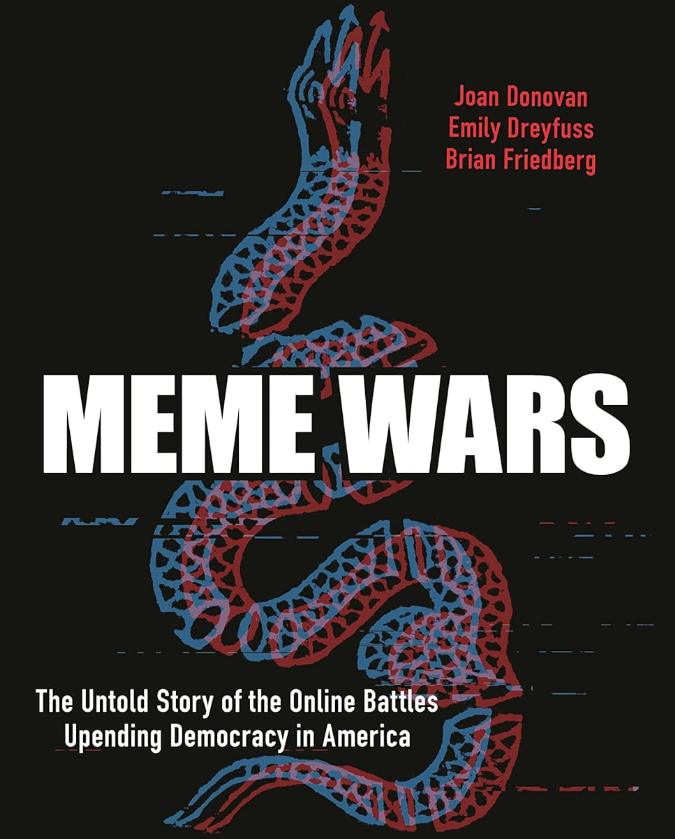
Remember when memes were just harmless internet jokes? Those days are long gone. “Meme Wars” meticulously documents how these seemingly innocent cultural artifacts have evolved into powerful weapons in a coordinated assault on American democracy — a form of information warfare that tears at our very ability to detect fantasy from reality at all, something that Hannah Arendt once warned of as a key tool of authoritarian regimes.
What makes this transformation particularly insidious is how easy it is to dismiss. After all, how could crudely drawn frogs and joke images possibly be a threat to democracy? Yet the authors convincingly demonstrate that this dismissive attitude is precisely what has allowed far-right operatives to wield memes so effectively.
The book reveals how figures like Alex Jones, Milo Yiannopoulos, Nick Fuentes, and Roger Stone have mastered the art of meme warfare. These digital provocateurs understand something that traditional political institutions have been slow to grasp: in today’s media environment, viral content can bypass established gatekeepers and directly shape public opinion at scale.
The Digital Radicalization Pipeline
Perhaps the most disturbing aspect of “Meme Wars” is its detailed examination of what the authors call the “redpill right” and their techniques for radicalizing ordinary Americans. The process begins innocuously enough—a provocative meme shared by a friend, a YouTube video recommended by an algorithm—but can quickly lead vulnerable individuals down increasingly extreme ideological paths.
This digital radicalization operates through sophisticated emotional manipulation. Content is carefully crafted to trigger outrage, fear, or a sense of belonging to an in-group that possesses hidden truths. Over time, these digital breadcrumbs lead users into alternative information ecosystems that gradually reshape their perception of political reality.
From Online Conspiracy to Capitol Insurrection
“Meme Wars” provides what may be the most comprehensive account to date of how online conspiracy theories materialized into physical violence on January 6th, 2021. The authors trace the evolution of the “Stop the Steal” movement from fringe online forums to mainstream platforms, showing how digital organizing translated into real-world action.
The book presents the Capitol insurrection as the logical culmination of years of digital warfare. Participants like “Elizabeth from Knoxville” exemplify this new reality—simultaneously acting as insurrectionists and content creators, live-streaming their participation for online audiences even as they engaged in an attempt to overthrow democratic processes.
This fusion of digital performance and physical violence represents something genuinely new and dangerous in American politics. The insurrectionists weren’t just attacking the Capitol; they were creating content designed to inspire others to join their cause.
Inside the Digital War Rooms
What sets “Meme Wars” apart from other analyses of digital extremism is the unprecedented access the authors gained to the online spaces where anti-establishment actors develop their strategies. These digital war rooms function as laboratories where messaging is crafted, tested, and refined before being deployed more broadly.
The authors document how these spaces identify potential recruits, gradually expose them to increasingly extreme content, and eventually mobilize them toward political action. This sophisticated recruitment pipeline has proven remarkably effective at growing extremist movements and providing them with dedicated foot soldiers.
The Existential Threat to Democracy
At its core, “Meme Wars” is a book about the fundamental challenge digital manipulation poses to democratic governance. By deliberately stirring strong emotions and deepening partisan divides, meme warfare undermines the rational discourse and shared reality necessary for democratic deliberation.
The authors make a compelling case that these tactics represent an existential threat to American democracy. What’s more, the digital warfare techniques developed in American contexts are already being exported globally, representing a worldwide challenge to democratic institutions.
Confronting the Challenge
Perhaps the most important contribution of “Meme Wars” is its insistence that we recognize digital threats as real-world dangers. For too long, online extremism has been dismissed as merely virtual—something separate from “real” politics. The events of January 6th definitively shattered that illusion.
While the book doesn’t offer easy solutions, it makes clear that protecting democracy in the digital age will require new approaches from institutions, platforms, and citizens alike. We need digital literacy that goes beyond spotting fake news to understanding how emotional manipulation operates online. We need platforms that prioritize democratic values over engagement metrics. And we need institutions that can effectively counter extremist narratives without amplifying them.
A Must-Read for Democracy’s Defenders
“Meme Wars” is not just a political thriller, though it certainly reads like one at times. It is a rigorously researched warning about how extremist movements are reshaping American culture and politics through digital means. For anyone concerned with the preservation of democratic institutions, it should be considered essential reading.
The authors — including Joan Donovan, widely known and respected as a foremost scholar on disinformation — have performed a valuable service by illuminating the hidden mechanics of digital manipulation. Now it’s up to all of us to heed their warning and work to build democratic resilience in the digital age. The future of our democracy may depend on it.
A Diplomatic Travesty in the Oval Office: Zelensky, Trump, and JD Vance’s Foreign Policy Ambush
The Oval Office has seen its share of tense diplomatic moments, but the recent clash between Ukrainian President Volodymyr Zelensky and former U.S. President Donald Trump—joined by Ohio Senator JD Vance—marks a new low in international decorum. What was expected to be a high-stakes discussion on Ukraine’s future and continued U.S. support instead devolved into a heated, profanity-laced exchange, described by German Foreign Minister Annalena Baerbock as ushering in a “new era of profanity.”
In a tense and extraordinary meeting in front of the cameras, President Trump and Vice President Vance confronted Ukrainian President Volodymyr Zelensky in what appeared to be a carefully orchestrated diplomatic ambush. With Russian state media present while major American outlets were excluded, Trump and Vance pressured Zelensky to accept terms highly favorable to Russia – including a ceasefire that would effectively cede Ukrainian territory and sign over rights to valuable rare-earth minerals without firm security guarantees in return. Zelensky pointed out that Putin had broken ceasefire agreements 25 times already — so what was his incentive to find this one credible, particularly without any concrete guarantees?
In response to a reporter’s question about the US’s sudden shift away from its staunch Cold War stance to embracing Russia, Trump complained that Zelensky showed “such hate” towards Putin, who — he alleged — has suffered very badly (hatred being more impactful than military invasion, I guess?). When Zelensky remained composed and warned that the United States might “feel problems” due to its shifting alliance toward Russia, Trump grew visibly agitated, repeatedly insisting Americans would “feel very good and very strong” instead, while Vance accused the Ukrainian leader of being ungrateful for American support — as someone insecure and in need of praise would do.
The situation escalated when Zelensky calmly but firmly stated that Trump and Vance would “feel influenced” by Russia, triggering an extended, angry tirade from Trump that veered into his grievances about Russian election interference investigations, criticisms of former Presidents Biden and Obama, and rhetoric that closely mirrored Putin’s talking points and invented conspiracy theories on Ukraine.
The terse portmanteus are blunt and blocky, like a brutalist architecture vocabulary. Their simplicity indicates appeal to the small-minded masses for easily digested pablum.
Table of Contents
What is Newspeak?
Newspeak is a fictional language created by George Orwell for his dystopian novel 1984, published in 1949. The language serves as an essential tool for the oppressive regime, known as The Party, to control and manipulate the population of Oceania. Newspeak is intentionally designed to restrict the range of thought, eliminate words that convey dissent or rebellion, and enforce political orthodoxy. The language accomplishes this by reducing the complexity of Newspeak vocabulary and grammar, condensing words into simplified forms, and eliminating synonyms and antonyms. The Party aims to eliminate the potential for subversive thoughts by ensuring that the language itself lacks the necessary words and expressions to articulate them.
In Orwell’s world, Newspeak works hand in hand with the concept of “doublethink,” which requires individuals to accept contradictory beliefs simultaneously. This manipulation of language and thought is central to maintaining the Party’s power and control over the populace. Newspeak translation is often the exact opposite of the meaning of the words said.
Newspeak’s ultimate goal is to render dissent and rebellion impossible by making the very thoughts of these actions linguistically unexpressable. As a result, Newspeak serves as a chilling representation of how language can be weaponized to restrict personal freedoms, suppress independent thought, and perpetuate an authoritarian regime.
Newspeak Rises Again
Those boots ring out again, from Belarus to Hungary to the United States. There are book burnings and the defunding of libraries in multiple states. From Ron DeSantis to Trumpian anti-intellectualism to the rampant proliferation of conspiracy theories, It’s a good time to brush up on the brutalism still actively struggling to take hold.
The following is a list of all Newspeak words from 1984.
Newspeak 1984 Dictionary
Newspeak term
Definition
ante
The prefix that replaces before
artsem
Artificial insemination
bb
Big Brother
bellyfeel
The blind, enthusiastic acceptance of an idea
blackwhite
To accept whatever one is told, regardless of the facts. In the novel, it is described as “…to say that black is white when [the Party says so]” and “…to believe that black is white, and more, to know that black is white, and to forget that one has ever believed the contrary”.
crimestop
To rid oneself of unorthodox thoughts that go against Ingsoc’s ideology
crimethink
Thoughts and concepts that go against Ingsoc, frequently referred to by the standard English “thoughtcrime”, such as liberty, equality, and privacy, and also the criminal act of holding such thoughts
dayorder
Order of the day
dep
Department
doubleplusgood
The word that replaced Oldspeak words meaning “superlatively good”, such as excellent, fabulous, and fantastic
doubleplusungood
The word that replaced Oldspeak words meaning “superlatively bad”, such as terrible and horrible
doublethink
The act of simultaneously believing two, mutually contradictory ideas
duckspeak
Automatic, vocal support of political orthodoxies
facecrime
A facial expression which reveals that one has committed thoughtcrime
Ficdep
The Ministry of Truth’s Fiction Department
free
The absence and the lack of something. “Intellectually free” and “politically free” have been replaced by crimethinkful.
–ful
The suffix for forming an adjective
fullwise
The word that replaces words such as fully, completely, and totally
goodthink
A synonym for “political orthodoxy” and “a politically orthodox thought” as defined by the Party
goodsex
Sexual intercourse only for procreation, without any physical pleasure on the part of the woman, and strictly within marriage
goodwise
The word that replaced well as an adverb
Ingsoc
The English Socialist Party (i.e. The Party)
joycamp
Labour camp
malquoted
Inaccurate representations of the words of Big Brother and of the Party
Miniluv
The Ministry of Love, where the secret police interrogate and torture the enemies of Oceania (torture and brainwashing)
Minipax
The Ministry of Peace, who wage war for Oceania
Minitrue
The Ministry of Truth, who manufacture consent by way of lies, propaganda, and distorted historical records, while supplying the proles (proletariat) with synthetic culture and entertainment
Miniplenty
The Ministry of Plenty, who keep the population in continual economic hardship (starvation and rationing)
Oldspeak
Standard English
oldthink
Ideas from the time before the Party’s revolution, such as objectivity and rationalism
ownlife
A person’s anti-social tendency to enjoy solitude and individualism
plusgood
The word that replaced Oldspeak words meaning “very good”, such as great
plusungood
The word that replaced “very bad”
Pornosec
The pornography production section (Porno sector) of the Ministry of Truth’s Fiction Department
prolefeed
Popular culture for entertaining Oceania’s working class
Recdep
The Ministry of Truth’s Records Department, where Winston Smith rewrites historical records so they conform to the Party’s agenda
rectify
The Ministry of Truth’s euphemism for manipulating a historical record
ref
To refer (to someone or something)
sec
Sector
sexcrime
A sexual immorality, such as fornication, adultery, oral sex, and homosexuality; any sex act that deviates from Party directives to use sex only for procreation
speakwrite
A machine that transcribes speech into text
Teledep
The Ministry of Truth’s Telecommunications Department
telescreen
A two-way television set with which the Party spy upon Oceania’s population
thinkpol
The Thought Police, the secret police force of Oceania’s government
unperson
An executed person whose existence is erased from history and memory
upsub
An upwards submission to higher authority
–wise
The only suffix for forming an adverb
Newspeak Dictionary Quiz
Claude Artifacts made this in one prompt. Imagine this power to generate study aids for a wide variety of students at all levels. If I had had this as a kid…
Newspeak Quiz: Test Your Ingsoc Vocabulary
Welcome to the interactive Newspeak quiz! This quiz will help you learn the terminology of Oceania’s official language through fun repetition. Demonstrate your goodthink by mastering these terms – your commitment to linguistic purity will surely be recognized by the Party.
Beginner
Intermediate
Advanced
Term → Definition
Definition → Term
Score: 0/0
Quiz Complete!
Your final score: 0/0
Review Your Answers
Creation of New Words in Newspeak
One of the most fascinating and insidious aspects of Newspeak is the methodical creation of new words. This process is not only about inventing new terms but also about streamlining and simplifying the language to ensure it serves the purposes of the Party. Here’s how this process works:
1. Compounding Words
In Newspeak, many new words are created by combining existing ones. This technique, known as compounding, helps to streamline communication by reducing longer phrases into single, concise terms. For example:
Goodthink: A compound of “good” and “think,” meaning orthodox thought, or thoughts that align with Party doctrine.
Oldthink: A combination of “old” and “think,” referring to thoughts that are based on outdated, pre-revolutionary beliefs and values.
By merging words in this manner, Newspeak eliminates the need for descriptive phrases, thereby simplifying language and controlling thought.
2. Prefixes and Suffixes
Newspeak employs prefixes and suffixes to create new words and alter the meanings of existing ones. This method ensures that language remains efficient and devoid of any unnecessary complexity. Some common prefixes and suffixes include:
Un-: This prefix is used to form the negative of any word, thereby eliminating the need for antonyms. For example, “unhappy” replaces “sad.”
Plus- and Doubleplus-: These prefixes intensify the meaning of words. “Plusgood” means very good, while “doubleplusgood” means excellent or extremely good.
-wise: This suffix is used to form adverbs. For instance, “speedwise” means quickly.
Through these prefixes and suffixes, Newspeak ensures that language remains consistent and simplified, reinforcing the Party’s control over thought.
3. Simplification of Grammar
The creation of new words in Newspeak is also characterized by the simplification of grammar. Irregular verbs and noun forms are abolished, making all words conform to a delimited list of regular patterns. For example:
Think: In Newspeak, the past tense of “think” would simply be “thinked,” and the past participle would also be “thinked,” eliminating irregular forms like “thought.”
Knife: Plural forms are regularized, so “knife” becomes “knifes” instead of “knives.”
This grammatical regularization reduces the cognitive load required to learn and use the language, further limiting the scope for complex or critical thought.
4. Abolition of Synonyms and Antonyms
Newspeak systematically removes synonyms and antonyms to narrow the range of meaning, engendering black and white thinking. Each concept is reduced to a single, unambiguous word, eliminating nuances and shades of meaning:
Good: The word “good” stands alone without synonyms like “excellent,” “great,” or “superb.” Intensifiers like “plus-” and “doubleplus-” are used instead.
Bad: Instead of having a separate word like “bad,” Newspeak uses “ungood.” This not only simplifies vocabulary but also imposes a binary way of thinking.
By removing synonyms and antonyms, Newspeak reduces the complexity of language, ensuring that only Party-approved ideas can be easily communicated.
5. Creation of Euphemisms
In Newspeak, euphemisms are crafted to mask the true nature of unpleasant or controversial realities, aligning language with Party propaganda. For instance:
Joycamp: A euphemism for forced labor camps, designed to make the concept seem more palatable and less threatening.
Minipax: Short for the Ministry of Peace, which actually oversees war. The euphemistic name helps to disguise its true function.
These euphemisms help to distort reality, making it easier for the Party to maintain control over the population’s perceptions and beliefs.
Pathocracy is a relatively lesser-known concept in political science and psychology, which refers to a system of government in which individuals with personality disorders, particularly those who exhibit psychopathic, narcissistic, and similar traits (i.e. the “evil of Cluster B“), hold significant power.
In today’s complex geopolitical landscape, understanding different systems of governance is crucial for making sense of world events. Among these systems, totalitarianism stands out as one of the most extreme forms of government control. What exactly is totalitarianism, how does it function, and what can history teach us about its impacts — and how to fight back against its oppressive aims?
Defining Totalitarianism
Totalitarianism is a form of government and political system that attempts to assert total control over the lives of its citizens. It shares similarities with both fascism and authoritarianism, but unlike other authoritarian regimes, totalitarian states seek to subordinate all aspects of individual life to the authority of the state. The term itself suggests the extreme “total” nature of this control—extending beyond purely political spheres into social, economic, cultural, and even private dimensions of human existence.
What distinguishes totalitarianism from other forms of authoritarianism is its ambition to erase the line between government and society entirely. Under totalitarianism, there is no concept of a private life outside the reach of state authority.
Key Characteristics of Totalitarian Regimes
1. Complete State Control of Society
Totalitarian states attempt to control virtually every aspect of social life:
Business and Economy: State-directed economic policies, often involving nationalization or collectivization of industries and resources
Labor: Control over labor unions, work assignments, and employment opportunities
Housing: Allocation and control of housing and living arrangements
Education: Strict control of curriculum and educational institutions to indoctrinate youth
Religion: Suppression or co-option of religious institutions
The Arts: Censorship and direction of artistic expression to serve state purposes
Personal Life: Intrusion into family relationships, leisure activities, and personal decisions
Youth Organizations: Creation of state-sponsored youth groups to foster loyalty from an early age
Pathocracy is a relatively lesser-known concept in political science and psychology, which refers to a system of government in which individuals with personality disorders, particularly those who exhibit psychopathic, narcissistic, and similar traits (i.e. the “evil of Cluster B“), hold significant power. This term was first introduced by Polish psychiatrist Andrzej Łobaczewski in his work “Political Ponerology: A Science on the Nature of Evil Adjusted for Political Purposes.”
The crux of pathocracy lies in the rule by a small pathological minority, which imposes a regime that is damaging to the majority of non-pathological people. The key characteristics of pathocratic leadership include a lack of empathy, a disregard for the rule of law, emotional manipulation, authoritarianism, and often, brutal repression. Many who are attracted to pathocratic rule exhibit the Dark Triad trio of malevolent and manipulative personality traits.
Origins and development of the concept of pathocracy
Pathocracy emerges from Łobaczewski’s study of totalitarian regimes, particularly those of two of which he lived through: Nazi Germany under Adolf Hitler, and Communism in the Soviet Union under Joseph Stalin. Born in Poland in 1921, he witnessed the upheaval and transformation of his own country during the horrors of World War II and the chilling effects of the subsequent Communist occupation.
He suffered greatly to arrive at the insights in his work — arrested and tortured by the Polish authorities under Communist rule, he was unable to publish his magnum opus, the book Political Ponerology, until he escaped to the United States during the 1980s. Łobaczewski spent the rest of his life and career trying to unpack what had happened to him, his community, and his nation — having witnessed such brutality over such a shockingly short span of time, and having experienced friends turning against friends in vicious and shocking ways.
Łobaczewski posits that these authoritarian and fascist regimes were not merely politically oppressive, but were also psychologically abnormal. He studied the characteristics of these leaders and their closest supporters, identifying patterns that aligned with known personality disorders. His work also identified a much higher percentage of personality disordered individuals than is still commonly understood, finding that about 7% of the general population could be categorized as severely lacking in empathy and possessing the tendencies — latent or overt — leading to the rise of pathocracy in society.
Characteristics of pathocratic leadership
Psychopathy: Leaders in a pathocracy often display traits synonymous with psychopathy, including a lack of empathy, remorse, and shallow emotions.
Narcissism: Excessive self-love and a strong sense of entitlement often drive pathocratic rulers.
Manipulation: These leaders are adept at manipulation, using deceit and coercion to maintain their power. They also often exhibit other traits and behaviors of emotional predators.
Paranoia: A heightened sense of persecution or conspiracy is common, leading to oppressive and authoritarian measures.
Corruption: Moral depravity, ethical degeneration, and widespread corruption are endemic in a pathocracy, as pathological leaders tend to surround themselves with similarly affected individuals who feel no shame about performing unethical and/or illegal actions either in secret, or in broad daylight with little fear of retaliation. The Trump corruption is unparalleled.
The situation is, as they say in the military, FUBAR’d. We are under a full-on authoritarian attack to democracy in progress in broad daylight, being carried out by the (unfortunately) legitimate president and his illegitimate best buddy Elon Musk. What can we do — the situation seems so bleak, you say. I hear you and I feel you. But AOC and HCR (two of my favorite acronyms) are here to break it down about how we should not go quietly — and how to do it.
First up: what are we facing? Among other things, what is most probably the biggest data breach of all time — perpetrated by Elon’s Musk’s fake department DOGE. Former Republican strategist Stuart Stevens called Musk’s land grab of the federal till and all its payment information about citizens “the most significant data leak in cyber history.” On top of that, the conflicts of interest inherent in this unlawful caper are so staggering they’re well out of scope of this single blog post.
Beyond that, Trump waited for Congress to go out of session before beginning the blitzkrieg of illegal Executive Orders and maneuvers designed to attack America and throw its citizens off balance. Here’s a list of the main actions we need to be pressing our Congresspeople to get answers for:
Events of the authoritarian push
Impoundment Attempt and Judicial Reversal:
Early in the Trump administration, an Office of Management and Budget memo attempted to freeze federal spending pending a review for alleged “DEI contamination”. A federal judge quickly ruled this action “blatantly unconstitutional,” forcing the administration to backtrack. However, related Executive Orders freezing some payments are said to “still be in order” which is (intentionally) causing confusion around the status of almost everything.
Elon Musk’s Intervention in the Treasury Payment System:
Musk’s people, reportedly a group of young men between 19 and 24 according to Wired, attempted to access a “secret area” within USAID (the agency responsible for U.S. foreign aid). In the process, two top officials were sidelined (put on administrative leave), and Musk’s team gained access, potentially compromising sensitive U.S. intelligence data.
Announced Cuts to Federal Programs:
Following these breaches, Musk (acting as a Trump ally) has claimed on social media that he is “cutting” certain federally funded programs, including a human services organization linked to the Lutheran Church. This move threatens funding for critical services such as migrant support, nursing homes, and possibly even affects Social Security and Medicare (though Trump has stated these will not be touched).
Tariffs and International Implications:
Additionally, Trump’s administration is imposing tariffs on Mexico, Canada, and China, which could inflict economic pain, especially in regions that predominantly support the Republican agenda.
These recent events (the inimitable Heather Cox Richardson covers them in-depth in her Letters from an American column) highlight an aggressive attack on constitutional governance marked by executive overreach and the manipulation of public funds. Actions such as unilateral spending freezes—disguised (thinly) as efforts to address DEI concerns—and the controversial transfer of control over federal financial systems to private interests like world’s richest man Elon Musk (who apparently still doesn’t have enough money) reveal a dangerous shift in power.
This reckless endangerment jeopardizes not only the integrity of critical public services and security measures but also the core democratic principle of accountability, underscoring an urgent need for citizens to remain vigilant and demand that elected officials uphold the constitutional order. We The People still wield the ultimate power — as AOC is about to so eloquently tell you more about.
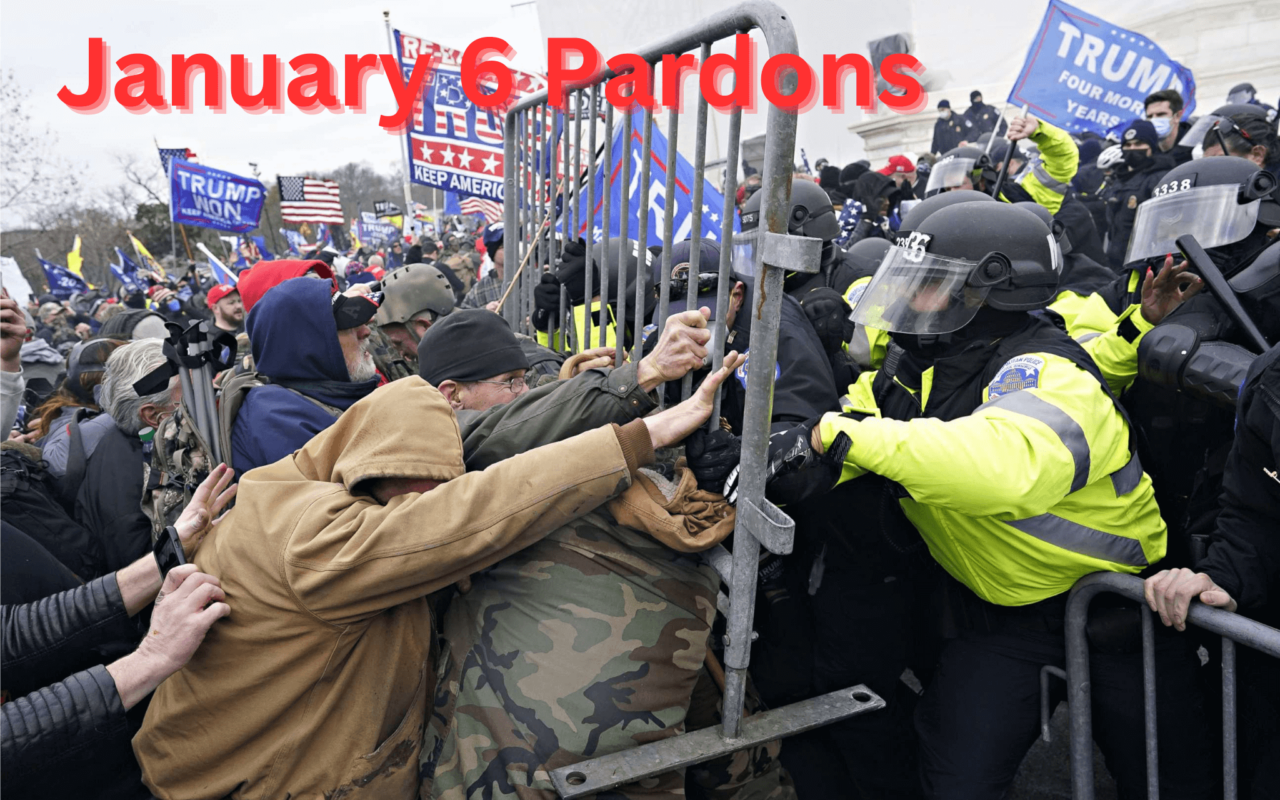
Apparently a spur of the moment decision without much thought behind it, Trump hoped to get the specter of the January 6 coup behind him — only to Streisand Effect himself into a wave of negative attention. Meanwhile, after months (and years) of slander against immigrants and supposedly violent criminal immigrants rampaging across the country, it is in fact Donald Trump himself who unleashed hundreds of convicted violent offenders back onto the streets — where they are already actively plotting revenge.
I’m old enough to remember when the GOP was supposedly the “party of law and order,” and now they are a brazenly and recklessly lawless bunch. One of few upsides is that a wave of discontent is brewing.
Federal judges slam January 6 pardons
Several federal judges who presided over multiple criminal trials of the January 6 rioters weighed in on the official record about the judiciary’s outrage over the January 6 pardons, including Tanya Chutkan, Colleen Kollar-Kotelly, Amy Berman Jackson, and Beryl Howell.
US District Judge Colleen Kollar-Kotelly had scathing words about the pardons:
“Dismissal of charges, pardons after convictions, and commutations of sentences will not change the truth of what happened on January 6, 2021. What occurred that day is preserved for the future through thousands of contemporaneous videos, transcripts of trials, jury verdicts, and judicial opinions analyzing and recounting the evidence through a neutral lens. Those records are immutable and represent the truth, no matter how the events of January 6 are described by those charged or their allies.”
Judge Amy Berman Jackson agreed that nothing could wipe away the truth about the events of that terrible day:
“No stroke of a pen and no proclamation can alter the facts of what took place on January 6, 2021.”
Judge Tanya Chutkan had strong words as well, as she dismissed without prejudice a pending case still before her:
“The dismissal of this case cannot undo the ‘rampage [that] left multiple people dead, injured more than 140 people, and inflicted millions of dollars in damage.”
Original Sources: Judges clap back to January 6 pardons
I’ve been wanting to do more of a consistent focus on going back to the original sources of the news beyond just the media coverage or commentary about them. This experiment with NotebookLM‘s curiously compelling audio generation feature provides the best of both worlds: audio commentary on the original court filings referenced by the PBS story about strident judicial warnings attached to the January 6 pardons. Let me know what you think in the YouTube comments — I’m really still just experimenting with the channel.
Effective Altruism and Longtermism are relatively recent (since the late 2000s) twin philosophical movements making the claim that, as a human species, we ought to prioritize impacting the long-term future of humanity — hundreds, thousands, or millions of years from now — over and above any concerns for actual humans alive today. Largely inspired by utilitarianism, it favors questionable metrics like “lives saved per dollar” in its quest to not just do good, but “do the most good.”
Longtermism is an outgrowth of Effective Altruism (EA), a social movement developed by philosophers Peter Singer and William MacAskill. It emphasizes the moral importance of trying to shape the far future, and adherents argue that the long-term consequences of our actions far outweigh their short-term effects because of the potential of vast numbers of future lives. In other words, future people will outnumber us at such a scale that, by comparison to this imaginary future universe, our current-day lives are not very important at all.
It has numerous and powerful adherents among the Silicon Valley elite including Trump bromance Elon Musk, tech billionaire Peter Thiel (who spoke at the RNC in 2016), indicted and disgraced crypto trader Sam Bankman-Fried, Twitter and Square founder Jack Dorsey (who is good friends with Elon), OpenAI‘s CEO Sam Altman, Ethereum founder (and Thiel fellow) Vitalik Buterin, co-founder of Asana Dustin Moskovitz, and others.
Why longtermism resonates with tech oligarchs
The tech-industrial complex is steeped in the idea of longtermism in part because it aligns so well with so many of their values:
technological optimism / techno-utopianism — the belief that technology is the solution to all of humanity’s greatest challenges
risk-taking mindset — venture capital is famous for its high-risk, high-reward mentality
Greatness Thinking — unwavering devotion to an Ayn Randian worldview in which only two groups exist: a small group of otherworldly titans, and everyone else
atomized world — social groups and historical context don’t matter much, because one’s personal individualized contributions are what make real impact on the world
The dubious ethics of effective altruism
Although it positions itself high, high above the heady clouds of moral superiority, EA is yet another in a long line of elaborate excuses for ignoring urgent problems we actually face, in favor of “reallocating resources” towards some long-distant predictively “better” class of people that do not currently exist and will not exist for thousands, millions, or even billions of years. It’s an elaborate excuse framework for “billionaires behaving badly” — who claim to be akin to saints or even gods who are doing the difficult work of “saving humanity,” but in reality are navel-gazing into their vanity projects and stroking each others’ raging narcissism while completely ignoring large, looming actual dangers in the here and now like climate change, systemic inequality, and geopolitical instabillity to name a few.
Kamala Harris should be proud of the race she ran, an almost flawless sprint through the tape at a scant 108 days’ worth of time to make her pitch to the American voters — many of whom complained that they did not know her very well as a candidate.
Disinformation continued relentlessly throughout the race — even doubling down when called out.
Not a Mandate
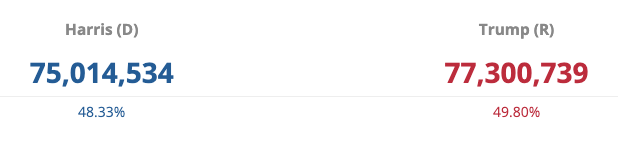
Trump’s lead keeps dropping as California and other western states finish counting their ballots after what seems like an eternity — mostly due to CA accepting ballots postmarked by election day, adding 7 days to the final count no matter what.
He dropped below 50% and never recovered — meaning that more people voted against him than voted for him.
As of the final count, his margin dropped below 1.5% — the 4th largest margin in any popular vote win in the past 100 years.
Vote Predictors
Education
Media Sources
Urban vs. Rural
I haven’t had the energy to give to this piece and I just learned about this feature of Google’s NotebookLM that can generate a podcast between 2 hosts, from your uploaded assets. I tested it out with a combined corpus of some of my own thoughts and some of the resources I found insightful.
What NotebookLM came up with was uncannily compelling. It would be something I would consider useful, particularly as a tool for initiating some of those folks less steeped in politics as I am. So I’m posting it here, in part as a signpost regarding where we’re heading — whether we like it or not.
What is a dictator, and what drives the allure of absolute power? How do dictators reshape the political and social landscapes they dominate? This post explores the intricate systems of control underpinning authoritarian governance, tracing its evolution from historical precedents to modern manifestations, and examining the far-reaching consequences for societies caught in its grip.
Dictators: Unraveling the Complexity of Authoritarian Governance
Political power represents a profound and intricate spectrum of human organizational capability, with dictatorships emerging as one of its most complex and destructive manifestations. The journey of understanding dictatorships requires a nuanced exploration that transcends simple categorizations, delving deep into the historical, sociological, and psychological landscapes that enable and sustain authoritarian control.
The Essence of Dictatorial Power
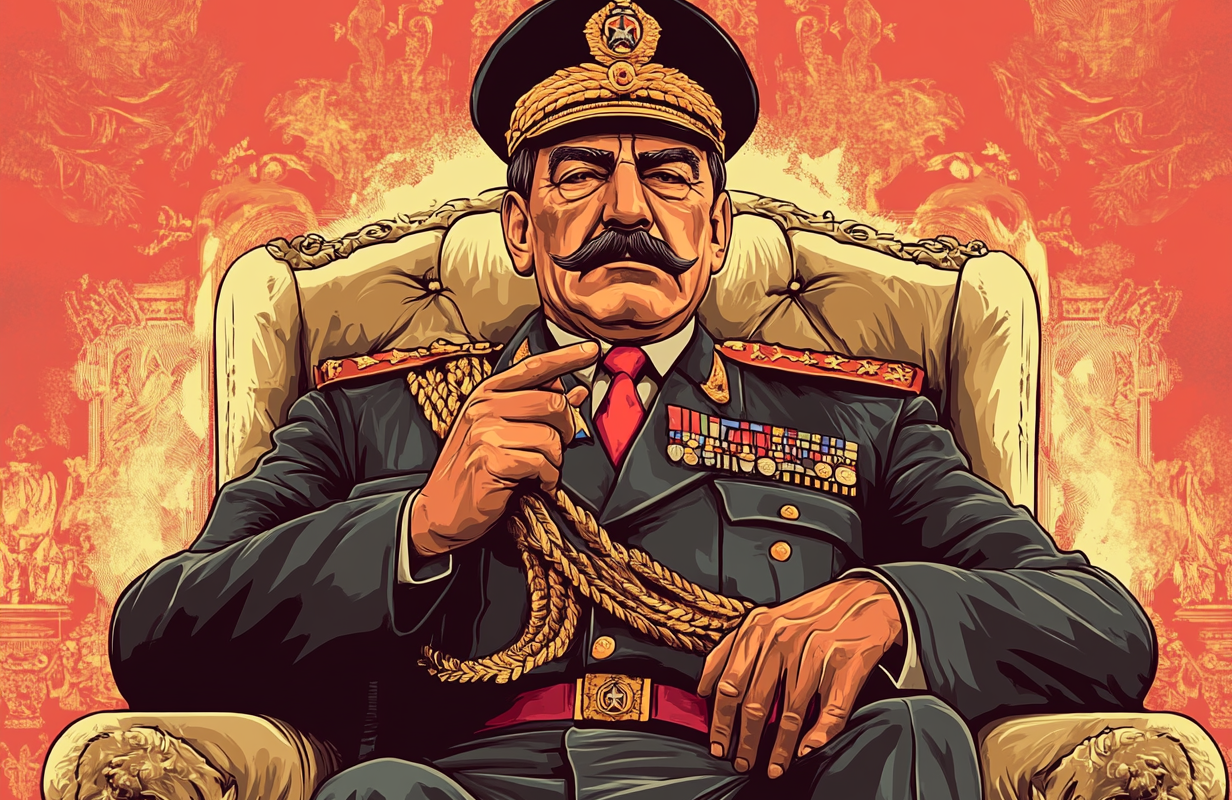
At its core, a dictator represents far more than a mere political leader. These individuals — often demagogues — are architects of comprehensive systems of control, systematically dismantling institutional safeguards and reconstructing societal frameworks to serve their singular vision of governance. Unlike democratically elected leaders constrained by robust institutional checks and balances, a dictatorship operates through a sophisticated network of power consolidation that penetrates every aspect of social and political life.
The hallmark of dictatorial governance lies not just in the concentration of power, but in the systematic elimination of alternative power structures. These leaders do not simply rule; they fundamentally reshape the entire landscape of political possibility, creating environments where opposition becomes not just difficult, but potentially life-threatening.
Douglas Rushkoff’s “Survival of the Richest: Escape Fantasies of the Tech Billionaires” delves into the unsettling strategies of the ultra-wealthy broligarchs as they prepare for global catastrophes of their own making. Drawing from personal encounters with tech magnates, Rushkoff unveils a mindset fixated on personal survival over collective well-being running rampant in Silicon Valley.
The Mindset
At the heart of Rushkoff’s critique is “The Mindset,” a belief system among tech billionaires from Peter Thiel to Elon Musk and beyond characterized by:
Extreme Wealth and Privilege: Leveraging vast resources to insulate themselves from societal collapse.
Escape Over Prevention: Prioritizing personal exit strategies rather than addressing systemic issues.
Technological Transcendence: Aiming to surpass human limitations through advanced technologies.
This worldview drives investments in elaborate escape plans, sidelining efforts to resolve the crises they anticipate. It is almost as if they are in a low-key doomsday cult, albeit one that lacks a singular leader and isn’t holed up in a compound (…yet).
The Event
The term “The Event” encapsulates potential disasters such as environmental collapse — particularly from climate change, social unrest, pandemics, and cyberattacks. They believe we should expect more bitter divisiveness, more covid-19s, and more hostile hacking in our future. The elite perceive these scenarios as unavoidable, focusing on personal survival rather than prevention.
Escape Strategies
Rushkoff examines the lengths to which the ultra-rich go to secure their futures, including:
Luxury Bunkers: Constructing fortified shelters to withstand various apocalyptic events.
These measures reflect a desire to detach from societal responsibilities and the broader human community.
The Insulation Equation
Rushkoff introduces the “insulation equation,” illustrating how billionaires calculate the wealth required to shield themselves from the fallout of their own actions. This cycle perpetuates reckless behavior and further wealth accumulation, exacerbating the very problems they seek to escape.
Critique of Capitalism and Technology
The book critiques the symbiotic relationship between capitalism and technology, highlighting:
Exponential Growth Pursuit: An obsession with endless expansion at any cost.
Shareholder Primacy: Prioritizing investor returns over societal or environmental considerations.
Erosion of Empathy: A growing disconnect between the wealthy and the rest of society.
Resource Exploitation: Reducing nature and human complexity to mere commodities.
Rushkoff argues that this dynamic fosters a dystopian future dominated by private technologies and monopolistic control — a very authoritarian direction.
Historical Context
Positioning today’s tech elites within a historical framework, Rushkoff contends they are not pioneers but continuations of past power structures that enriched themselves at others’ expense. Their perceived uniqueness is, in reality, a repetition of historical patterns, including colonialism.
Proposed Solutions
While primarily a critique, Rushkoff offers some ideas for pathways to counteract “The Mindset”:
Rejecting Doom’s Inevitability: Embracing proactive solutions over fatalistic resignation.
Supporting Local Economies: Fostering community resilience through localized commerce.
Advocating Anti-Monopoly Laws: Challenging corporate dominance to promote fair competition.
Redefining Identity: Moving beyond algorithmic categorizations to embrace human complexity.
Some critics argue these suggestions may not fully address the scale of the issues presented — but it’s much easier to be a critic than to come up with these solutions. We may not know all the answers yet as to how to curb these alarming trends, but I think Rushkoff’s point is well taken that we ought to involve ourselves in at least starting to work out the solutions with some urgency.
Ultimately, “Survival of the Richest” serves as a stark examination of the escapist fantasies of the tech elite, and an eye-opening look behind the curtains of the Great Oz’s who dot our landscape today. These wealthy tech elites have promised the moon (or Mars) without knowing whether they could really deliver — and all the while planning a Plan B in case their hare-brained schemes went belly-up. They are okay with sacrificing the vast majority of the people on the planet, as long as their underground bunkers (or better yet, private islands) are there for them.
By exposing their self-serving strategies, Rushkoff urges a shift from individualistic survivalism to collective action in tackling the many global challenges that face us today. We would be wise to heed the call and gather our tribes early and often.
Alexander Dugin, born on January 7, 1962, in Moscow, is a Russian political philosopher and strategist whose ideas have significantly influenced Russia’s geopolitical stance. His father’s ties to military intelligence likely shaped his early interest in geopolitics.
In the 1980s, Dugin was an anti-communist dissident. After the Soviet Union’s collapse, he co-founded the National Bolshevik Party with Eduard Limonov, merging elements of communism and fascism. He later pursued his own ideological path, developing Neo-Eurasianism—a vision positioning Russia as a unique civilization distinct from both Europe and Asia.
Dugin’s anti-US worldview
His 1997 work, “Foundations of Geopolitics,” outlines strategies for Russia to counter U.S. dominance, including fostering instability within the U.S. and annexing Ukraine. This book has reportedly influenced Russian military and foreign policy circles. In 2009, Dugin introduced “The Fourth Political Theory,” proposing a new ideology that integrates elements from liberalism, communism, and fascism while rejecting their negative aspects.
Dugin’s political activities include founding the Eurasia Party in 2002 and the International Eurasian Movement. While he hasn’t held official government positions, he’s been described as an informal advisor to various Russian political figures. His relationship with Vladimir Putin is subject to speculation; some have dubbed him “Putin’s philosopher,” and even “Putin’s Rasputin,” though the extent of his influence remains unclear.
Fascination with fascism
Known for his extreme views, Dugin has called for a Eurasian empire to challenge the U.S.-led world order and supported pro-Russian separatists during the 2014 Ukraine conflict. He has expressed admiration for certain aspects of fascism and Nazism, though he claims to reject their racist elements. Accusations of promoting anti-Semitic and racist ideas have been leveled against him, which he denies.
Internationally, Dugin’s ideas have found traction among far-right and far-left groups. In 2014, he was placed under U.S. sanctions due to his role in the Ukraine conflict and has been banned from entering several countries, including Ukraine.
In August 2022, Dugin’s daughter, Darya Dugina, who was also involved in promoting his ideological work, was killed in a car bombing near Moscow. While Dugin himself was believed to be the intended target, the incident brought renewed international attention to him and his ideas.
Understanding Dugin’s philosophy provides insight into certain strains of Russian nationalist and anti-Western thought, even as his more extreme positions remain outside the mainstream.
What is fascism? Fascism is a far-right political ideology that emerged in the early 20th century, primarily in Italy under Benito Mussolini. It advocates for a centralized, authoritarian government, often led by a dictatorial figure, and places a strong emphasis on nationalism and, sometimes, racial purity. Fascism rejects liberal democracy, socialism, and communism, instead promoting a form of radical authoritarian ultranationalism. It often involves the suppression of dissent, the glorification of war and violence, and the demonization of perceived enemies, whether they be internal or external.
Historical context of fascism
Fascism gained prominence in the aftermath of World War I, a period marked by social upheaval, economic instability, and a crisis of traditional values. Mussolini’s Italy was the birthplace of fascism, but the ideology found its most extreme and devastating expression in Nazi Germany under Adolf Hitler. The Holocaust, the invasion of multiple countries, and the atrocities committed during World War II, including genocide, are dark chapters directly associated with fascist ideology. After the war, fascism was discredited but not eradicated. Various forms of neo-fascism, far-right, and alt-right ideologies have emerged in different parts of the world, although they often avoid the label of “fascism” due to its historical baggage.
Psychology of adherents
Understanding the psychology of those who adhere to fascist ideologies can be challenging but is crucial for a comprehensive view. Several factors contribute to the appeal of fascism:
Social Identity: People often gravitate towards ideologies that offer a strong sense of community and identity. Fascism’s emphasis on nationalism and often ethnocentrism can be attractive to those feeling alienated or marginalized.
Economic Insecurity: Fascism often gains traction during times of economic uncertainty. The promise of stability and prosperity can be enticing to those who feel left behind by other political systems.
Fear and Prejudice: Fascist ideologies often exploit existing prejudices, whether they be racial (like white nationalism), religious (like Christian nationalism), or otherwise, to create an “us versus them” mentality.
Desire for Order: The authoritarian nature of fascism can appeal to those who value social order and are willing to trade off democratic freedoms for promised or perceived safety and stability.
Charismatic Leadership: Fascist movements often rely on charismatic leaders who can galvanize public sentiment and offer simplistic solutions to complex problems. So do cults.
Core Ideological Pillars of Fascism
Ultranationalism At the heart of fascism lies a rabid nationalism that elevates the nation above all else, often cloaked in exclusionary rhetoric that defines “the nation” by narrow ethnic, racial, or cultural terms.
Authoritarianism Fascist regimes hinge on the power of a singular, dictatorial leader who positions himself as the embodiment of the national will.
Totalitarian Control A fascist state doesn’t just seek influence; it seeks control over every corner of public and private life, leaving no room for dissent.
Rejection of Democracy Inherently hostile to liberal democracy, fascism dismantles pluralism, erodes individual rights, and scorns any notion of democratic checks.
Cult of the Leader Charismatic, “infallible,” and above reproach, the fascist leader becomes a central figure to be idolized and obeyed without question.
Social and Cultural Machinery of Fascism
Militarism Fascism lionizes military power, often celebrating conflict and expansionism as tools for national rejuvenation.
Social Darwinism Fascist ideology thrives on a belief in social hierarchies, arguing that the strong must dominate the weak in a brutal, zero-sum worldview.
Anti-intellectualism Ideas and arts that challenge fascist ideals are often met with disdain or outright suppression. Thought and expression are sacrificed on the altar of ideology.
Sexism and Rigid Gender Roles Fascist movements are overwhelmingly male-dominated and sexist, perpetuating restrictive gender norms and relegating women to traditional roles.
Scapegoating A classic tool: fascism thrives on the creation of enemies, identifying scapegoats—whether minorities, intellectuals, or political dissidents—as a unifying target for the masses.
In-Group/Out-Group Polarization
Fascist movements masterfully exploit humanity’s tribal instincts by constructing rigid boundaries between “us” (the pure, virtuous, authentic people) and “them” (the corrupted, dangerous, foreign others). This binary “us vs. them” worldview transforms complex social realities into simplified moral battlegrounds where compromise becomes betrayal, dialogue becomes weakness, and the out-group is systematically dehumanized. By constantly reinforcing these divisions through rhetoric, symbolism, and policy, fascist leaders ensure that followers’ primary loyalty shifts from universal human values to exclusive group membership, making previously unthinkable actions against the “other” not only acceptable but morally imperative.
Political and Economic Playbook of Fascism
Corporatism Fascism tends to ally with powerful business interests, intertwining the state with corporate power to mutually reinforce each other’s agendas.
Suppression of Labor Labor unions and workers’ rights are among the first casualties, often stifled or eradicated in a fascist regime’s march to consolidate power.
Media Domination Fascists aim to monopolize information, using propaganda and disinformation to construct a controlled narrative that drowns out dissent.
Obsession with Security Fear is weaponized. Fascists often amplify threats, real or imagined, to justify repressive measures under the banner of “national security.”
Methods and Tactics of Fascism
Violence as a Political Tool Organized violence isn’t just incidental to fascism—it’s woven into the strategy, deployed to silence opposition and enforce control.
Manipulation of Truth Fascism operates in a realm where facts are malleable. Myths, lies, and distorted realities are crafted to serve political ends.
Populist Rhetoric Fascist leaders often adopt populist language to appear as champions of “the people,” casting themselves as saviors from elites or corrupt institutions.
While not all these elements must be present to identify fascism, a critical mass of these characteristics—especially the core ideological traits—serves as a clear signal of fascist leanings. Fascism’s true face is layered, but its essence is unmistakably authoritarian, divisive, and repressive.
What is fascism? Fascism is a far-right ideology that has had a profound impact on global history and continues to exist in various forms today. Its appeal lies in its ability to offer simple solutions to complex problems, often at the expense of individual freedoms and ethical considerations. Understanding the historical and psychological factors that contribute to the rise of fascism is crucial for recognizing and combating it in the modern world — where it is once again on the rise.