Politics

Alex Pretti just before he died at the hands of federal agents in Minneapolis

There was a weird controversy that set in after the events of the white nationalist Unite the Right rally in Charlottesville, VA in which a neo-Nazi 8chan bottomfeeder killed Heather Heyer by running her over with his car, while injuring 19 others. It was a shocking moment for the nation and all Trump had to say about it was they condemned violence “on many sides, on many sides” — though there were only two sides, and only one of those two sides had killed someone.

A couple of days later he managed to get through a scripted teleprompter statement explicitly condemning white supremacists and neo-Nazis only to walk it back again and then double down on it the following day, saying “The statement I made on Saturday, the first statement, was a fine statement… What I’m saying is this: You had a group on one side and you had a group on the other, and they came at each other with clubsβ€”and it was vicious and it was horrible. You had some very bad people in that group, but you also had people that were very fine people, on both sides.”

First of all, both sides did not have clubs. One side had tiki torches and a car that killed someone while the other side was armed with hymnals and homemade signage. Secondly — where were those “other” fine people? The vagueness allows for almost any interpretation — were some of the people with clubs “very fine” despite beating others about the head? Were some of the people who didn’t have clubs themselves but were cheering on the people with clubs “fine people”? Maybe there was a gathering of small invisible fairies merely caught up in the shuffle and Trump wanted to just make sure that possibility didn’t get overlooked and this innocent group of delicate souls unnecessarily besmirched?

The primary chosen “debunk” that detractors ended up going with from the wet clay of Trump’s stilted statement alleges that the *other* side Trump meant by “both” were simply innocent local townsfolk objecting to the removal of a statue of their beloved hero Robert E. Lee. Besides the fact that the right-wing has failed to this day to produce a shred of evidence that such people were even there, and the inconvenient reality that the rally was openly marketed as a white supremacist event, organized by avowed white nationalist organizations, it doesn’t even matter if they could produce such evidence — because those people are still not very fine! Robert E. Lee was a traitor to the United States and exalting him is not good!

In fact, Robert E. Lee was a terrible human being whose noble cause was maintaining his ownership of other human beings — as well as a shitty general who paid zero attention to the battle after giving a set of static orders and hoping God would sort out the rest. All he had to do was defend the borders of his baby white homeland, but he was an arrogant showboat who couldn’t keep it in his pants and had to go attacking Pennsylvania for no good reason.

He was also a senseless butcher who had the highest casualty rate of the entire war, being so reckless with his soldiers’ lives that he may as well have fed them into a woodchipper. He chewed through his entire army of 100,000 only 14 months into the campaign and by the war’s end had effectively annihilated his original army multiple times over through cumulative losses, as well as obliterating a whopping 30% of the total Confederate forces overall despite leading only one army in one theater.

He was overconfident and mean-spirited like the rest of his Confederate compadres, feeling that his natural superiority would win the day without much effort. He was trounced and the moral bankruptcy of the Confederacy defeated, but to this day the spirit of the “Lost Cause” animates an unholy miasma of sadistic trolls, anti-government whackjobs (who nevertheless guzzle Trump’s emissions), and stone cold psychopaths who feel the “Cause” — aka white supremacy — is still worth fighting for.

The Confederacy lost. But the ideology β€” the conviction that some people are simply born to rule over others, that cruelty is strength, that losing doesn’t mean you were wrong β€” has never died. It just went underground, waiting, simmering. And in Charlottesville, it walked openly in the streets again — wearing khakis and carrying torches, feeling emboldened enough to show its face.

This movement of treasonous trolls had to lick its wounds and bide(n) its time between 2021 and 2025, but true to his word (for once), when Senile Orange Grandpa conned enough noobs to retake the White House in 2024, he pardoned all the January 6 rioters on day one. Including, of course, hundreds of avowed white nationalists from groups he had claimed — fleetingly — to disavow. Including their leaders, among the rare breed of individuals who have ever been convicted of seditious conspiracy in the history of this country, each serving up to 20-year sentences. And including violent thugs who beat Capitol police officers with bats, flagpoles, their own stolen shields, and numerous blunt objects on hand.

People who maced, pepper sprayed, bear sprayed, and electrocuted law enforcement with their own tasers. Folks who committed the obvious crime, broadcast live to the whole world, of breaking and entering at multiple entry points, including overwhelming a line of officers with a physical siege — then rampaged through the halls of Congress defiling, destroying, and stealing irreplaceable historical objects and defecating on lawmakers’ desks. And after all this, they fled the scene and hid from law enforcement — despite having collectively livestreamed the entiretiy of it and posting thousands of “trophy shots” on social media themselves, on top of being filmed by TV cameras from news organizations around the globe.

Then they lied about it. They continue to lie about it. President Trump continues to lie about it. The Republican Party continues to lie about it. A day which resulted in the deaths of 5 law enforcement officers and injuries to 150 more members of the “blue line.”

And yet.

We are to believe.

That Alex Pretti deserved to die because law enforcement found him “threatening.”

While standing at the side of the road, with a hand waved in a gesture of surrender, and looking away from the scene over his shoulder out of concern for an individual in distress.

No. We call bullshit. We know these ghost skins have no trouble killing one of their own from the killing of Renee Good, regardless of whatever Great Replacement idiocracy they espouse about the white race — if you get in their way, killing you is perhaps the one unbiased act they will perform free of bigotry to anyone who disagrees with them. Because if they happen to possess an ounce of shame, they never let a molecule of it leak out in public.

People with no shame may skirt the technical bounds of the law at times in order to prolong their abuse of the system, but completely disrespecting the spirit of the law inevitably leads them to break it. If they get away with it, they do it more. If they get caught, they double down. Blame the victim. Blame the media. Blame Biden. Blame Obama. Blame Clinton. Assert absurd moral authority based on a trash heap ideology that shifts like a toxic oil spill and makes no sense. State that plainly true facts are wrong and obviously thin lies are inarguable truths. Behave like the most morally depraved psychopaths online and in public, exalting violence and relishing petty revenge, smearing the names of random bystanders they shot in the street mere minutes ago, and generally treating human life as political toys for them to play with, or a casual game of Call of Duty IRL — all in the name of Jesus.

It is vile. It is a blackened pile of steaming horseshit smeared across the nation. It is a moral stain being done in our name that we will never, ever, ever, ever in the history of history live down — that this is happening here. That we allowed this to happen here. That we are allowing this to happen here. We must not allow this to happen here.

Read more

Kristie Noem in her ICE Barbie cosplay outfit, between 2 thugs, saying "The only thing I regret is not being there to shoot the bitch myself"

The shooting in Minneapolis last week of Renee Good, a 37-year-old wife and mom to 3 kids, hit me really hard. It’s not just that she was in a lesbian couple like me, with kids from previous husbands — and that I would be the one in the passenger’s seat. It’s because of the brazenness — pride, even — of the officer who ended her life cavalierly and without remorse.

The smear campaign about this woman nauseates me deeply — it began mere milliseconds after her death when the officer who shot her at point-blank range yelled “fuckin’ bitch!” after her vehicle and escalated extremely quickly to the sitting President, Vice President, and Homeland Security Secretary calling her a “domestic terrorist” despite the physical impossibility of being able to confirm that kind of information so quickly.

It is clear that agent Jonathan Ross escalated the situation himself. He broke DHS policy by putting himself in the path of a moving vehicle. And he should not have had his cellphone out, occupying his other hand, when he drew his weapon — you need the hands to be unobstructed to maximize your ability to handle any situation that may emerge.

He claimed he was afraid for his life — when? Show me on tape at which moment(s) in time this agent appears to behave an a fearful manner, because I do not see it. There are the moments when he’s calmly walking around the entire vehicle recording on his cellphone, moments when he has calmly drawn his gun and is pointing it at Renee Good, and moments where he is shouting and shooting bullets into her head. Where is the fear? He doesn’t run or dive; he doesn’t scream; he doesn’t call for help; he doesn’t show any surprise. He doesn’t seem fearful — he seems in control of the situation at all times, including when he pulls the trigger 3 times to take someone’s life as punishment for being cheeky.

Continue reading The killing of Renee Good
Read more

They do not care about you — you are expendable to them. They do not GAF. Especially now with AI — they are gonna replace you anyway brah! At best they are biding time putting you on a drip feed of murder porn and revenge fan fic until the moment they are completely certain they’ve hijacked the electoral system at which time you too, buddy, will be shown the airlock into a deep space void no one will ever hear you from because they have all the powers of the earth to override whatever puny narrative you may have had for yourself.

You will be crushed like a bug 1000x tinier than Kafka’s roach — millions at a time under the heels of casually sadistic billionaires many of whom were Democrats up until 5 minutes ago when someone offered them a deal to cut their tax bill in exchange for a measley few million dollars. It’s “irrational” to not take the deal. You have to take the deal. Your competitors have taken the deal. You’d be the only chump not taking the deal. It’s the Art of the Deal, right?

Deals are all that matter. Transactionality is all there is — including reducing the beautiful, awe-inspiring teachings of Jesus to a mere materialistic creed, draped in a flag, shouted from a bullhorn, fired into an already capsized boat, and shot into the heads of innocent bystanders if they don’t comply with conflicting directives.

Read more

Jack Smith, Special Prosecutor in two federal cases brought against Donald Trump

Five years ago today, a violent mob stormed the United States Capitol in an attempt to overturn a free and fair election. The man who incited them has since been re-elected president, which scuppered the investigation into him by Special Counsel Jack Smith. If that whiplash isn’t enough to give you vertigo, consider this: we now have sworn testimony, under oath, from the prosecutor who investigated Trump laying out exactly why his office believed they could convictβ€”and why they were stopped.

Former Special Counsel Jack Smith’s December testimony before the House Judiciary Committee is the closest thing we’ll get to the trial that should have happened. In it, Smith methodically dismantles every defense Trump and his allies have offered, explains how the case was built on testimony from Republicans willing to put country over party, and makes clear that the evidence of Trump’s guilt wasn’t circumstantialβ€”it was direct.

In this post, I’m breaking down the key takeaways from Smith’s testimony, sharing one of my AI #MiniHistory videos marking the anniversary, and giving you a way to interrogate the evidence yourself through an interactive NotebookLM bot. Because if there’s one thing the incoming administration is counting on, it’s that you won’t have time to read 255 pages of testimony. Let’s make sure they’re wrong.

January 6 in 40 seconds

But first, a J6 refresher course — again, for busy folks.

I’ve been into making these little AI #MiniHistory videos with Glif agents, trying to tease out important signposts along our road to dictatorship and other interesting moments in history to highlight. Here’s the one I did for today and the 5th anniversary of January 6, 2021:

Trump has still never been held accountable for his actions that day — the election of 2024 put a boot in the face of any hope for justice prevailing against the Chief Insurrectionist. Nevertheless, Jack Smith replanted a tendril of hope in his mid-December testimony to Congress with a scathingly clear broken record message that Trump was guilty and they had all the receipts they needed to prove it and then some. It lays down new tracks in the Congressional record that will be impossible to expunge, regardless of whatever trash MAGA fairy tale of J6 the right-wing goons decide to slather on the White House website.

Jack Smith testifies to Trump’s guilt “beyond a reasonable doubt”

In eight hours of testimony before the House Judiciary Committee on December 17, 2025, former Special Counsel Jack Smith laid out why his office was prepared to convict Donald Trump on federal charges. Speaking under oath in a closed-door deposition β€” the Republicans who now hold the gavel had denied his request to testify publicly (after crying decades of crocodile tears over ‘transparency’?? truly?) β€”Smith called Trump “the most culpable and most responsible person” in the criminal conspiracy to overturn the 2020 election.

Continue reading Remembering January 6: Here’s how Jack Smith saw it
Read more

Liberal Tears illustrates the sneering cynicism of the right wing who refuse to articulate political values

There’s something conspicuously absent from American political discourse: actual discussion of values and the morals, ethical choices, and beliefs that go into the creation of good government policy.

Think about the last major political debate you watched, or the last campaign ad that stuck with you. How much of it was about what government should do versus who you should hate? How much was articulating a vision for society versus performing dominance over the out-group?

This isn’t an accident. It’s a strategy.

When your policy positions are wildly unpopular β€” when majorities oppose you on healthcare, taxation, abortion, climate change, guns, and wages β€” you don’t engage on the substance. You change the subject. You make politics about identity, grievance, and tribal belonging. You turn every election into a referendum on vibes rather than vision.

The American right has become extraordinarily sophisticated at this evasion. They’ve built an entire media ecosystem designed not to argue for right-wing values, but to ensure those values never have to be argued for at all. And the Trump administration is chock full of people from that media ecosystem.

The Polling Problem

Here’s the uncomfortable reality the modern right has to navigate, and we need to trumpet: their actual policy preferences are not popular.

Exposed to the individual provisions of the Affordable Care Act, majorities supported them β€” even among Republicans. Majorities support raising taxes on the wealthy, protecting Social Security and Medicare, acting on climate change, keeping abortion legal in most cases, and implementing universal background checks for gun purchases. On issue after issue, when you strip away the partisan framing and ask people what they actually want government to do, the “conservative” position loses.

This creates a strategic problem. You can’t win elections by articulating positions most people reject. So you articulate… something else.

The Retreat from Argument

Meanwhile, the right-wing has indefensible values, which is why they no longer even bother to try to articulate them. Instead, they express them obliquely through “memes” and mores that evince cruelty, bigotry, narcissism, domination, supremacy, greed, selfishness, and contempt for vulnerability β€” all while maintaining plausible deniability through irony, “just asking questions,” and the ever-ready accusation that anyone who names the pattern is being hysterical or unfair.

This is the function of the perpetual rhetorical shell game: you can’t pin down a position that’s never stated plainly. The cruelty gets expressed through policy and aesthetic, but when challenged, retreats behind procedural objections or “economic anxiety.” The bigotry shows up in who gets mocked and who gets protected, but is never admitted as such β€” it’s always reframed as “common sense” or “tradition.”

Continue reading The Quiet Part Loud: Why the right stopped talking about values
Read more

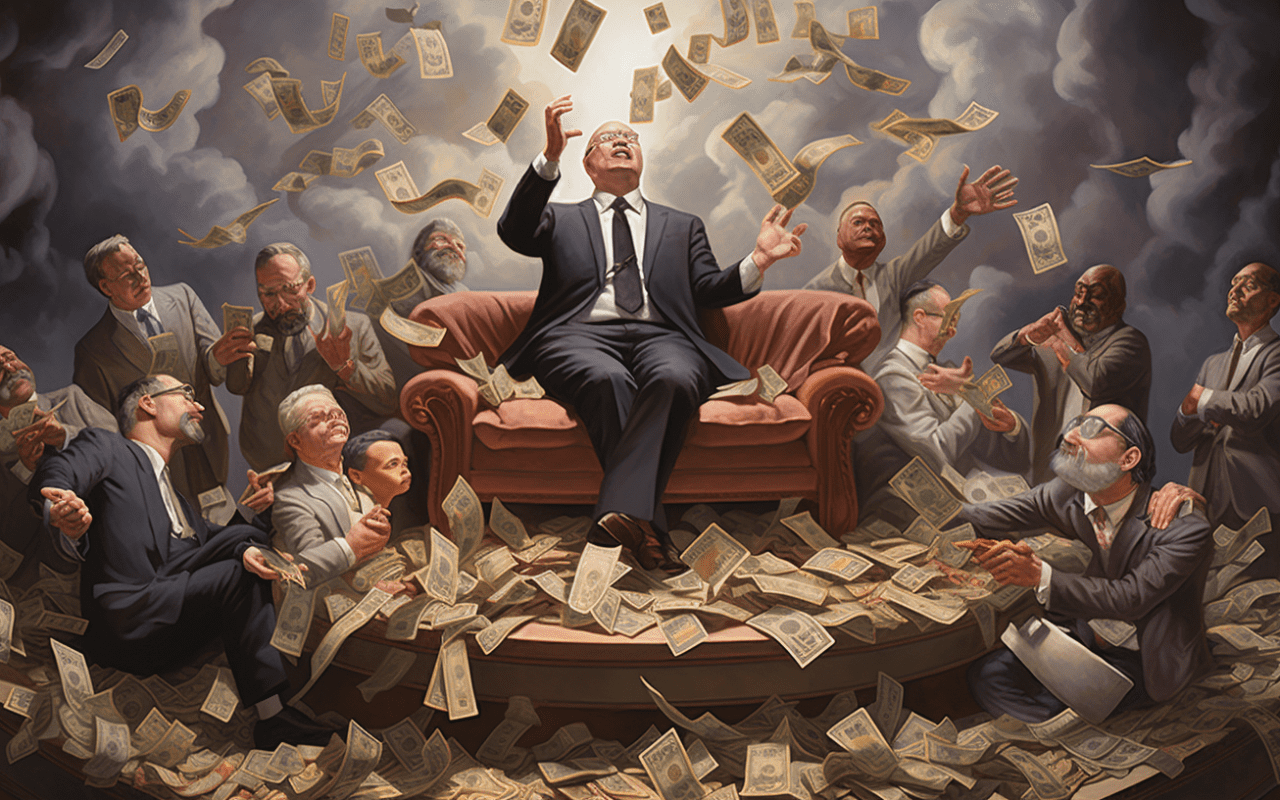
Wealth Cult -- rich men behaving badly, by Midjourney

A network of exceedingly wealthy individuals and organizations have channeled their vast fortunes into influencing American politics, policy, and public opinion — they’ve formed a wealth cult. And they’ve leveraged that cult and its considerable fortune to influence and in many ways dramatically transform American politics.

The most succinct way I have come up with to explain American politics is that the wealthy are dividing us over race and religion. Today far more openly than in the past, where much oligarch shadow influence was delivered via dark money kept intentionally untraceable back to its origins.

The term “dark money” refers to political spending meant to influence the decision-making and critical thinking of the public and lawmakers where the source of the money is not disclosed. This lack of transparency makes it challenging to trace the influence back to its origins, hence the term “dark.”

And, it is dark indeed.

Wealth cult anchors the trench coat

The Wealth Cult is one of 3 primary groups or clusters supporting the right-wing and generally, the Republican Party. It anchors the trench coat by funding the 2 cults above it: the Christian Cult, and the White Cult.

Its story is stealthy and significant.

A bunch of billionaires toast themselves to themselves, by Midjourney

The wealth cult has funded disinformation campaigns, the spread of conspiracy theories, created fake social movements through astroturfing, enabled violent extremists to attack their country’s capitol, aided and abetted a convicted felon, cruelly deprived vulnerable people (especially immigrants, poor people, and women) of the kind of state aid granted generously throughout the developed world, bribed regulators, rigged elections, crashed economies, and on and on in service of their extremist free market ideology beliefs (which, by the way, have resulted in catastrophic market crashes every single time).

They believe in “makers and takers,” or Mudsill Theory, as it was once called by pedophile and racist Senator and slavery enthusiast James Henry Hammond. Some people were born to serve others, they say. Hierarchies are natural, they claim. Wealthy men should make all the decisions — because that’s what’s best for everyone, they say in paternalistic tones.

I don’t buy it. I believe all men are created equal. So did a certain Founder of our country.

Continue reading Wealth Cult: The oligarchs influencing American politics from the shadows
Read more

Slavery was the central question leading to the Civil War according to Abraham Lincoln, depicted here in a mini history video

But you don’t have to take our word for it — just ask the Vice President of the Confederacy what his reasons were in the infamous Cornerstone Speech of 1861, just a few weeks before the Confederates fired on Fort Sumter:

“The new [Confederate] constitution has put at rest, forever, all the agitating questions relating to our peculiar institution β€” African slavery as it exists amongst us β€” the proper status of the negro in our form of civilization. This was the immediate cause of the late rupture and present revolution . . . The prevailing ideas entertained by . . . most of the leading statesmen at the time of the formation of the old constitution, were that the enslavement of the African was violation of the laws of nature; that it was wrong in principle, socially, morally, and politically. . . Those ideas, however, were fundamentally wrong. They rested upon the assumption of . . . the equality of races. This was an error . . .

Our new government is founded upon exactly the opposite idea; its foundations are laid, its corner–stone rests upon the great truth, that the negro is not equal to the white man; that slavery β€” subordination to the superior race β€” is his natural and normal condition.”

β€” Alexander H. Stephens, March 21, 1861, reported in the Savannah Republican, emphasis in the original

The “States’ Rights” Contradiction

One of the clearest ways to prove the war was about slaveryβ€”and not abstract “states’ rights”β€”is to look at how the Confederacy treated the rights of Northern states.

  • The Fugitive Slave Act Paradox:Β Southern leaders explicitly opposed “states’ rights” when Northern states attempted to exercise them. When Northern states passed “Personal Liberty Laws” (exercising their sovereign right to not enforce federal slave-catching laws), Southern states demanded theΒ Federal GovernmentΒ override these state laws.​
  • South Carolina’s Declaration:Β In its “Declaration of Causes,” South Carolina specifically lists theΒ failureΒ of Northern states to enforce the federal Fugitive Slave Act as a primary grievance. They were not fighting for the right of states to choose their own laws; they were fighting for the federal government to enforce slavery acrossΒ allΒ states

The Rejection of the “Forever” Amendment (Corwin Amendment)

Perhaps the most damning evidence is the South’s rejection of the Corwin Amendment.

  • The Offer:Β In a last-ditch effort to prevent war, the Northern-controlled Congress actuallyΒ passedΒ a Constitutional Amendment (the original 13th Amendment) in early 1861. It would have protected slaveryΒ foreverΒ in the states where it already existed, guaranteeing the federal government could never abolish it.​
  • The Rejection:Β If the South were seceding simply to “protect their property” or “defend against Northern aggression,” they would have accepted this victory. Instead, they rejected it. Why? Because the amendment only protected slaveryΒ where it was, but did not guarantee itsΒ expansionΒ into new western territories. The South seceded not just to keep slavery, but to ensure it could grow into a continental empire
Continue reading Was the Civil War about slavery? Yes.
Read more

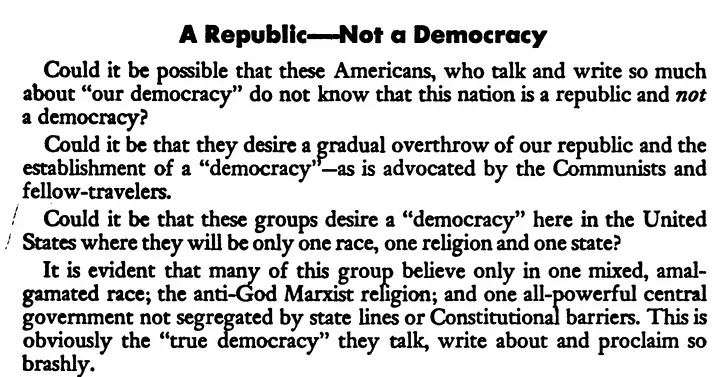
You’ll hear a common retort on the extreme right that now holds sway in the mainstream Republican Party, in response to protests about the dismantling of democracy in this country — that we’re “a republic, not a democracy.” Right off the bat, a republic is a form of democracy — so they are claiming something akin to having a Toyota and not a car. It’s a rhetorical trick, in which people who fully know better are hacking the simple ignorance of civics and basic political philosophy of the right-wing political base.

But it manages to get worse — the origins of the bully taunt “a republic, not a democracy” go way back — they’re actually located in the segregationist movement. Specifically, the concept comes from the pro-segregation book You and Segregation, written in 1955 by future Senator Herman E. Talmadge.

John Birch Society loonies laud “a republic, not a democracy”

The “republic, not a democracy” meme would go on to be featured in the John Birch Society Blue Book — an organization so toxically extremist that even conservative darling William F. Buckley distanced himself from them. They feared the idea that increasing democratization would be a shifting balance of power away from white conservative men, and they spun numerous conspiracy theories to explain this as the result of nefarious undercover plot to overthrow Western Civilization.

In reality, the trend towards greater democracy is something the Founders themselves envisioned — though they likely could not have imagined how it would turn out. They believed fiercely in self-governance, and a clear separation from the tyranny of kings.

Continue reading “A republic, not a democracy” came from segregationists
Read more

the golden rule as a key moral compass

Watch: The Golden Rule — A Deep Dive into the Ethic of Reciprocity

Video Length: 6:36

⏱️ CHAPTERS:

  • 0:00 – Introduction: One Rule to Guide Us All?
  • 1:15 – Golden vs Silver: The Critical Distinction
  • 1:54 – Around the World in 7 Religions
  • 3:10 – Love as Action: The Good Samaritan & Rabbi Weiser
  • 4:38 – Where the Rule Breaks Down (Shaw & Kant’s Challenges)
  • 5:39 – Why It Still Matters: The Empathy Engine

What Is the Golden Rule?

The Golden Rule is a moral maxim that transcends religious, cultural, and philosophical boundaries. At its core, this essential mental model for the world states: “Treat others as you would like to be treated.” This deceptively simple principle serves as a moral compass that has guided human interactions across millennia and continents.

The Critical Distinction: Golden vs. Silver

Not all versions of this rule are created equal. The key difference lies in whether the rule commands action or restraint:

The Golden Rule (Positive Form):

  • “Do unto others as you would have them do unto you”
  • Demands proactive kindness and active good
  • Found in Christianity and Islam’s teachings
  • Requires you to get up and act

The Silver Rule (Negative Form):

  • “Do not do unto others what you would not have them do unto you”
  • Advocates restraint from harmful actions
  • Found in Confucianism, Judaism, Hinduism, and Buddhism
  • Can be followed through non-action

This distinction is crucial: you can follow the Silver Rule perfectly by sitting on your couch and doing nothing. The Golden Rule demands that you actively engage with the world.

A Universal Code: The Rule Across Cultures

What makes the ethic of reciprocity so remarkable is its near-universal appearance across human civilization:

Judaism: Hillel the Elder declared this the entire Torah in a nutshellβ€”the negative version focused on avoiding harm.

Christianity: Jesus framed it as the Greatest Commandment, the positive version demanding active love.

Continue reading The Golden Rule
Read more

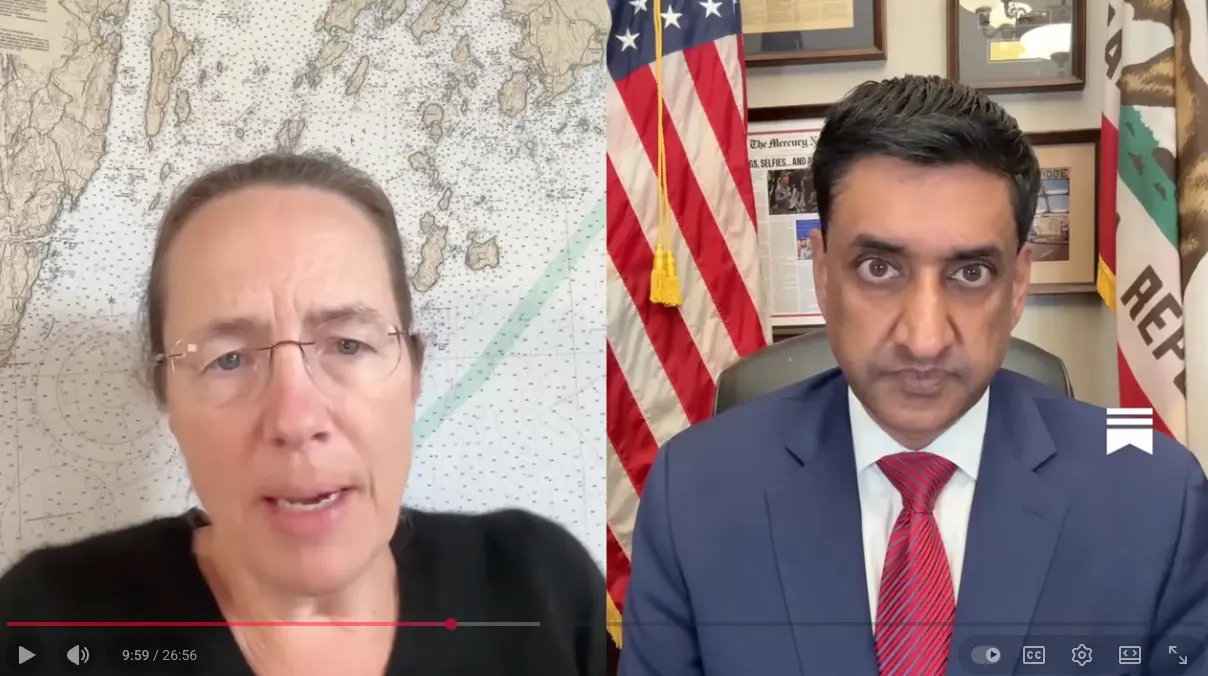
progressive capitalism as articulated by Ro Khanna as interviewed by Heather Cox Richardson

After last night’s solid trouncing of the entire GOP steez by the Democrats in elections coast to coast (p.s. don’t miss Zohran Mamdani’s victory speech — it’s a banger), the time is ripe for articulating a new vision of the American Dream. And the vision of progressive capitalism is sounding like the right tone for a nation state that wishes to remain the leader of the free world.

I believe there is pent-up energy in the Democratic reservoir — with a deep bench of political talent of people who actually seem to care about other people. And who actually understand and exalt the real promise of America — as a beacon of hope for a new experiment in self-governance — if we can keep it.

One of those politicians is Ro Khanna, who represents the bulk of Silicon Valley in his California district. He recently sat down with my favorite historian of all time, Heather Cox Richardson, to talk about the vision of progressive capitalism for lifting us out of this moment of reactionary pessimism and “nostalgia populism” — a promise he says is fake in the age of AI because it won’t generate real opportunity (I agree). The following video is a great introduction to this promising vision for a way out of the quagmire we feel ourselves in.

What is progressive capitalism?

Progressive capitalism summary

1. What Khanna means by β€œprogressive capitalism”

  • Khanna argues that place matters: for decades, US policy has let capital go wherever it wants and told people in hollowed-out towns, β€œmove if you want opportunity.”
  • His version of progressive capitalism says:
    • Markets and free enterprise are valuable for freedom and innovation, but
    • Government must intentionally invest in people’s health, education, and communities so they can actually develop their capabilities where they live.
  • He calls for a national economic development strategy β€” a kind of β€œMarshall Plan for the United States” β€” tailored to each region:
    • Advanced manufacturing in some places
    • Trade schools and tech institutes (AI, data, cyber) so people don’t have to leave small towns
    • Jobs in healthcare, education, childcare, and elder care

2. Care economy and tech economy, not either/or

  • Heather Cox Richardson pushes him on care work (childcare, elder care, education), noting it’s already present in every community, dominated by women and immigrants, and chronically underinvested in.
Continue reading Progressive Capitalism: A vision for the future
Read more

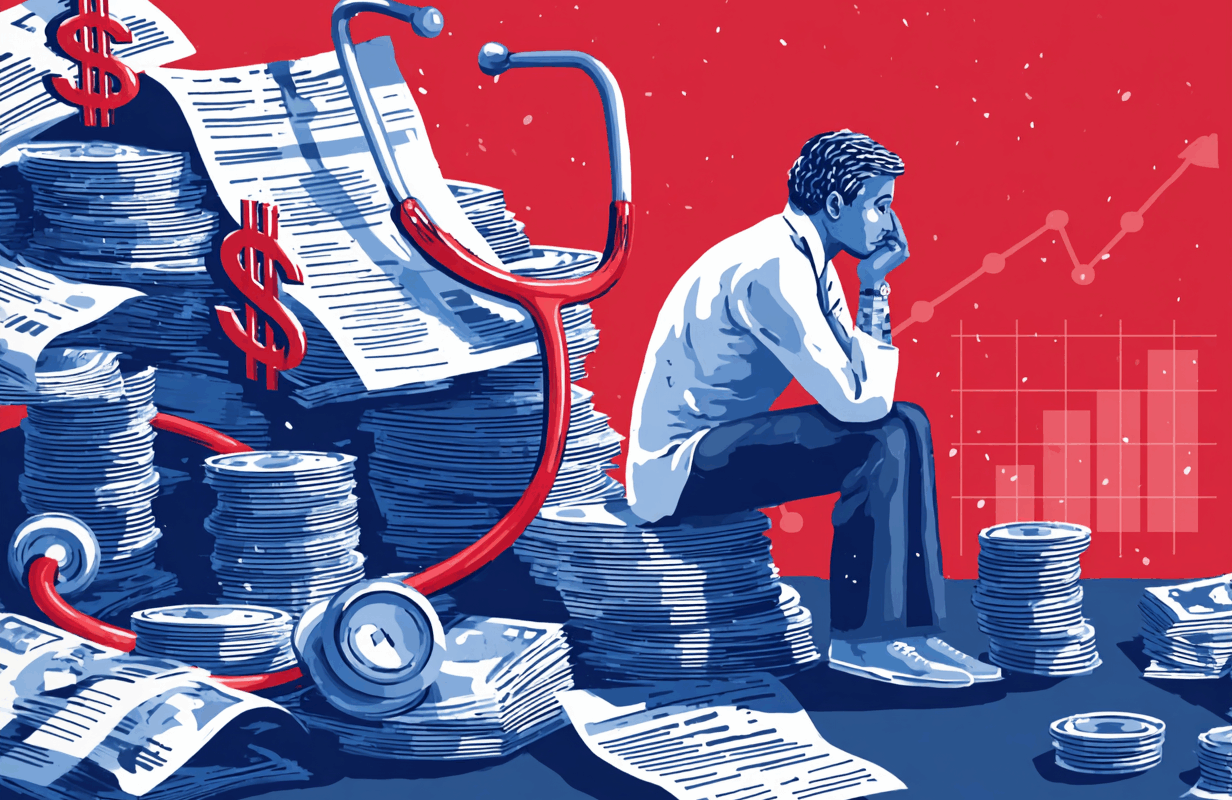
why is health care so expensive, illustrated by a man sitting on a pile of medical debt

Why Healthcare Costs Stay Highβ€”And How the ACA Actually Helps Lower Them

America’s health care cost problem has a perverse logic at its core: we’ve committed to providing emergency care to everyone who needs it, regardless of ability to pay — but we’ve historically failed to ensure people have access to the preventive and primary care that would keep them out of astronomically expensive emergency rooms in the first place.

This contradiction creates a predictableβ€”and expensiveβ€”spiral. Uninsured patients, lacking regular access to doctors, delay care until conditions become acute. They end up in emergency departments, where hospitals are legally required to treat them under EMTALA (the Emergency Medical Treatment and Labor Act — signed into law by Ronald Reagan in 1986). Those visits generate massive uncompensated costs that hospitals pass along to everyone else: insured patients through higher prices, insurance companies through higher premiums, and taxpayers through increased public spending.

The Affordable Care Act was designed, in part, to break this cycle by attacking the problem at its source. The logic is straightforward: expand insurance coverage, and you enable people to seek preventive and primary care before minor issues become medical emergencies. Fewer emergency visits mean less uncompensated care, which translates to lower costs for hospitals, taxpayers, and the broader healthcare system.

And the data backs this up. Research consistently shows that after the ACA’s implementation, emergency department visits by uninsured patients declined significantly. More people with insurance meant more people managing chronic conditions, catching health problems early, and avoiding the emergency room when they had other, more appropriate care options. The shift from reactive emergency care to proactive preventive care doesn’t just improve health outcomesβ€”it fundamentally reduces the financial burden on everyone in the system.

an infographic showing some of the key outcomes of the ACA health care law including lower taxpayer costs and more preventive care

The image above captures the four key outcomes: more insured people leading to fewer ER visits, lower taxpayer costs, and increased preventive care. Understanding this mechanism reveals why expanding coverage isn’t just a moral imperativeβ€”it’s a rational economic policy that makes the system work better for everyone, including those already insured.

But how exactly does this work in practice? And if the ACA helps lower costs, why don’t more people understand this benefit? Below, we answer the most common questions about healthcare costs, the hidden “emergency room tax” that everyone was paying before the ACA, and why the law remains one of the most misunderstood cost-saving policies in American history.

Why is health care so expensive in America?

Because hospitals must provide emergency care to everyone under EMTALA (1986). When patients can’t pay, those uncompensated bills ripple into higher local taxes and insurance premiums. It’s the costliest way to fund care.

Continue reading Why is health care so expensive?
Read more

Common Sense pamphlet by Thomas Paine that changed the world

Common Sense Review: The Original Viral Manifesto and What It Teaches Us About Revolutionary Rhetoric

A reading guide for the disinformation age

There’s a certain type of political document that doesn’t just argue for changeβ€”it manifests the psychological conditions that make change feel inevitable. Thomas Paine’s Common Sense is the template for this genre, and if you’re trying to understand how populist movements gain momentum, how institutional legitimacy crumbles, or how a pamphlet can reshape a nation’s self-concept in under 50 pages, you need to study this text like it’s a masterclass in persuasion engineering. And we’ll help you do just that in this Common Sense Book Review.

Published in January 1776, Common Sense sold an estimated 500,000 copies in a population of 2.5 million. Do the math: that’s a 20% penetration rate in an era when literacy wasn’t universal and distribution meant physical printing presses. In modern terms, Paine achieved what every content creator dreams ofβ€”he didn’t just go viral, he became the conversation.

But Paine wasn’t writing for the Continental Congress or the educated elite debating in Philadelphia drawing rooms. He was popularizing revolutionary ideas among ordinary colonistsβ€”farmers, tradesmen, shopkeepersβ€”transforming an elite political dispute into a mass movement. This wasn’t theory; it was a manual for collective action that an entire society could rally behind.

The Structural Genius: Four Pillars, One Conclusion

Paine’s architecture is deceptively simple:

  1. Government vs. Society – Establishes the mental model that government is inherently suspect
  2. Monarchy is Absurd – Demolishes hereditary succession through both scripture and reason
  3. The Case for Independence – Makes reconciliation seem more radical than revolution
  4. America’s Material Capability – Provides the practical roadmap

He doesn’t start with independence — he starts by reframing how you think about authority itself. By the time you reach his actual policy proposal, your conceptual framework has been rebuilt from the foundation up. This is first-principles argumentation at its finest.

And the foundation he’s building? It’s the core democratic principle that the law should rule, not hereditary dynasties. Not kings, not aristocrats, not whoever was born into the right family. Paine is arguing for a system where the law governs consenting people who agree to the terms of mutual self-governanceβ€”even when they disagree on specific policies. This is the actual American political tradition, and reading Common Sense is the perfect antidote to the current disinformation campaign claiming “the US is a republic, not a democracy!” Paine clearly articulates what the public sentiment actually was at the founding: a forceful rejection of monarchy and inherited power.

Before we dive deeper into the specifics, here’s a video overview:

Mental Model: The Overton Window as Battering Ram

What Paine understoodβ€”and what every effective propagandist since has internalizedβ€”is that you don’t persuade people by meeting them where they are. You move the window of acceptable discourse so dramatically that your previously extreme position becomes the moderate compromise.

In 1776, most colonists still considered themselves British subjects seeking redress of grievances. Independence wasn’t just radicalβ€”it was treasonous. Paine’s innovation was to make continued loyalty to Britain seem like the radical position:

“As well can the lover forgive the ravisher of his mistress, as the continent forgive the murders of Britain.”

Continue reading Common Sense Review
Read more

Peter Thiel sits in a far future, under an all-watchful digital eye

Peter Thiel FAQ: The Contradictions of Silicon Valley’s Dark Philosopher

Peter Thiel occupies a rarefied place in the modern pantheon of tech billionaires β€” less the tinkerer or engineer than the theorist-king of the movement. A venture capitalist, PayPal co-founder, Facebook’s first major outside investor, and the billionaire backer of numerous reactionary causes, Thiel has built a career at the intersection of money, ideology, and myth. He is the financier of futuristic dreams β€” and dystopian nightmares.

Born in Frankfurt and raised in California, Thiel studied philosophy at Stanford, where he was captivated by the writings of Leo Strauss and RenΓ© Girard. These thinkers β€” one obsessed with the hidden logic of political elites, the other with the contagious nature of human desire β€” shaped Thiel’s enduring worldview: that civilization is locked in cycles of envy and collapse, and only an enlightened few can see beyond the herd. In this sense, Thiel has always seen himself less as a businessman and more as a philosopher of power.

His ventures, from PayPal to Palantir, form a kind of metaphysical architecture of control. PayPal, the proto-financial infrastructure of the internet, made Thiel his fortune. Palantir, as explored deeper in What Is Palantir?, has monetized the surveillance state. In between, Thiel cultivated a cadre of disciples β€” the so-called PayPal Mafia β€” that went on to dominate Silicon Valley. His investments in companies like Facebook gave him not only wealth but leverage: a front-row seat in the grand experiment of data-driven social engineering.

Peter Thiel at an imaginary round table of Peter Thiels

But Thiel’s influence extends far beyond technology. He bankrolls candidates, think tanks, and movements aimed at reshaping our very democracy itself. In Peter Thiel and the Antichrist, I explored how Thiel’s quasi-religious futurism blends techno-eschatology with authoritarian politics β€” a longing for an end-times β€œreset” that he sees as necessary for renewal. His protΓ©gΓ©s, like Palmer Luckey and J.D. Vance, carry forward the same paradoxical ethos: rebellion against democracy in the name of β€œfreedom.” As I argued in Palmer Luckey, Peter Thiel, and the Welfare Queens of Defense, his ventures often feed off the very government systems they publicly scorn.

Continue reading Peter Thiel FAQ
Read more

What is fascism, and what are the signs of fascism? The fascist form of government is a complex and multi-faceted ideology that can manifest in various ways, making it challenging to pin down with a single definition.

Fascism resists simple definition precisely because it’s a syncretic ideologyβ€”adaptable to different contexts while maintaining core structural features. Rather than a fixed doctrine, it operates as a political methodology characterized by specific power dynamics, rhetorical strategies, and institutional patterns.

Structural characteristics of fascism

These are the ideological foundations and belief systems that define fascist movementsβ€”not merely policy positions but the fundamental orientations toward power, identity, and social organization that shape how fascism understands the world and its place in it.

  1. Authoritarian Consolidation: Fascism centralizes power through the dismantling of horizontal accountability structures, typically concentrating authority in a charismatic executive who positions themselves above institutional constraints.
  2. Ultranationalism as Identity Politics: Goes beyond patriotism to assert inherent civilizational superiority or racial supremacy, often manifesting as collective narcissism where national mythmaking replaces historical accuracy.
  3. Militarized Social Order: Valorization of martial virtues, hierarchical discipline, and violence as political tools. Fascist movements frequently draw from veteran communities and paramilitary traditions.
  4. Anti-Intellectualism and Epistemic Closure: Systematic devaluation of expertise, academic inquiry, and empirical reasoning in favor of intuition, emotion, and revealed truth. The “coastal elite” or “ivory tower” becomes a rhetorical enemy.
  5. Ethno-Nationalism and Boundary Enforcement: Xenophobia operating through strict in-group/out-group categorization, often targeting immigrants, religious minorities, or racialized “others.”
  6. Reactionary Temporal Orientation: Deployment of a mythologized past as political programβ€”the promise to restore a golden age that never existed, weaponizing nostalgia against pluralism.
  7. Anti-Leftist Mobilization: Positioning communism, socialism, and progressive movements as existential threats, often conflating disparate left ideologies to create a unified enemy.

The Us vs. Them Architecture: In-group/Out-group dynamics as core infrastructure

Fascism doesn’t just exploit social divisionsβ€”it requires their constant production and intensification as its primary source of political energy. While most political movements contain some degree of group identity, fascism is structurally dependent on a stark binary between insiders and outsiders, making this dynamic its foundational operating system rather than an incidental feature. The movement coheres not around shared policy goals or governance philosophy, but around the ongoing project of boundary maintenance: defining, defending, and purifying the “us” against an ever-present “them.”

Continue reading Warning Signs of Fascism
Read more

Peter Thiel at Isengaard looking into the Palantir

Peter Thiel has a plan to save the world, and it looks like a nightmare. He’s casting around for scapegoats, but perhaps Peter Thiel and the Antichrist are one and the same.

The PayPal co-founder, Facebook‘s first outside investor, and Silicon Valley‘s most influential political operator has spent years developing a political philosophy so strange that most people assume it can’t be serious. Democracy and freedom are incompatible, he says. Global cooperation is the Antichrist. The only hope for civilization is absolute monarchy modeled on tech startups. And he’s not just theorizingβ€”he’s building it.

Thiel has poured millions into political campaigns, funded think tanks, mentored a generation of “New Right” intellectuals and alt-Right screeders, and cultivated politicians who share his vision. He’s amplified fringe thinkers like Curtis Yarvin (the blogger behind “Neoreaction” who openly advocates abolishing democracy), but Thiel’s worldview is uniquely his ownβ€”a bizarre synthesis of Christian eschatology, corporate governance theory, and techno-authoritarianism that’s far more sophisticated and disturbing than anything coming from the intellectual dark web.

This isn’t just eccentric billionaire philosophy. Thiel’s protΓ©gΓ©s include a sitting Vice President (J.D. Vance) and multiple Republican senators. His ideas circulate through conservative think tanks and Trump‘s inner circle. What sounds like science fiction is increasingly becoming Republican policy doctrine.

The media often portrays Thiel as an enigmatic libertarian or contrarian thinker. But that framing misses what’s actually happening. This is a systematic rejection of 250 years of democratic governance, wrapped in theological language and corporate efficiency rhetoric. And it’s weirder and more methodical than most people realize.

Peter Thiel and the Antichrist in 8 minutes (video)

This NotebookLM video does a great job explaining the background and impact of Thiel’s dangerously apocalyptic rhetoric inspired by Nazi theorist Carl Schmitt — and below it you can find a deeper explanation of all major points:

Here are the five interlocking beliefs that form Thiel’s visionβ€”and why each one should terrify you.

1. Democracy Is the Bug, Not the Featureβ€”Replace It With a Tech Startup Dictatorship

Thiel doesn’t just critique democracyβ€”he’s concluded it’s fundamentally incompatible with freedom. In a 2009 essay, he wrote: “I no longer believe that freedom and democracy are compatible.” Not ideal partners; not in tension — but incompatible.

His alternative is coldly corporate: run countries like founders run startups. One CEO. One vision. Absolute authority. No consensus. No debate. No democracy.

Continue reading Peter Thiel and the Antichrist: 5 Weirdo beliefs driving the new tech right
Read more