On March 21, 1861, the Vice President of the Confederacy stood up in Savannah, Georgia and said the quiet part out loud.
Alexander Stephens told a packed house in his Cornerstone Speech that the new Southern government’s “cornerstone rests upon the great truth that the negro is not equal to the white man; that slavery, subordination to the superior race, is his natural and normal condition.” He didn’t whisper it. He didn’t code it. He printed it. The newspapers carried it. The crowd applauded.
A century later, Americans were being taught that the Civil War was about states’ rights. That tariffs played a starring role. That slavery was, you know, part of it — but really it was about “Northern aggression” and economic anxiety and the noble agrarian way of life. The most explicit confession in American political history got memory-holed so thoroughly that to this day, polite people at dinner parties will tell you the war’s causes are “complicated.”
That isn’t historical drift. That’s organized forgetting.
And it’s the reason this series exists.
The lie at the foundation: The Lost Cause
The Lost Cause wasn’t a passive misremembering. It was an active, well-funded, multi-generational rewriting project — pushed by the United Daughters of the Confederacy, baked into Southern schoolbooks, cemented in marble on courthouse lawns, sentimentalized by Hollywood from Birth of a Nation to Gone With the Wind. They built the cover-up the same way you build any successful piece of infrastructure: deliberately, expensively, and over a long enough timeline that most people forget it was ever built at all.
In the shadows of Washington’s policy debates, a quiet technological revolution is taking shape—one that could fundamentally alter how the federal government collects, analyzes, and potentially weaponizes data on American citizens. At the heart of this transformation sits Palantir Technologies, the secretive data analytics firm co-founded by tech billionaire Peter Thiel that has become the Trump administration’s go-to contractor for an ambitious plan to merge information across federal agencies into what critics fear could become an unprecedented surveillance apparatus.
The push represents the culmination of Thiel’s decades-long influence campaign within both Silicon Valley and right-wing politics, where he has emerged as the “godfather” of a powerful network of tech billionaires who have shifted dramatically rightward. Once the sole major Silicon Valley figure to back Trump in 2016, Thiel has watched his political philosophy spread throughout the tech elite, with former PayPal colleagues like Elon Musk and proteges like Vice President J.D. Vance now occupying the highest levels of government. This so-called “PayPal Mafia“—a group of billionaires with overlapping business interests and shared anti-regulatory fervor—has become integral to the second Trump administration, with at least three former Palantir employees now working within Musk’s Department of Government Efficiency (DOGE).
Since Trump’s March executive order calling for expanded data sharing across government agencies, Palantir has quietly embedded itself deeper into the federal bureaucracy than ever before. The company has secured over $113 million in new federal contracts and expanded its flagship Foundry platform into at least four major agencies, including the Department of Homeland Security, Health and Human Services, and most recently, the Internal Revenue Service. This technological infrastructure could enable the administration to create detailed digital portraits of Americans by combining bank records, medical claims, student debt information, and disability status—all accessible through a single, searchable database.
The expansion reflects Thiel’s long-standing belief that “freedom and democracy are not compatible,” a philosophy that has guided his investments and political activities for over a decade. While Thiel maintains no official government position, he has direct access to the president, vice president, and virtually every tech figure in Trump’s inner circle, recently hosting an inauguration party at his Washington mansion for the “crème de la crème of the tech world.” As one journalist noted during the 2024 Republican National Convention, “It’s Peter Thiel’s party now”—a sentiment validated by the presence of his handpicked protege as vice president and his former colleagues running key government efficiency initiatives.
But the expansion has also triggered alarm bells within Palantir itself, where current and former employees worry about their company becoming the public face of Trump’s political agenda. Thirteen former employees recently signed a public letter urging the company to reconsider its role, while at least one strategist has resigned over the expanded ICE contracts, calling the work a “red line” she won’t cross.
As privacy advocates file lawsuits and Democratic lawmakers sound warnings about potential abuse, Palantir finds itself at the center of a national debate about the balance between government efficiency and civil liberties. To understand how we arrived at this moment—and what it might mean for American privacy—we need to examine the company behind the technology and the controversial figures who built it.
What is Palantir?
And once again I turned to Perplexity Labs to help me tell the story of Palantir in an interactive way. I am a little bit addicted to this new featureset — it is miraculous. It can build incredibly sophisticated things in a very short amount of time. To view the presentation, simply click the image below to launch it in a new Lightbox window:
And once again, the methodology and the full response are below.
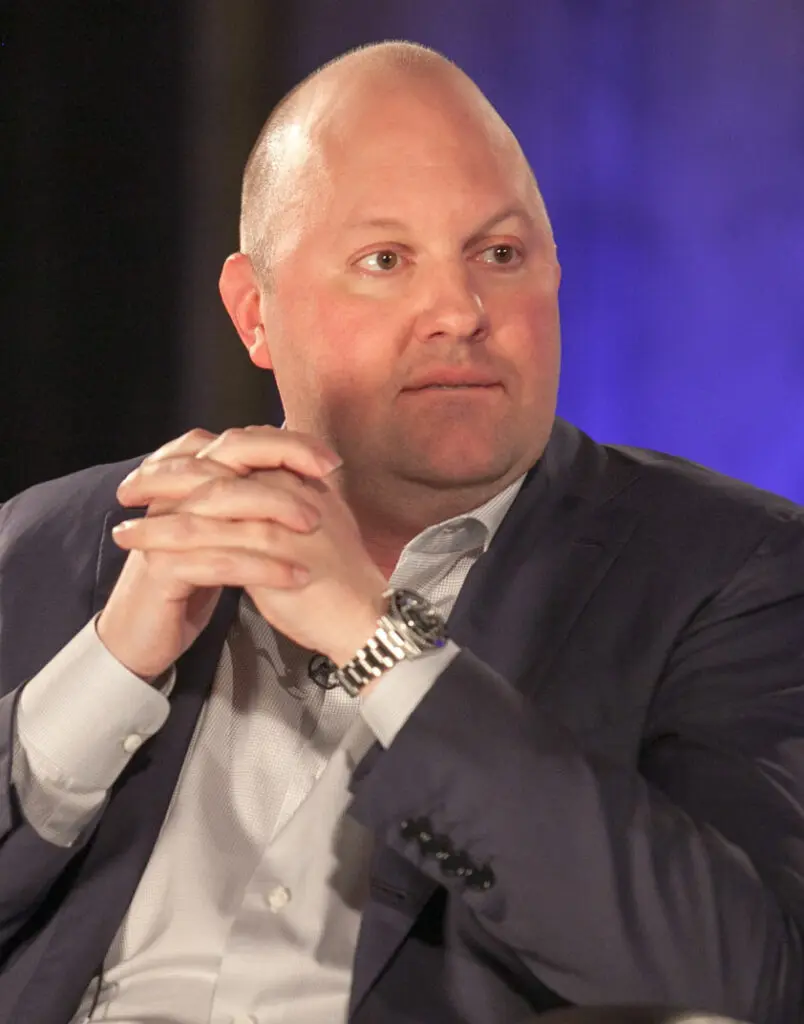
Marc Andreessen, a prominent tech billionaire, co-founder of the venture capital firm Andreessen Horowitz, and one of Twitter (X)’s current investors, holds a complex and often controversial set of beliefs and ideologies. But who is Marc Andreessen, really — as in, what does he believe in? What is he using his wealth and power to achieve?
His perspectives are often polarizing, marrying an unyielding faith in the transformative power of technology with a worldview that is dismissive of societal concerns and hostile to traditional democratic values. Here are some of the key aspects of his views:
1. Techno-Optimism and Elitism
Andreessen is a strong advocate for techno-optimism, believing that technological advancements are the key to solving societal problems and driving progress. However, this optimism is often tied to an elitist worldview, where he sees technologists and wealthy entrepreneurs as the primary drivers of societal advancement.
His “Techno-Optimist Manifesto” outlines a vision where technologists are the leaders of society, unencumbered by social responsibility, trust, safety, and ethics — particularly in the realm of AI, which he believes ought to race ahead to whatever end, risks be damned.
2. Critique of Government and Social Structures
Andreessen criticizes the U.S. government for being strangled by special interests and lobbying, yet his firm has engaged in significant lobbying efforts.
He expresses disdain for centralized systems of government, particularly communism, while advocating for technologists to play a central role in planning and governing society.
3. Accelerationism and Right-Wing Influences
Andreessen embraces “effective accelerationism,” a philosophy that champions technological advancement at any cost. This is influenced by thinkers like Nick Land, known for his anti-democratic and anti-egalitarian ideas.
Sociologist Theodor Adorno created the “F scale” in a 1950 seminal work entitled The Authoritarian Personality, in order to rank the level of predilection to fascism in an individual, which became desirable both during and shortly after World War II. According to Adorno and his cohort, the defining authoritarian personality traits of the Platonic fascist (or the ur-Fascist as Umberto Eco would later call them) include the following:
conventionalism — following the rules; “this is how we’ve always done things”; fundamentalist thinking; dogmatic philosophy; intolerance of ambiguity (and intolerance in general)
authoritarian submission — follow the Ruler; the Ruler is always right, no matter how obvious the lie or big the myth. only ingroup authority figures matter, though.
authoritarian aggression — “send in the troops,” “when the looting starts the shooting starts,” “dominate the streets”
anti-intellectualism — distrust of experts; paranoid politics; intellectualism is unmasculine
stereotypy — racism, sexism, classism, ageism, all the isms; bigotry, homophobia, Islamophobia, transphobia, all the phobias
power and “toughness” — obsessed with dominance and submission; rigidly pro-hierarchy; solves problems with violence; values physical strength
destructiveness — dismantle the Federal government; remove environmental regulations; pull out of international alliances; weakening America’s place in the world, abandoning the EU, and kowtowing to dictators around the world
cynicism — “both sides do it,” whataboutism, all politicians are bad, conscience (non)voters
projectivity — everything is Obama‘s fault, almost literally; claims Biden is corrupt; Hillary’s email server (though they all used and continue to use private email servers, every single one of them); claim that the Clinton campaign started the birther controversy; accuse everyone else of lying
exaggerated concerns over sex — anti-abortion; homophobia; pedophilia; excessive taboos; excessive shame
We are seeing all of these traits today. We see the rise of authoritarianism — we see it in our leadership, we see it in our communities, and we see it surging around the world.
We see it in a much larger percentage of our populace than many of us might have imagined. Research by Karen Stenner and others shows that across populations in the developed world, about a third of a given population will be prone to authoritarian tendencies. People of good character far outnumber the Right-Wing Authoritarians, but they can be subjugated, emotionally manipulated, strong-armed, abused, intimidated, made cynical by the RWAs. And the RWA personality is driven to actively hate outgroups in many outrageously twisted and depraved ways, from pettiness to genocide.
Right-Wing Authoritarianism
Refined by professor of psychology Bob Altemeyer (The Authoritarians, et al) in 1981, the Right-Wing Authoritarianism scale (RWA) addresses some of the limitations of the F scale and exhibits more predictive power in identifying individuals exhibiting authoritarian personality.
The RWA personality is associated with all of the following traits, beliefs, actions, patterns, and signs of authoritarianism:
extreme obedience
unquestioning respect for and submission to a chosen authority
a primary drive to achieve relief from uncertainty, even at the cost of individual freedom
Democracy vs. Authoritarianism
Maybe we could offer up the RWA test as a “good faith” gesture, if one is interested in participating in civic discourse with credibility and authenticity. It would help us identify those individuals who are going to be unlikely to play by the rules of the game or have no intention of behaving fairly. It would help us draw authoritarianism and totalitarianism out of the proverbial closet and into public discourse so we can refute it vehemently in a proper forum.
Although we have bot tests, we don’t really have great ways of measuring and identifying human beings with deceptive agendas to help us in this battle of democracy vs. autocracy. If we could screen people as authoritarians via “honorable challenge,” we could save so much time by not wasting it on the lost causes whose power trip runs so deep it can never be exposed. It could serve as a way to drag out into the light any number of intolerable, anti-democratic sentiments masquerading as “strict Constitutionalism.” We can pry open the doublespeak and arm ourselves with the secret decoder rings of understanding RWA dogwhistles.
And maybe we can finally change the conversation by more easily identifying friendlies from foes from the start, without having to wade through every minefield.