It’s Center vs. Extreme.
Extremism is being aided and abetted by technology. By feedback loops that light up with extremism’s most extremes.
It’s Center vs. Extreme.
Extremism is being aided and abetted by technology. By feedback loops that light up with extremism’s most extremes.
Did Russia hack the 2016 US election? Most certainly. The FBI, CIA, and entire intelligence community is in agreement on this point. Russian information warfare has been infamous the world over for decades — with a recent flare up starting with the Brexit vote as an obvious canary in a larger coalmine, and extending to the proliferation of right-wing movements around the world: particularly in Eastern Europe on Putin’s doorstep.
The following list is an attempt to demystify the language surrounding Russian interference in the election of Donald Trump, and Vladimir Putin’s efforts to undermine the Western order — in retaliation for the fall of the Soviet Union which happened under his watch as a young KGB agent stationed in Dresden, Germany.
See also: the RussiaGate Bestiary which lists the individuals involved in the Russian 2016 election interference investigation of Trump campaign conspiracy and fraud. Please note: both of these resources are works in progress and are being updated frequently.
| Term | Definition |
|---|---|
| 4chan | A notorious internet message board with an unruly culture capable of trolling, pranks, and crimes. |
| 8chan | If 4chan isn't raw and lawless enough for you, try the even more right-wing "free speech"-haven 8chan, which is notorious for incubating a large swath of the Gamergate culture. |
| The Act | Las Vegas nightclub in the Palazzo, owned by Sheldon Adelson, under surveillance by the Nevada Gaming Control Board for obscene performances. Site of the Miss USA pageant party attended by Trump and the Agalarov's in June 2013. |
| active measures | information warfare aimed at undermining the West |
| Air Force One | The U.S. presidential plane. |
| AMS Panel | The GRU's "nerve center" through which they monitored the middle servers that monitored the DNC and DCCC networks. Housed on a leased computer located in Arizona. |
| art critic in civilian clothing | "joke" used by the KGB to refer to themselves while informing on dissidents under Soviet rule |
| attorney work product | |
| backdoor | a method, often secret, of bypassing regular login authentication or encryption of a computer or server |
| Baku | capital of Azerbaijan |
| banana republic | politically unstable countries whose economies are monocultures controlled by an oligarchy; puppet states |
| Bank Secrecy Act | Legal statute requiring persons managing funds in excess of $10,000 in foreign banks disclose said accounts to the US Treasury. |
| bespredel | "limitless and total lack of accountability of the elite oligarchs" |
| blind trust | A financial trust in which the beneficiaries have no access to the holdings of the trust, or any knowledge of its investments and contents |
| Bolotnaya Square | The square was the site of the biggest protests in Russia since the Soviet era, in December 2011 |
| Bolshevik | The majority faction within the Marxist revolutionary party led by Vladimir Lenin to power in Russia during the October Revolution of 1917, eventually becoming the Communist Party of the Soviet Union. |
| bolt hole | A type of retreat or refuge for those in the survivalist subculture, to be absconded to in case of disaster or apocalypse. |
| BND | German foreign intelligence agency |
| bug-out location (BOL) | Another name for a bolt hole or survivalist refuge location. |
| Calexit | Movement to split the state of Californnia into East and West states |
| capital flight | Refers to the massive ongoing exodus of both legitimate and illegitimate funds of Russian oligarchs and their state cronies to "safe havens" in foreign banks and offshore accounts outside of Russia |
| 28 C.F.R. 600.8(c) | "at the conclusion of the Special Counsel's work, he...shall provide the Attorney General a confidential report explaining the prosecution or declination decisions the Special Counsel reached" |
| Charter 77 | Informal Czech resistance movement against the communist regime, named after a document that was deemed a political crime to distribute. |
| Chekism | Loyalty to the concept of an unbroken chain of Russian security services, all the way from Lenin's Cheka to the KGB to the FSB |
| Chronicle of Current Events | Soviet dissident periodical (samizdat) from 1968 to the early 1980s that reported on the human rights violations in the Soviet Union |
| Cold War | |
| Color Revolutions | |
| computational propaganda | |
| cooperating witness | |
| CPAC | Conservative Political Action Conference |
| CPSU | Communist Party of the Soviet Union |
| Crimea | territory in eastern Ukraine invaded and "annexed" by Putin in 2014; unrecognized and condemned by the international community |
| criminal investigation | |
| Crocus City Hall | 7000-seat theater complex in Moscow built by Aras Agalarov; site of the 2013 Miss Universe pageant in Moscow |
| Cuban Missile Crisis | |
| cut out | |
| cyberspies | |
| cyberwarfare | |
| Cyprus | |
| DACA | |
| dacha | country estate |
| Dark Web | |
| data transfer | |
| deep state | Networks of opposition within governments who undermine the official regime |
| demoshiza | short for βdemocratic schizophrenicsβ |
| deposition | |
| dΓ©tente | strategy of easing geopolitical tensions between nations; used in particular to describe attempts to "cool off" antagonism during the Cold War |
| dezinformatsiya | Russian information warfare |
| diaspora | |
| directories | The file folder organizational structure on your computer |
| disinformation | |
| DIOG | The FBI's Domestic Investigations and Operations Guide |
| document theft | |
| Donbas | Territory in eastern Ukraine where Russian aggression has resumed as of Jan 29, 2017 following two years of Minsk Two ceasefire agreement |
| Doomsday Clock | |
| doxing | researching and broadcasting personally identifiable information about an individual |
| Duma | the lower house of the Federal Assembly, Russia's Parliament |
| Eastern Bloc | |
| Echo Moskvy | Democratic radio station in Moscow seminal is thwarting the KGB-led coup against Gorbachev in 1991 |
| encryption | |
| "Eternal Rome" | ideology positing Russia as a geopolitical bulwark of conservatism against a weak-kneed West (part of Alexander Dugin's reformulation of Eurasianism theory) |
| Evening Internet | the first blog in Russia, founded by Anton Nossik |
| executive privilege | |
| exfiltration | The removal or copying of data from one server to another without the knowledge of the owner |
| fake news | |
| fallout shelter | |
| false flag | covert operations designed to deceive by appearing as though they are carried out by other entities, groups, or nations than those who actually executed them |
| FAPSI | One of the agencies spun out from the former KGB to head Govt Comms & Info (modeled after the NSA) β this division was instrumental in controlling the unfolding of the Russian internet |
| Federal Assembly | Russian Parliament |
| fifth column | |
| fifth world war | non-linear war; the war of all against all |
| Financial Crimes Enforcement NEtwork (FinCEN) | Department within the Treasury that handles and maiontains FBAR filings from US persons holding in excess of $10,000 in foreign banks. |
| FISA Court | |
| FISA warrant | |
| Foreign Agents Registration Act (FARA) | Legal statute requiring those persons lobbying on behalf of a foreign government or other entity to register such with the U.S. government. |
| foreign bank account report (FBAR) | Required disclosure to the US treasury by persons holding in excess of $10,000 in funds in foreign banks. |
| forensics | |
| FreedomFest | Conservative evangelical event annually in Las Vegas |
| frozen conflict zones | term for several unrecognized pseudo states within former Soviet territories who have broken away from the national government and are operating as Russian protectorates |
| FSB | the Russian Federal Security Service |
| GamerGate | |
| Gazeta.ru | |
| Gazprom | Russia's energy monopolgy and largest gas company |
| Georgia | |
| Ghost Stories | FBI operation allowing a sleeper cell of 10 KGB spies to operate in the U.S. for 10 years, to reverse engineer their methods. At the end of the sting, FBI Director Robert Mueller rounded them all up and expelled them from the country. |
| glasnost | "increased government transparency" or openness β a slogan employed by Mikhail Gorbachev, Soviet leader in the 1980s |
| Glavplakat | |
| "global cabal" | euphemism in far-right Russian discourse to refer to a perceived "Jewish conspiracy" behind the international order of institutions like NATO and the EU |
| globalization | |
| Grand Jury | 16 to 23 people impaneled to hear evidence from a legal prosecution, and decide if said prosecution has a caseworthy set of evidence to bring charges. |
| Grenadines | |
| hashtag | |
| Helsinki Accords | |
| honeypot | |
| hybrid warfare | |
| IC (Intelligence Community) | |
| iMessage | Apple's version of SMS |
| information warfare | |
| interlocuter | |
| IRC | |
| Iskra | The main Bolshevik newspaper in the early 20th century |
| JacksonβVanik amendment to the Trade Act of 1974 | |
| kakistocracy | |
| keylogging | Technique that enabled the GRU to record passwords, internal communications, banking info, and sensitive personal info from compromised DCCC and DNC employees |
| KGB | The Soviet secret service, renowned for ruthlessness and duplicity |
| kleptocracy | form of government in which the leaders harbor organized crime rings and often participate in or lead them; the police, military, civil government, and other governmental agencies may routinely participate in illicit activities and enterprises. |
| Kommersant | Long-respected business newspaper purchased by pro-Kremlin oligarch Alisher Usmanov |
| kompromat | compromising material on a head of state or other important figure; typically used for blackmail purposes |
| Komsomol | Leninist Youth League organization for Communists aged 14 to 28 in the late 80s & early 90s |
| The Kremlin | |
| Kuchino | the oldest top-secret research facility of the KGB, 12 miles east of Moscow |
| Kurchatov Institute | Preeminent Soviet nuclear research facility still in operation today in the far north of Moscow |
| Latvia | |
| Lenta.ru | |
| liberalism | Political and ethical framework based on individual liberty via human rights and equal protection |
| Logan Act | |
| lords on the boards | |
| Mafia state | A systematic corruption of government by organized crime syndicates. |
| Magnitsky Act | |
| Maidan revolution | Student protests that ousted the Ukranian President Viktor Yanukovych, that started Nov 21, 2013. |
| malware | |
| Marxism | |
| maskirovka | war of deception and concealment |
| Menatep | |
| Menshevik | |
| middle servers | Intermediary sets of servers used by the GRU to communicate with their malware implants in infected U.S. computers and networks -- for an arm's length, plausible deniability strategy |
| Mimikatz | Piece of malware whose function is a hacker credential harvesting tool |
| Minsk Two | Colloquial name of the 2015 ceasefire agreement between Russia & Ukraine following the annexation of Crimea |
| Mitrokhin Archive | |
| Mokhovaya Square | well-known landmark in front of the Kremlin |
| MSK-IX | The main Internet exchange point in Russia |
| MVD | Ministry of Internal Affairs; supervises all police, prisons, and "public order militias" |
| nationalism | |
| National Prayer Breakfast | |
| neutralize | |
| Never-Trump | |
| Newsru.com | |
| NKVD | a forerunner to the KGB under Stalin |
| non-linear warfare | |
| NotPetya | |
| novichok | military-grade nerve agent developed by Russia and used in the poisoning of former FSB agent turned Putin critic Andrei Skripal and his daughter in Lonson in March, 2018 |
| Novorossia | region of eastern Ukraine occupied by Russian separatists |
| October Revolution | the Nov 7, 1917 Bolshevik revolution and armed overthrow of the government, leading to the creation of the USSR |
| October Surprise | |
| oligarchy | |
| one-party state | |
| open source intelligence | |
| operating system | |
| operatives | |
| oppo | short form of opposition research |
| opposition research | |
| OSINT | open source intelligence |
| Ostankino | Russia's TV network |
| Ozero Cooperative | |
| perestroika | policy of restructuring or rebuilding the Soviet government, employed by Mikhail Gorbachev in the 1980s |
| plausible deniability | |
| plea deal | |
| plead the Fifth | |
| Plovdiv, Bulgaria | Safe "bolt hole" identified for Eastern European hackers paid by Trump and the Kremlin if things went south |
| ponyatiya | an unwritten understanding about how things must be done |
| populism | |
| postmodernism | |
| "post office boxes" | Secret Soviet military and security research facilities, known only to the public by their P.O. Box number |
| post-truth | |
| power grid intrusions | |
| Prague, Czech Republic | |
| proizvol | Russian word for "arbitrariness" |
| Project Lakhta | Internal name for the operation that Prigozhin's IRA was running to interfere in elections across the Western world, according to the Mueller indictments. |
| Project Ripon | |
| propaganda | |
| provokatsiya | |
| rar.exe | A hacker tool used to compile and compress materials for exfiltration to GRU servers from the DNC and DCCC networks |
| American social network inhabited by numerous denizens of the alt-Right and hosting notoriously grotesque subreddits. | |
| refuseniks | Term given during the Soviet era, particularly under Stalin, for Jews who had been denied permission to emigrate |
| reiding | |
| Relcom | One of the first private companies or "collectives" formed under Gorbachev's glasnost reforms, it brokered the first proto-Internet within the Soviet Union and first connection to the outside world β playing a key role in thwarting the attempted coup against Gorbachev by the KGB in August, 1991 |
| rent-a-peer | |
| retweet | When a Twitter user amplifies the tweet of another, by "retweeting" it out to her or his network |
| Rodina | extreme nationalist party in Russia c. 2003 that hinted at ethnic cleansing; The Guardian reported it had actually been set up as a prop by Putin & cronies, to draw votes away from the other far-right Communist Party |
| Rosatom | Russian company building Turkey's first nuclear plant |
| Rose Revolution | Peaceful protest-driven pro-Western transfer of power in the former Soviet state of Georgia in Nov 2003 |
| Rosneft | Russia's state oil company |
| Rossiiskaia Gazeta | Russia's official government newspaper |
| RT.com | state-owned Russian news service |
| Rublevka | billionaire's row in Moscow |
| Russian Imperial Movement | part of the far-right coalition within Russia seeking to build an international consensus, this group advocates "Christian Orthodox imperial nationalism" |
| Russophobia | Popular hysteria against Russia and Russians perceived to be the case by Russia and Russians |
| samizdat | in the Soviet era, the creation by hand and distribution of copies of literature and other material banned by the state |
| Sberbank | Russia's largest bank |
| SDNs (specially designated nationals) | Individuals against whom secondary sanctions have been applied |
| The Seychelles | |
| shadow profiles | Data that Facebook collects on people who are not members of Facebook, via association with their friends who are |
| shestidesiatniki | "Sixties' Generation" in the Soviet Union, who shared a lot in common with the American New Left. Advocated for political reform. |
| Siemens AG | |
| siloviki | Russian term for those who have backgrounds and employment in security services, the military, and police; more specifically a reference to Putin's security cabal |
| Signal | |
| sistema | Russian term to denote "how the government really works" (as opposed to via formal state institutions) |
| SJW | Social Justice Warriors, a term which has somehow been wielded as a pejorative by alt-righters and other radical right cadre, energing out of Gamergate culture. |
| SMS | Aka "texting" |
| Snow Revolution | popular protests beginning in Moscow in 2011, demanding the reinstatement of free elections & the ability to form opposition parties |
| sockpuppet accounts | Fake social media accounts used by trolls for deceptive and covert actions, avoiding culpability for abuse, aggression, death threats, doxxing, and other criminal acts against targets. |
| Solidarity | Polish workers' party confronting Communism in the late '80s |
| SORM | System of Operative Search Measures β the system in use by the FSB to eavesdrop on the Russian internet |
| South Stream pipeline | Gazprom project through Balkans and Central Europe |
| "sovereign democracy" | system in which democratic procedures are retained, but without any actual democratic freedoms; brainchild of Vladislav Surkov |
| sovereign wealth fund | |
| spasitelnii | Russian word for "redemptive" |
| spearphishing | An email designed to appear as if from a trusted source, to solicit information that allows the sender to gain access to an account or network, or installs malware that later enables the sender to gain access to an account or network |
| specialists | Moniker given to the IRA employees assigned to operate the social media accounts in the U.S., including Facebook, Twitter, YouTube, Instagram, and Tumblr. |
| Sputnik | Russian news wire proffering fake news |
| Stasi | Nickname for the Ministry of State Security in East Germany during the Cold War |
| Steele dossier | |
| stochastic terrorism | |
| Stoleshnikov Lane | pedestrian street in Moscow lined with designer boutiques |
| St. Petersburg | Location of the headquarters for the IRA, Internet Research Agency, aka Putin's troll farm, at 55 Savushkina Street. |
| Strana.ru | |
| subpoena | |
| SUP Media | Russia's largest blogging service via acquisition of LiveJournal from Six Apart |
| SVR | Russian foreign intelligence service |
| swatting | hoaxed reports to emergency services intended to provoke a SWAT team response at the target's home; a form of Internet-based attack used by Gamergate, the alt-Right, and other groups and individuals |
| tax returns | |
| The Thaw | Brief period of reform under Nikita Khrushchev between 1956 and 1964, when Khrushchev takes over from Stalin and is replaced by Leonid Brezhnev |
| tradecraft | |
| "translator project" | |
| trial balloon | Information put out or leaked to the media to gauge public reaction. |
| Trump Tower Moscow | Then-candidate Trump signed a letter of intent to move forward with this project in 2015, while at the same time denying its existence publicly, repeatedly. |
| truthiness | |
| Turkish Stream | Proposed gas pipeline allowing Russia to extend its control over Turkey and European energy markets |
| Ukranian occupation | |
| unmasking | Intelligence protocol redacting American identities from transcripts of foreign intercepts |
| USPER | |
| Velvet Revolution | |
| vertical of power | reference to the tightly controlled power cabal structure Putin has amassed around himself |
| vKontakte | Russian social network; equivalent analog to Facebook |
| vlast | power |
| VPN | |
| VTB | Russia's largest commercial bank |
| wag the dog | |
| watering hole | hacker attacks that infect entire websites |
| whataboutism | Classic debate tactic of old Soviet apologists to deflect criticism of Soviet policy; whenever an American would levy a critique, the response would be, "What about the bad things America does?" |
| white knights | |
| white nationalism | |
| Wolf Creek Nuclear Operating Corporation | |
| World National-Conservatism Movement (WNCM) | umbrella term for Russia's movement to unite an international extreme far-right coalition |
| X-Agent | Multifunction hacking tool that allowed Russian GRU Military Unit 26165 to log keystrokes, take screenshots, and gather other data about the infected computers |
| X-Tunnel | Hacking tool creating an encrypted connection between the victim DCCC/DNC computers and the GRU-controlled computers to facilitate a large-scale data transfer |
| Yes California | Movement to secede from the US entirely, run by Marcus Ruiz Evans, Louis J. Marinelli |
| Yukos | |
| zakaz | news information that has been paid for by special interest |
Dictatorships generally do not foster, or even tolerate, the kind of creative disruption of the status quo necessary to the existence of a dynamic free market. Plus, the economy of the Russian state can best be described as a mafia state, or kleptocracy. Thus Vladimir Putin needs to find other ways to shore up both the national finances and the support of his cronies (much less so, of his people, who are primarily afterthoughts in the Russian power structure).
After the fall of the Soviet Union, the rapid shift to capitalism was done with little oversight and many hands in the cookie jar. The Russian land’s rich stores of minerals, oil and gas, heavy metals, and other natural resources were rapidly privatized and newly-minted oligarchs flexed wealth and power in a way never before dreamed of in the former USSR.
The combination of powerful new gatekeepers who locked up the Russian economy early via capital flight and never let it go overshadowed the capitalistic transition and, in a very real way, hijacked it before it ever really got underway. The result is, some 30 years on, an unpopular creaking kleptocratic regime reviled around the world for its stubborn aggression, subversion of democratic processes around the world particularly in Europe and the United States, support for organized crime, and significant financial crimes on the part of the state itself.
Putin’s autocratic rule from dull to terrifyingly devious has a chilling effect on hope, self-determination, self-governance, and ultimately — on happiness, freedom, and creativity. Totalitarianism is capable of exerting control, but always fails to inspire anything except for eventual revolution against the oppressors.
Here is a granular look at major indicators of the economy of the Russian Federation.
While we wring our hands in the United States over whether or not such a strategy is even conceivable, the erstwhile President of Russia has been running this playbook out in the open in Ukraine and Eastern Europe for some time. With help from Propagandist-in-Chief Vladislav Surkov, Putin has leveraged the open secrets about the psychology of crowds we learned in the late 19th and early 20th century to stir up emotional antagonisms within the political spectrum — to predictable results.


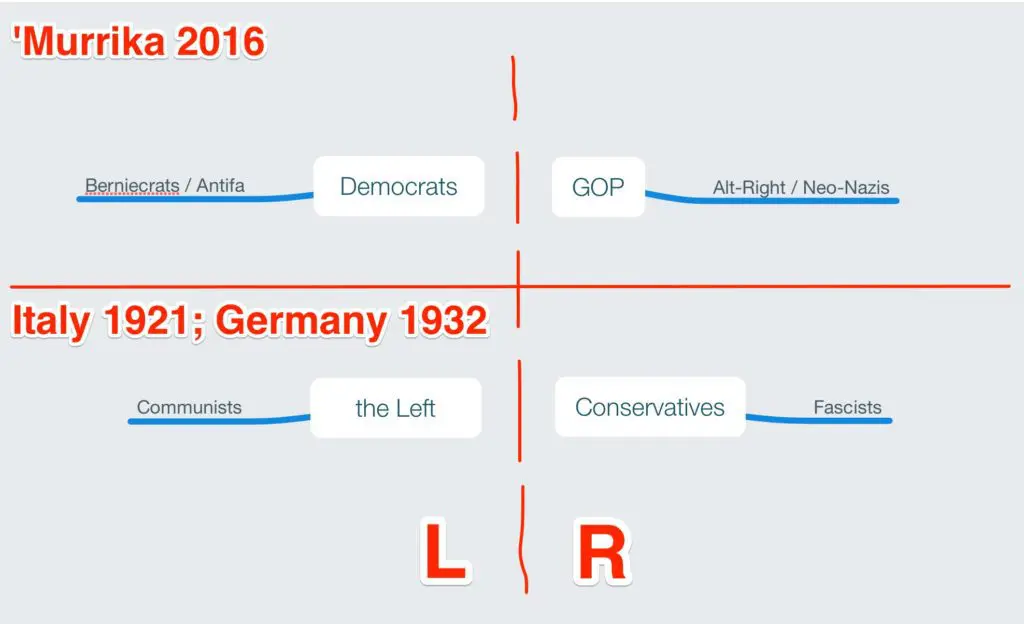
It’s no accident that fascism is on the march in America. The conditions have been brewing for some time, predominantly since the Conservative movement began breaking away more militantly from democratic principles and towards authoritarian philosophy (elite rule by force: preferably invisible force via economic hegemony for the middle and upper classes, and violent force / the carceral state for The Undesirables) in the late 1970s and 1980s. All Putin had to do was make use of available prevailing conditions and tools — the rise of social media in the 2000s counterintuitively blew a gaping wide security hole in the American persuasion landscape that Cold War Soviet operatives of the 1960s would scarcely have believed.
Today, as in parts of Europe between the world wars, the U.S. has partisan gridlock within The Establishment sector of politics; this exacerbates the impatience with and contempt for the status quo (aka the Liberal world order) that in some sense naturally congeals at the far right and far left margins of the political spectrum as a simple consequence of the Normal Distribution (the Median Voter Theorem captures this tendency quite succinctly). Under such conditions, an influence campaign like the one Russia wielded against the United States during the 2016 election season was tasked merely with tilting the playing field a little further — a task that platforms like Facebook and Twitter were in some sense fundamentally engineered to accomplish, in exchange for ad revenue.
“Both Italian and German fascists had done their best to make democracy work badly. But the deadlock of liberal constitutions was not something the fascists alone had brought about. ‘The collapse of the Liberal state,’ says Roberto Vivarelli, ‘occurred independently of fascism.’ At the time it was tempting to see the malfunction of democratic government after 1918 as a systemic crisis marking the historic terminus of liberalism. Since the revival of constitutional democracy since World War II, it has seemed more plausible to see it as a circumstantial crisis growing out of the strains of World War I, a sudden enlargement of democracy, and the Bolshevik Revolution. However we interpret the deadlock of democratic government, no fascist movement is likely to reach office without it.”
— Robert O. Paxton, The Anatomy of Fascism
100 years on, it feels like we’re back at the start.
While multiple formal investigations against the Trump family and administration continue to unfold, and Drumpf supporters weirdly deny the probable cause for concern, Putin’s troll army continues to operate out in the open on Twitter, Facebook, Medium, and other social media networks. The sheer scale of this operation started to become clear to me in the months leading up to Election 2016, having both spent a lot of time on social media both professionally and personally for over a decade as well as a hefty amount of time on political investigation during this presidential cycle: bots on Twitter had taken over.
Whatever your thoughts on the #RussiaGate corruption scandal may be, it should concern any citizen that an enormous group of bad actors is working together to infiltrate American social media, with a specific intent to sway politics. Media literacy is one part of the answer, but we’re going to need new tools to help us identify accounts that are only present in bad faith to political discourse: they are not who they claim to be, and their real goals are kept carefully opaque.
We should consider our nation embroiled in a large international game of psychological warfare, or PsyOps as it is referred to in intelligence circles. The goal is to sow disinformation as widely as possible, such that it becomes very difficult to discern what separates truth from propaganda. A secondary goal is to sow dissent among the citizenry, particularly to rile up the extremist factions within America’s two dominant political parties in an attempt to pull the political sphere apart from the center.
We didn’t really need much help in that department as it is, with deep partisan fault lines having been open as gaping wounds on the American political landscape for some decades now — so the dramatically escalated troll army operation has acted as an intense catalyst for further igniting the power kegs being stored up between conservatives and progressives in this country.
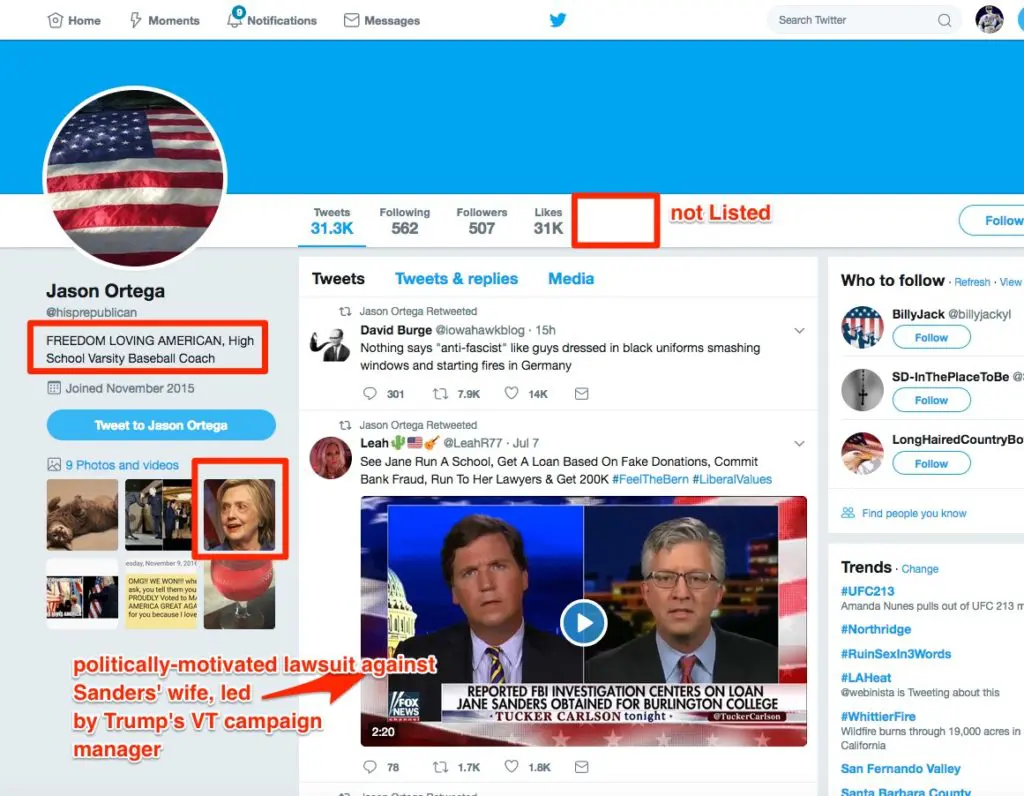
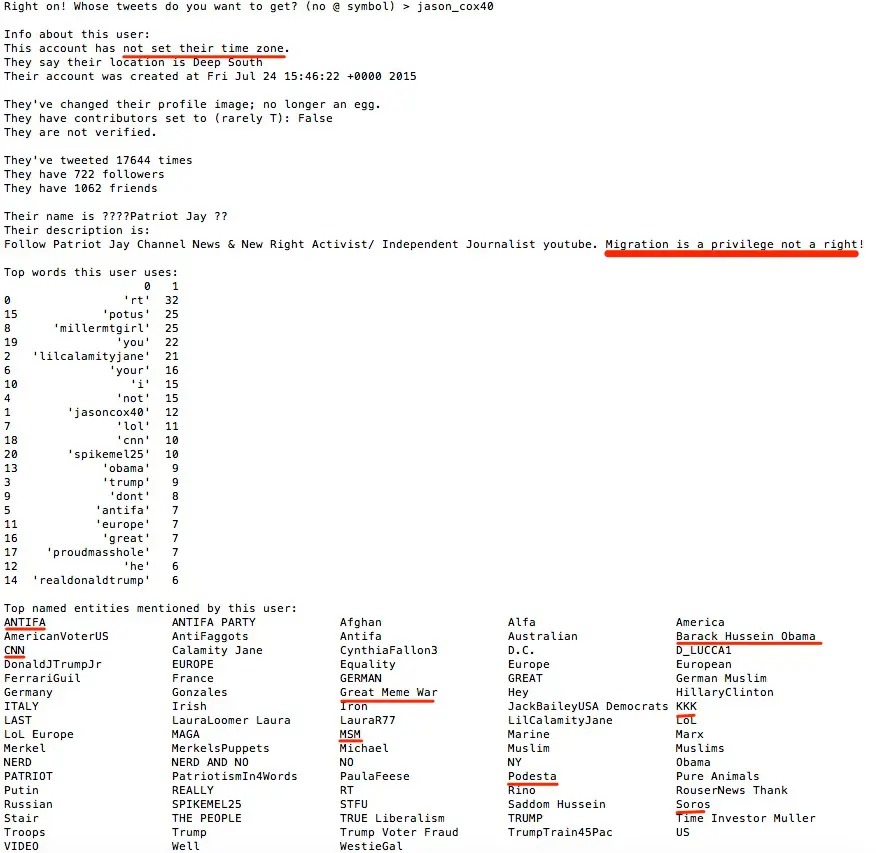
Luckily there are some ways to help defray the opposition’s ability to distract and spread disinfo by identifying the signatures given off by suspicious accounts. I’ve developed a few ways to evaluate whether a given account may be a participant in paid propaganda, or at least is likely to be misrepresenting who they say they are, and what their agenda is.
Sometimes it’s fun to get embroiled in a heated “tweetoff,” but I’ve noticed how easy it is to feel “triggered” by something someone says online and how the opposition is effectively “hacking” that tendency to drag well-meaning people into pointless back-and-forths designed not to defend a point of view, but simply to waste an activist’s time, demoralize them, and occupy the focus — a focus that could be better spent elsewhere on Real Politics with real citizens who in some way care about their country and their lives.
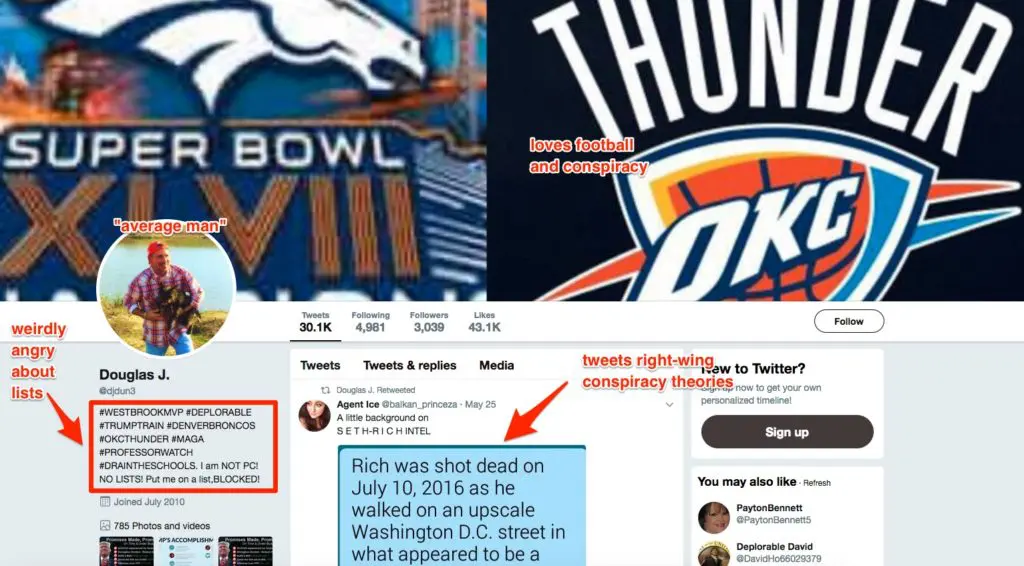
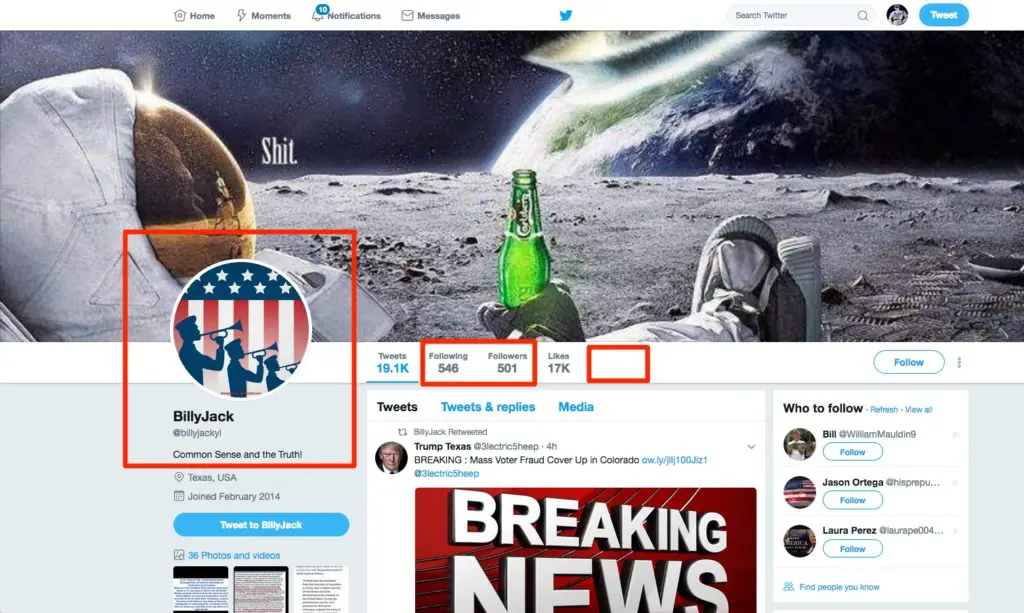
– Conspicuously hyper-patriotic bio (and often, name) – Posts predominantly anti-Democrat, anti-liberal/libtard, anti-Clinton, anti-Sanders, anti-antifa etc. memes:


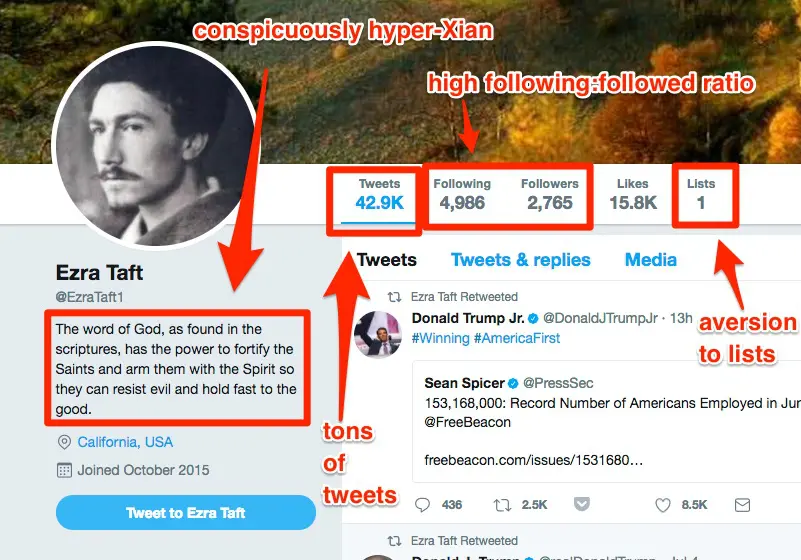
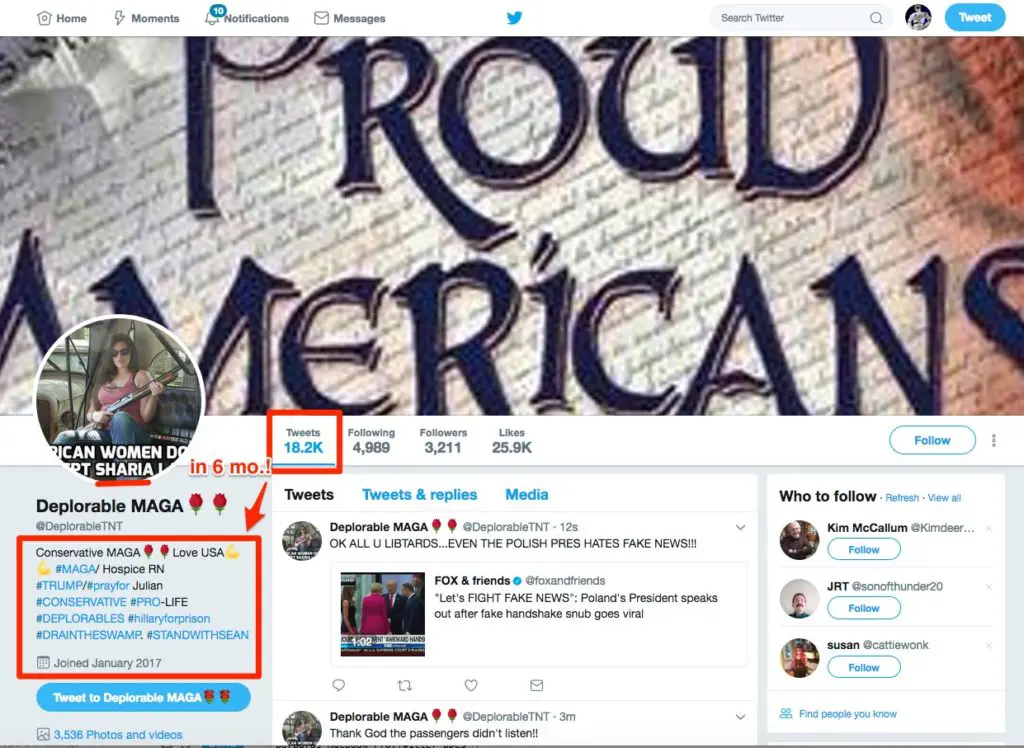
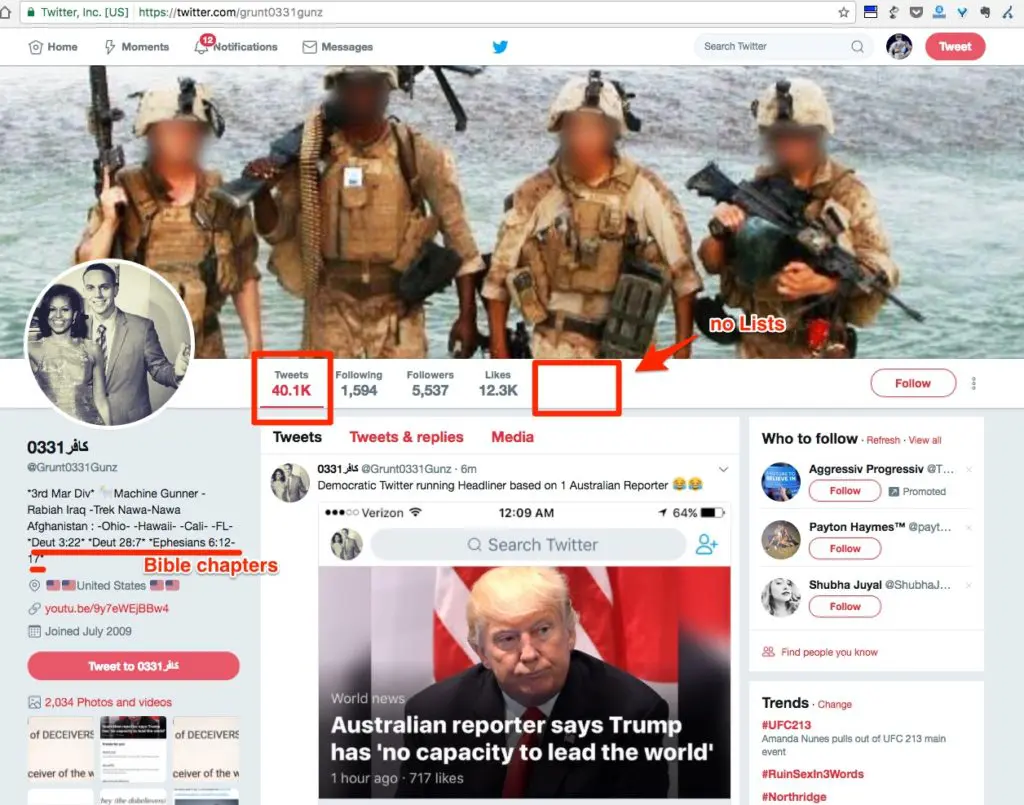
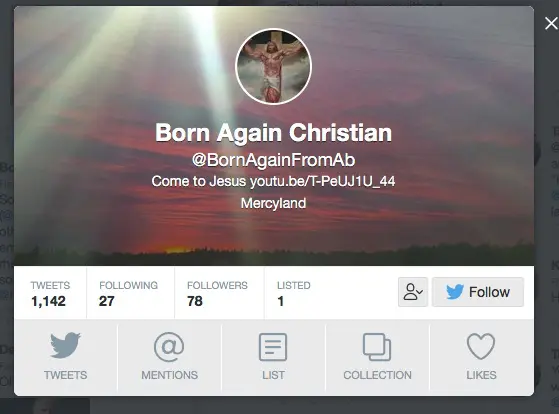
– Conspicuously hyper-Christian in bio and/or name of bots on Twitter:


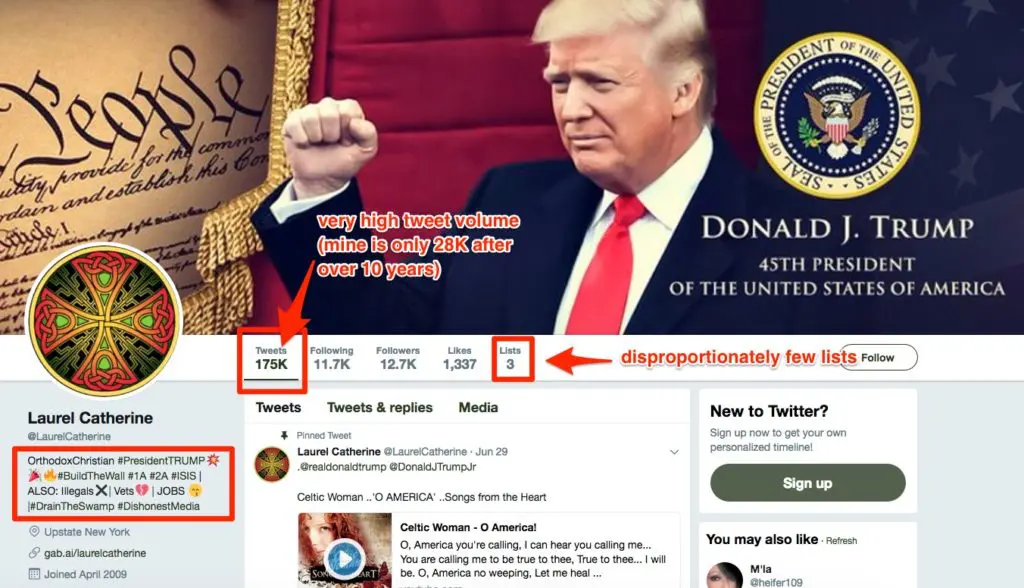
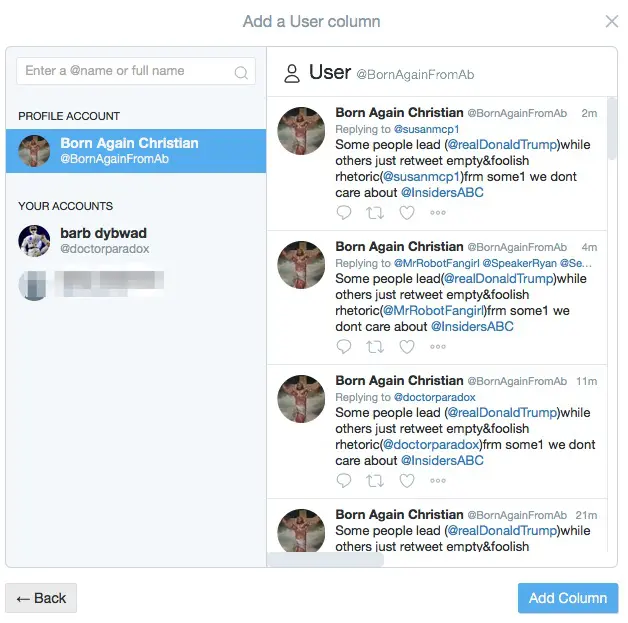
Seems to tweet &/or RT constantly without breaks — supporting evidence of use of a scheduler tool at minimum, and displaying obviously automated responses from some accounts. The above account, for example, started less than 2 years ago, has tweeted 15,000 more times than I have in over 10 years of frequent use (28K). Most normal people don’t schedule their tweets — but marketers and PR people do.


– Posts exclusively about politics and potentially one other primary “normie” topic, which is often a sport – May proclaim to be staunchly not “politically correct”:


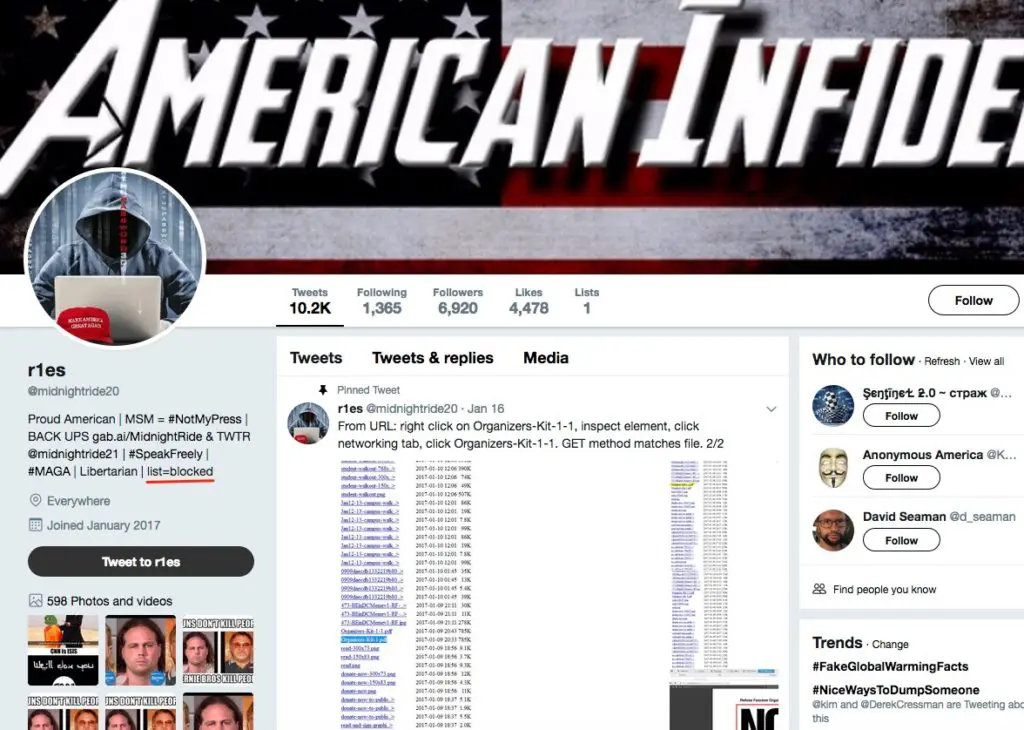
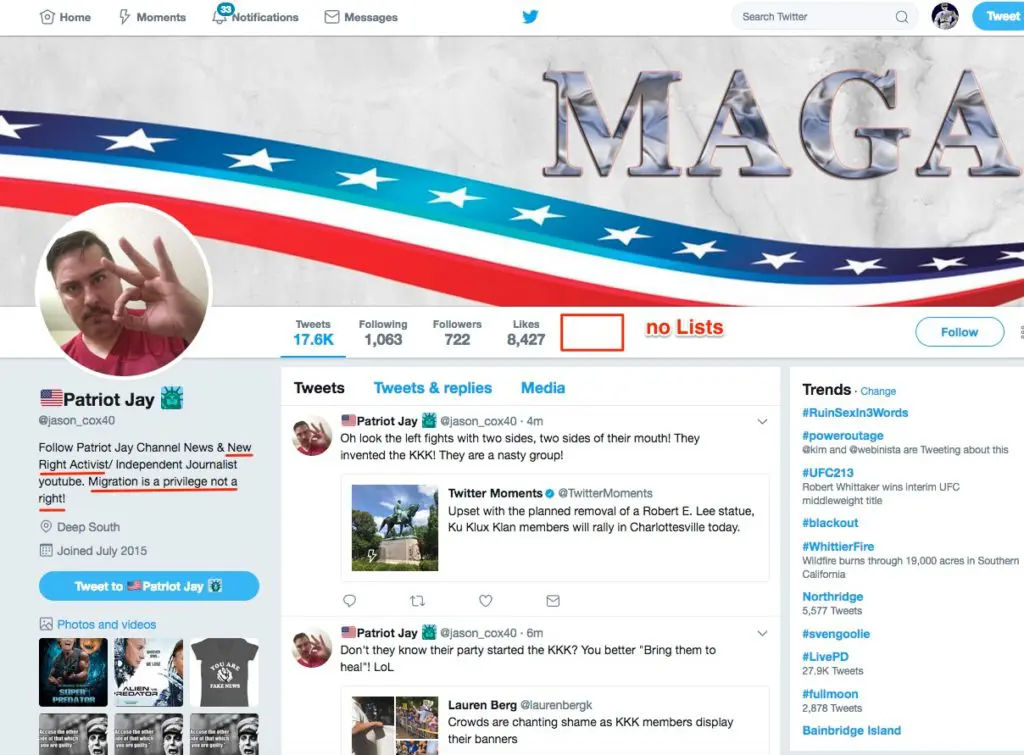
– Bots on Twitter have a strange aversion to being added to Lists, or making Lists of their own:


– Uses hashtags more than normal, non-marketing people usually do:


– Seems ultimately too one-dimensional and predictable to reflect a real personality, and/or too vaguely similar to the formula:


– Most obviously of all, it retweets the same thing over and over again:


– Tweets predominantly about a predictable set of memes:


Mismatched location and time zone is another “tell” — and although you can’t get the second piece of data from the public profile, it is available from the Twitter API. If you know Python and/or feel adventurous, I’m sharing an earlier version of the above tool on Github (and need to get around to pushing the latest version…) — and if you know of any other “tells” please share by commenting or tweeting at me. Next bits I want to work on include:
βThe most dangerous ‘enemy of the people’ is presidential lying–always. Attacks on press by @realDonaldTrump more treacherous than Nixonβsβ
— Carl Bernstein, journalist who broke the Watergate scandal
“These systematic attacks on the media accomplish two things. First, they fire up the base, which believe that traditional media do not represent their interests or concerns. Second, they provoke the media itself, which feeling threatened, adopts a more oppositional posture. This in turn further fuels the polarization on which the leaders depend and paves the way for the government to introduce legal restrictions.
The most dramatic example was in Venezuela, where elements in the media embarked on a campaign of open warfare, engaging in overtly partisan coverage intended to undermine ChΓ‘vezβs rule. Some media owners were alleged to have conspired in a 2002 coup that briefly ousted the president. Once Chavez returned to power, he rallied his supporters behind a new law imposing broad restrictions on what the media could and could not cover under the guise of βensuring the right to truthful information.β Across the hemisphere, other restrictive legal measures were adopted, including Ecuadorβs notorious 2013 Communications Law, which criminalizes the failure to cover events of public interest, as defined by the government. In the first year, approximately 100 lawsuits were filed under the law, stifling critical reporting.”
— Columbia Journalism Review
“Brian Stelter, in his Reliable Sources newsletter, rounds up elite-media Twitter reaction:
At the same time, understand that this is partly a game to Trump. His confidants tell us he intentionally exploits the media’s inclination to take the bait and chase our tails.”
— Axios
John McCain:
“… slammed President Donald Trumpβs attacks on the media this week by noting dictators βget started by suppressing free press.β
It was a startling observation from a sitting member of Congress against the President of the United States, especially considering McCain is a member of Trumpβs party.
βI hate the press,β the Arizona Republican sarcastically told NBC Newsβ Chuck Todd on βMeet the Press.β βI hate you especially. But the fact is we need you. We need a free press. We must have it. Itβs vital.β
But he continued, βIf you want to preserve β Iβm very serious now β if you want to preserve democracy as we know it, you have to have a free and many times adversarial press,β McCain said in the interview. βAnd without it, I am afraid that we would lose so much of our individual liberties over time. Thatβs how dictators get started.β
Evan McMullin:
“Authoritarians routinely attack checks on their power and sources… Donald Trump does exactly that.”
http://www.cnn.com/videos/tv/2017/02/05/are-trumps-attacks-on-media-authoritarian.cnn
“The freedom of the press is one of the greatest bulwarks of liberty, and can never be restrained but by despotic governments.”
— The Virginia Declaration of Rights
There’s something those of us in marginalized groups know instinctively, having lived lives long in opposition to a dizzying continuum of Absurd Moral Authority: from outright violence, to secretive “technical” manipulations of statutes designed to erode or remove rights, to vague and carefully unstated “wink wink nudge nudge” moments from individuals of authority who had some power to constrain us — whether it’s a boss (or potential boss), a teacher, a community figure, and/or perhaps most guttingly a family member.
We know the sting of being scolded for even daring an attempt at upsetting the Tautological Supremacist Meritocracy: “If you weren’t worthless, you’d already be here by now!”
But we should remember one of the primary reasons that we as a nation even won our independence in the first place:
Lord North offered tax relief to the colonies that would help “defend the motherland” in February, 1775 — none took him up on it. And in fact, the Conciliatory Resolution only deepened the growing sense of unity emerging against what increasingly became perceived as a Common Enemy. The attempt to divide and conquer not only failed, but backfired.
The British Parliament thought the colonists full of hot air — that a few shows of military force would quickly crumble the upstart radicals in their quest for representation and rights. But battles at Lexington and Concord only fueled further the sentiment that the colonies were inhabited by an occupying force that must be resisted.
It was widely thought to be insane to stand against the world-renowned military force of the British Empire — but the Continental Army under George Washington doggedly turned the fact of underestimation to their advantage via innovative battlefield strategy. The motherland, finding it difficult to raise sufficient troops to fight against their own former countrymen, hired German mercenaries to fight against the colonists — further deepening the resolve of the Americans to throw off an oppressor willing to bring foreign assassins to bear in a dispute formerly perceived as a conciliatory process of achieving the basic rights of citizenship that colonists’ forbears once enjoyed in England. The British overestimation of Loyalist support — combined with the general mistreatment of those who did cross the “revolutionary picket line” — only added to the troubles faced by a predominantly naval power slogging through a lengthy land war over vast territory.
In so many ways we’ve become more fragmented; more balkanized; more atomized in modern society. We’ve self-selected into our communities of shared values and our social media bubbles. In many ways this is the paradox of prosperity, and the Catch-22 of progress.
We may feel stronger in our own foxholes, but there comes a time when the whole choir must sing together. Now is that time.
And perhaps it is dangerous to use the language of war, and of conflict — or perhaps it may help us to better identify where our Common Enemy lies. Our Common Enemy is not the down at heel rural Trump supporter who lashes out at us in fear, and in retaliation — though their words are often hateful, these people have been misled.
It’s a very old story — older than Trump; older than George W. Bush; older than Reagan or Nixon or Coolidge or Jackson or Johnson. The wealthy white elite has a centuries’ old playbook of dangling so-called Christian morality in front of those whites left most destitute by the former’s economic policies — and winning.
We are watching reruns.
This time, fascism and foreign influence have been added to up the ante — keeping even the most blasΓ© among us glued to our seats.
The framers of our Constitution deliberated, debated, andΒ agonized over the most ideal structure to supportΒ a broad pluralist power, in concerted opposition to the monarchies and aristocracies of the past. Many were shocked by — and fought bitterly against — the unprecedented act of beginning such a governing document with the words, “We the people.”
But 85 Federalist Papers later, our sovereign power was enshrined in the document that still governs our ambitions today — and acts as a backstop against those who would wield tyrannical power in our name.Β


Our Common Enemy is tyranny, and we must learn to recognize where it lives, and how it acts. Even — perhaps especially — when that domicile is the White House, and that act an act of Congress.
Our Common Enemy is those who would deny the power of the people to govern themselves: through the silencing of debate in a once great forum; through casual disregard of the judiciary branch; through an endless parade of troglodyte efforts at voter suppression.
Our Common Enemy is the long litany of elected officials who act in their own best interests at the expense of We the People. It is the slew of slick sycophants currying political favor with the powerful, who continually rewrite the rules of the game the Winners have already Won many times over, to accelerate the gaping gulf of inequality that threatens democracy, liberty, justice, and most certainly peace.
Without Justice there can be no Peace.
And those who wield injustice have vastly underestimated the swaths of citizenry who can see through the ruse; who have heard the old story and seen its outcomes; who are tired of having to wage the same struggles for rights and respect over, and over, and over again.
But the tired gain strength through camaraderie in adversity; through simple acts of kindness; through humor, and through love.
These are tools the tyrannical cannot access.
Stand, and wield them, in the name of We the People.
But we will grow from it, and they will not — over the long run, at least.
Things we need to improve upon and/or rebuild:
The creator of the also excellent Century of the Self film series released his latest film in October, 2016. Dubbed HyperNormalisation, it offers both a history lesson of the complicated relationship between the West, the Middle East, and Russia, as well as an unflinching look at the roles played by technology, surveillance, and the media on our modern condition of general confusion, destabilization, and surrealism.
Russian aggression is mercurial — itβs getting harder to tell anymore who is being paid to push pro-Russian messages, and who has just been sadly taken in by them. For all this braggadocio (braggadocious, even!) about βbuilding a wallβ to keep supposed Mexican rapists out (although net migration has been falling with our southern neighbor for some time and is now net negative), no matter what the outcome of next Tuesdayβs election, the βbordersβ around the internet will remain difficultβββif not impossibleβββto police for the foreseeable future.
This all makes our breathless, behind-closed-doors hand-wringing over Soviet Communist influence over the population in the 1960s seem like childβs play. No need to train up a double agent over a lifetime and infiltrate the corridors of state power anymoreβββjust fire up Twitter (or Medium).
It thus probably shouldnβt be as shocking as it has been to find the pro-Russian lovefest coming just as hard from the far-left as it has from the far-right. It stems from a good place (for the most part): a heartfelt desire for peace and the youthful misunderstanding of how difficult (read: impossible) that has been to achieve throughout history. Still, we always want to believe weβve cracked the nutβββthat Mutually Assured Destruction now keeps us safe from all the power-hungry demons of the world.
Unfortunately, the Cold War is thawing. With theΒ Russian economy reportedly in dire straitsΒ thanks to fragile over-reliance on oil and gas production combined with the precipitous drop in oil prices over the past 18 months, Putin is in a state. A state of keeping theΒ angry ailing Russian classes distracted by the drums of war, while aiming to keep the pampered, self-absorbed American classes distractedΒ fromΒ the drums of war. So far to great successβββat least on the latter front. Itβs hard to speak to the former, although all the paid trollsΒ doΒ seem mighty angry.
Since we can barely pull our heads out of our navels in the U.S. to remember thereβs a whole other world outside of our Big Orange Terror Bubble (which is by turns understandable and deeply concerning), I wanted to record here a timeline of Russian aggression events in the lead-up to where we are today (re-purposed from this post with some additional backstory on the Green Party candidateβs Jill Stein involvement with Putin):
This doesnβt include any of the Russian aggression βsoftβ lobs like the cheeky offers to monitor our elections, or the material connections to the alt-right movement here as well as the swell of right-wing political insurgencies around the world.
Perhaps history will one day show that the deepest destruction wrought by globalization was not the disintegration of Americaβs manufacturing sector, nor its incentivization of capital flight, but its damage to the last pillars of an aging democratic architecture slowly corroded by neoliberal economic policies in fashion since the Reagan years.
If any history still remains.