Right-wing

Christian nationalism, a complex and multifaceted ideology, intersects the realms of faith, politics, and cultural identity. At its core, it seeks to fuse Christian and national identities, advocating for policies and governance that reflect a particular interpretation of Christian values as foundational to the national identity and public life.

This movement is not monolithic; it varies widely in its manifestations and intensity, ranging from a general preference for a Christian cultural ambiance to more extreme calls for the implementation of laws that strictly adhere to certain Christian doctrines. Despite its name, Christian nationalism is less about religious faith per se and more about leveraging religious identity as a marker of belonging and legitimacy within the national narrative and overall political power structure of the United States and elsewhere. In some ways, Christian nationalism doesn’t actually seem very Christian at all.

False claims of national origin

The Christian nationalists of America today present a false narrative surrounding the origin story of the United States as part of their fundamental claim to power. Contrary to their claims of America as a Christian nation, the Framers of the Constitution took great pains to separate religious authority from democratic governance — having seen the deleterious effects of state imposed religion by the Church of England. In fact, one of the primary reasons many original American colonists left their native homeland was to flee the mandates of the church and seek the religious freedom to worship in their own ways, whether Puritanism, Lutheranism, or other Protestant sect.

Part of a broader pattern of right-wing Big Lies, the idea that the Founders intended anything other than a strong separation of church and state belongs in the realm of propaganda, not in the realm of truth. Moreover, Jesus himself seemed to be quite allergic to the desire for accumulating political power — famously saying, “render therefore unto Caesar the things which are Caesar’s; and unto God the things that are God’s” in Matthew 22:21. The imposition of Christian nationalism in America would destroy the very religious freedom the United States was actually founded upon.
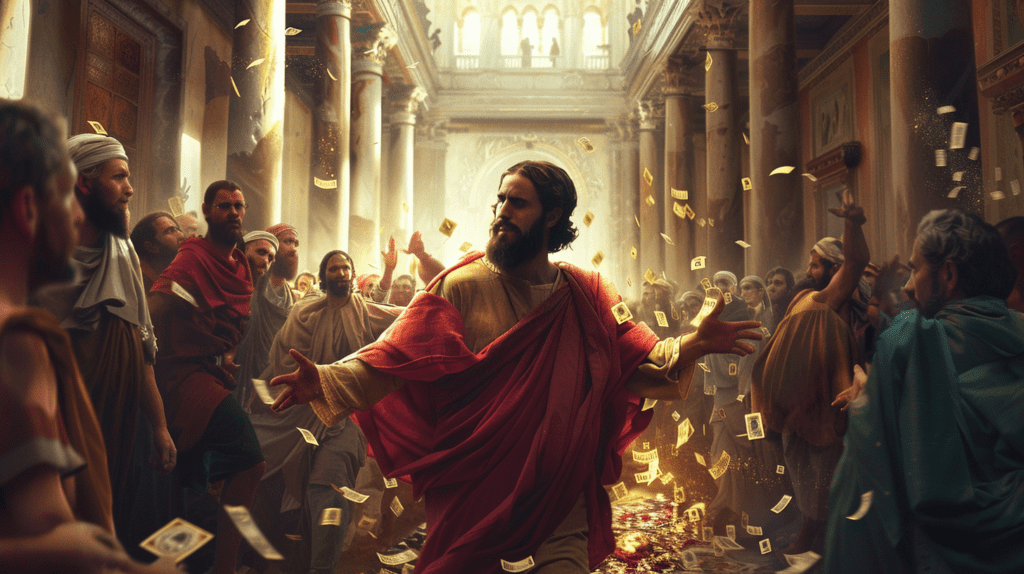
Jesus in the template of the money-changers, by Midjourney

Dictionary of Christian nationalism terms

We will continue to update this dictionary of terms relating to Christian nationalism as the ideology evolves in American politics. For additional reading, check out our collection of books about Christian nationalism, and our Christian nationalism timeline.

  • 10 Commandments — The 10 Commandments are a set of biblical principles relating to ethics and worship, which play a fundamental role in Judaism and Christianity. They include directives on worship, morality, and human relationships, as outlined in the books of Exodus and Deuteronomy in the Bible.
  • acolytes — Acolytes are individuals who assist in religious ceremonies, particularly in Christian liturgical traditions, performing duties such as carrying processional crosses, lighting candles, and assisting with preparations for communion. Their role is to support the clergy and enhance the ceremonial aspects of worship.
  • affirmative action — Affirmative action refers to policies and measures designed to increase opportunities for underrepresented groups in areas such as education and employment, aiming to redress historical injustices and discrimination. It seeks to promote equality by considering factors like race, gender, or ethnicity in decision-making processes.
  • American exceptionalism — American exceptionalism is the idea that the United States is inherently different from other nations, often due to its unique historical evolution, democratic institutions, and national ethos. This concept suggests that America has a special role to play in human history and global affairs.
  • apostles — the primary disciples of Jesus Christ in Christianity, chosen by Him to spread His teachings. The term traditionally refers to the Twelve Apostles in the New Testament, who were sent out to proclaim the message of Jesus across the world.
  • apostates — individuals who renounce or abandon their faith or religious beliefs. This term is often used in a religious context to describe someone who has turned away from the religious faith they once professed.
  • baptism — a Christian sacrament of initiation and purification, symbolizing the believer’s spiritual cleansing, rebirth, and admission into the Christian community. It is typically performed by sprinkling water on the head or by immersion, signifying the washing away of sins and the individual’s commitment to follow Jesus Christ.
  • Biblical values — the moral and ethical principles derived from the teachings and narratives found in the Bible. These values include love, justice, compassion, humility, and integrity, guiding the behavior and decision-making of believers.
  • Biblical worldview — a way of understanding and interpreting the world from the perspective of biblical teachings, seeing all aspects of life through the lens of Scripture. It encompasses beliefs about God, morality, human nature, and the purpose of life, influencing how individuals perceive and interact with the world around them.
  • born-again — within Christian nationalism, being born-again is not just a private spiritual matter but also a call to action to bring about a nation that aligns with specific Christian principles. The born-again experience is thus politicized, serving as a catalyst for engaging in activities aimed at shaping national identity, policy, and governance in accordance with a particular Christian worldview.
  • Calvinism — a major branch of Protestantism that follows the theological tradition and forms of Christian practice set down by John Calvin and other Reformation-era theologians. It emphasizes the sovereignty of God, the doctrine of predestination, and the total depravity of humans, among other key points.
  • cheap grace — cheap grace refers to the concept of receiving forgiveness and moral absolution without any personal cost or commitment to ethical transformation. It’s often criticized for reducing the complexities of faith and morality to a simplistic transaction, undermining the depth and rigor of spiritual practice.
  • β€œChristian journalism” — refers to the practice of journalism within a Christian framework, emphasizing reporting, analysis, and commentary that align with Christian values and perspectives. It aims to provide news and insights on various issues, including moral, ethical, and social matters, from a Christian viewpoint.
  • Christian Reconstructionism — Christian Reconstructionism is a theological movement within conservative Calvinist Christianity, advocating for the application of a particular interpretation of biblical law to all areas of life, including civil governance. It promotes the idea that society should be reconstructed along biblical lines, with a significant emphasis on the Old Testament’s legal codes.
  • City Upon a Hill — The phrase “city upon a hill” is often invoked in conservative discourse to emphasize America’s role as a beacon of freedom, democracy, and moral leadership for the world. Originating from a sermon by Puritan leader John Winthrop in 1630, the term has been adapted to advocate for a vision of American exceptionalism and the importance of upholding traditional values.

a Vision of American exceptionalism: the Statue of Liberty. by Midjourney
  • clergy — individuals who are ordained for religious duties in Christian and other religious traditions. They perform various spiritual functions, including leading worship services, performing sacraments, and providing pastoral care to the congregation.
  • communion — Communion, also known as the Eucharist in some Christian denominations, is a sacrament that commemorates the Last Supper of Jesus Christ with His disciples. It involves the partaking of bread and wine (or grape juice) as symbols of Jesus’ body and blood, signifying participation in the divine grace.
  • Conservative Resurgence — historical period in the late 1970s and early 80s that started to reverse the trend backwards from the political and economic philosophies of the New Deal, and away from church liberalization efforts and towards a more hardline, fundamentalist approach complete with purges of moderates
  • conversions — In a religious context, conversions refer to the process by which an individual adopts a new religious belief, often resulting in a change of affiliation from one religion to another. It typically involves a personal experience of transformation and acceptance of the new faith’s tenets.
  • culture war — The term “culture war” refers to the ideological and social conflicts that arise when different groups clash over issues like religion, morality, politics, and social norms. These battles often manifest in debates over topics such as LGBTQ+ rights, abortion, immigration, and the role of government, and they can deeply influence public opinion and policy.
  • defense of marriage” — The term “defense of marriage” often refers to political and social efforts to uphold the traditional definition of marriage as a union between one man and one woman. It is frequently used in debates over the legal recognition of same-sex marriages and related legal and policy issues.
  • demons — In Christian theology, demons are considered malevolent spiritual beings opposed to God and humanity. They are often associated with temptation, possession, and various forms of evil, and are believed to be fallen angels led by Satan.
  • End Times — The End Times, also known as the eschaton in theological terms, refer to a future period described in biblical prophecy where world events reach a final climax, leading to the return of Jesus Christ, the final judgment, and the establishment of God’s kingdom. Different Christian traditions have various interpretations of the signs, events, and timing related to the End Times.

The End Times; armageddon. By Midjourney
  • family values — “family values” often refers to a set of traditional beliefs that emphasize the importance of the nuclear family, marital fidelity, and conservative religious principles. These values are seen as the bedrock of a stable society and are often contrasted with more progressive or liberal social norms.
  • flyover country — a colloquial term often used to describe the central regions of the United States perceived as less significant or overlooked by coastal elites. It implies a region primarily flown over by air travelers from one coast to the other, with the insinuation that these areas are less culturally or politically important.
  • fundamentalism — originally referred to a movement within American Protestantism that emerged in the early 20th century, emphasizing a literal interpretation of the Bible and adherence to its fundamental doctrines. The term has since broadened to describe any religious movement across various faiths that holds to strict adherence to foundational principles and often rejects modernism.
  • The Golden Rule — treat others how you wish to be treated; Jesus referred to this teaching as his “Greatest Commandment”
  • The Great Awakening — a series of religious revivals that swept through the American colonies in the 18th century, marked by a renewed enthusiasm for religious experience, personal piety, and evangelism. It significantly influenced American Protestantism and the country’s social and cultural landscape.
  • groupthink — a psychological phenomenon that occurs within a group of people when the desire for harmony or conformity results in an irrational or dysfunctional decision-making outcome. It is characterized by the suppression of dissenting viewpoints, leading to a lack of critical evaluation of decisions.
  • holy ghost — one of the three persons of the Holy Trinity; believed to be the active presence of God in the world today. The Holy Ghost is often associated with guiding believers, empowering them with spiritual gifts, and serving as a comforter or advocate.
  • holy spirit — considered the third person of the Trinity in Christian theology, alongside God the Father and God the Son (Jesus Christ). The Holy Spirit is believed to be the presence of God active in the world, guiding, inspiring, and empowering believers, and playing a central role in their spiritual life and growth.

Holy ghost; holy spirit. By Midjourney
  • homeschooling — an educational approach where parents choose to educate their children at home instead of sending them to traditional public or private schools. This method allows for a personalized education, often tailored to the child’s learning pace, interests, and values, and can include various educational philosophies and curricula.
  • hypocrisy — the act of pretending to hold beliefs, attitudes, virtues, or feelings that one does not actually possess. It is often highlighted in moral and religious discussions as a vice, where an individual’s actions contradict their professed values, demonstrating a lack of integrity or moral consistency.
  • i360Charles Koch‘s massive database of 230 million voters and their intimate demographic data, deployed for use in a wide range of Republican campaigns
  • The Johnson Amendment — The Johnson Amendment is a provision in the U.S. tax code, enacted in 1954, that prohibits nonprofit organizations, including churches and other religious organizations, from endorsing or opposing political candidates. It aims to maintain the separation of church and state by restricting the political involvement of tax-exempt entities.
  • Kingdom action — “Kingdom action” refers to activities or initiatives undertaken by Christians to advance the kingdom of God on Earth, in alignment with the teachings and example of Jesus Christ. This can include evangelism, social justice efforts, charitable works, and other forms of ministry aimed at reflecting God’s love and righteousness in the world.
  • liturgy — Liturgy refers to the prescribed set of rituals, prayers, and ceremonies that make up the formal public worship in religious traditions, particularly in Christianity. It serves as a structured framework that guides the communal expression of faith and devotion.
  • love thy neighbor — “Love thy neighbor” is a fundamental ethical injunction in many religious traditions, emphasizing the importance of treating others with kindness, compassion, and respect, akin to one’s self. In Christianity, it is second only to loving God and is central to the teachings of Jesus Christ.

Love thy neighbor, by Midjourney
  • “moral decay” — a term often used to describe a perceived decline in the ethical standards, values, and behavior of a society, suggesting a move away from traditional morals towards increased vice and immorality. It is frequently cited in cultural and religious critiques of contemporary social trends.
  • the β€œnatural family” — used within certain ideological frameworks to describe a family unit based on heterosexual marriage, with clear gender roles and biological offspring. It is often promoted as the foundational building block of society and a standard for raising children.
  • The New International Version (NIV) Bible — The New International Version (NIV) Bible is a contemporary English translation of the Bible, first published in 1978, with a focus on a balance between word-for-word and thought-for-thought translation techniques. It is one of the most popular and widely used modern translations of the Bible.
  • the New Right — refers to a conservative political movement that emerged in the United States in the late 20th century, advocating for free market principles, a strong national defense, traditional family values, and a reduction in government intervention in the economy. It played a significant role in reshaping the Republican Party.
  • The New Testament — The New Testament is the second part of the Christian biblical canon, consisting of texts that describe the life, teachings, death, and resurrection of Jesus Christ, as well as the early Christian Church’s teachings and history. It includes the Gospels, Acts, Epistles, and Revelation.
  • The Old Testament — the first part of the Christian Bible, comprising religious texts that are also sacred in Judaism. It includes a collection of books that cover the creation of the world, the history of Israel, laws, and prophetic writings, laying the foundation for Christian and Jewish religious beliefs.
  • nuns — women who have taken solemn vows and dedicated their lives to religious service within a monastic order in Christianity. They live a life of prayer, contemplation, and community service, often within a convent or monastery.

Nuns, by Midjourney
  • paleoconservatives — proponents of a political philosophy emphasizing tradition, limited government, civil society, and non-interventionist foreign policies, often advocating for a return to older conservative values and skepticism towards globalism and neoconservatism.
  • party of character — The term “party of character” often refers to a political group or movement that emphasizes moral integrity, ethical conduct, and virtuous leadership as central principles. It asserts that character and personal ethics are crucial for public officials and the governance of society.
  • pastors — ordained leaders within Christian churches who are responsible for guiding the congregation, preaching, administering sacraments, and providing pastoral care. They play a key role in the spiritual life and education of their community members.
  • pious — Pious describes someone who is devoutly religious and deeply committed to the observance of their faith’s rituals and moral principles. It implies a sincere and earnest approach to religious practice and a life led in accordance with one’s spiritual convictions.
  • predestination — the Calvinist concept that God has chosen individuals for salvation prior to their birth
  • priests — In many religions, priests are ordained figures authorized to perform sacred rituals and provide spiritual leadership to the community. In Christianity, particularly within Catholicism, Orthodoxy, and some Anglican and Lutheran traditions, priests administer sacraments, lead worship, and offer pastoral care.
  • proselytizing — Proselytizing refers to the act of attempting to convert someone to a particular religion, belief system, or ideology. It often involves persuasive techniques and may be carried out through various means such as one-on-one conversations, literature distribution, or public speaking.
  • Prosperity Gospel — The Prosperity Gospel is a controversial theological belief that financial blessing and physical well-being are always the will of God for them, and that faith, positive speech, and donations to religious causes will increase one’s material wealth. Critics argue it often exploits vulnerable believers.
  • Rapture — In Christian eschatology, the Rapture is a future event where believers in Christ will be caught up from Earth to meet the Lord in the air, preceding the tribulation period and Second Coming of Christ. Interpretations of the timing and nature of the Rapture vary among Christians.

The Rapture -- by Midjourney
  • received wisdom — refers to ideas, principles, or knowledge that are traditionally accepted and passed down through generations without being questioned or critically examined. It often pertains to established norms or beliefs in society or within specific communities.
  • religious freedom / religious liberty — Religious freedom or liberty is the principle that supports the freedom of an individual or community, in public or private, to manifest religion or belief in teaching, practice, worship, and observance without government interference or restriction.
  • “right to work” — statutes in some U.S. states that prohibit union security agreements between companies and workers’ unions. Under these laws, employees in unionized workplaces cannot be compelled to join the union or pay regular union dues, even if they benefit from the collective bargaining agreements.
  • sacrament — In Christianity, a sacrament is a rite recognized as of particular importance and significance. Different Christian traditions hold varying views on the number and nature of sacraments, but they are generally seen as means of grace. Common sacraments include baptism and communion.
  • “school choice” — refers to policies that allow parents to choose their children’s educational pathways, including public, charter, private, and home schooling options. It’s based on the idea that providing various educational options can improve the quality of education by fostering competition.
  • Second Vatican Council — The Second Vatican Council, or Vatican II, was an ecumenical council of the Roman Catholic Church held from 1962 to 1965. It marked a significant shift in liturgical practices, ecclesiastical approach to the modern world, and the promotion of ecumenism, updating the church’s role in the contemporary world.
  • sermon — an oration or lecture by a preacher (often a religious leader) intended to provide moral or spiritual guidance, typically based on a passage from the Bible. Sermons are a central part of Christian worship services.
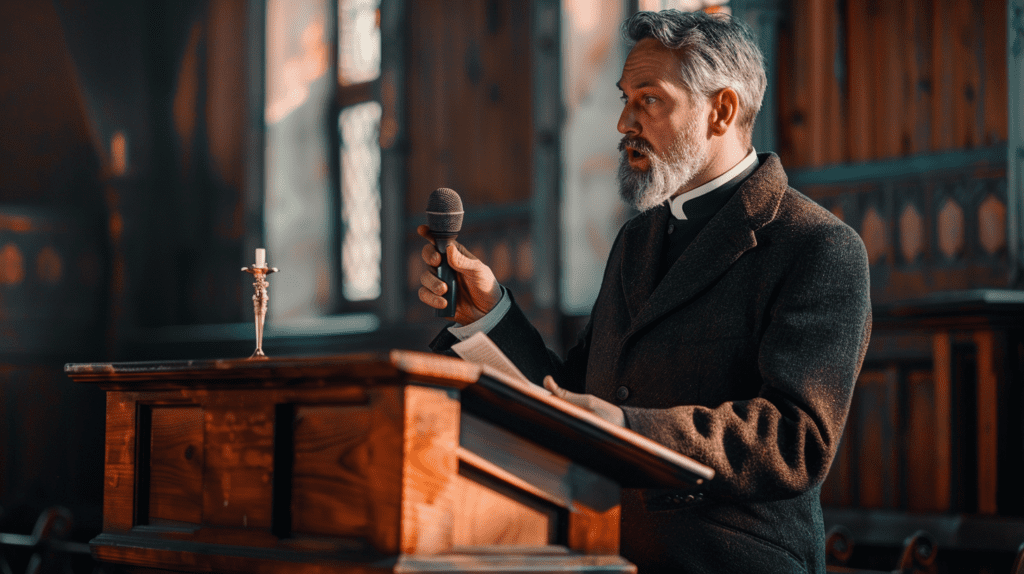
Sermon, by Midjourney
  • seven mountains dominionism; 7D — Christian movement that advocates for Christian influence in seven major spheres of society: Religion, Family, Education, Government, Media, Arts & Entertainment, and Business. The goal is to bring about societal transformation in accordance with biblical principles.
  • soft coup d’etat — refers to a non-violent overthrow of a government or significant change in power structures, achieved through non-traditional means such as legal challenges, political maneuvering, or psychological operations rather than direct military action.
  • Telecommunications Act of 1996 — a comprehensive law in the United States that overhauled telecommunications regulation. It aimed to deregulate the broadcasting market, encourage competition, and promote the rapid deployment of new telecommunications technologies.
  • televangelism — the use of television broadcasts to spread Christian religious teachings. Televangelists often appeal to viewers for financial donations and may be associated with charismatic preaching and the Prosperity Gospel.
  • theoconservatives — Theoconservatives, or “theocons,” are conservatives who advocate for the integration of traditional religious values into public policy and government. They emphasize the role of faith in political life and often champion causes related to moral and social issues.
  • “traditional marriage” — typically refers to a socially recognized and legally sanctioned union between one man and one woman. Advocates for this definition often oppose the legalization of same-sex marriage, arguing for the preservation of historical and religious norms.
  • War on Christmas — a term used by some to describe perceived attempts to minimize or eliminate public expression of Christmas traditions, symbols, and expressions in secular or public spaces, arguing that such efforts undermine Christian values and cultural heritage.


See also: A list of Christian nationalists

Learn more

Read more

The essence of the Soviet term bespredel is the “limitless and total lack of accountability of the elite oligarchs”; lawlessness; anarchy; no presence of the rule of law.

“Bespredel” is a Russian term that has seeped into broader discourse, particularly in discussions about social, political, and cultural behaviors. At its core, “bespredel” translates to “limitlessness” or “without limit,” but its connotations stretch far beyond this literal interpretation.

Bespredel means a society without morals

It evokes a state of lawlessness, anarchy, or the absence of boundaries, where traditional rules and moral codes are disregarded. This concept is often associated with the extreme exertion of power and control, where individuals or groups act with impunity, unconstrained by societal norms or legal frameworks.

The term seems closely related to the concept of pathocracy, in which society’s most personality disordered individuals congregate at the helm of power and wreak their very worst havoc on the rest of the population.

Bespredel operates in multiple contexts

In various contexts, “bespredel” has been used to describe situations ranging from personal relationships to the highest levels of political power. It captures a sense of unchecked aggression, corruption, or exploitation, where the absence of limits leads to extreme and often destructive behavior.

This term is particularly resonant in discussions about the post-Soviet social landscape, where rapid changes and the vacuum of power sometimes led to chaotic conditions and a blurring of moral and legal boundaries as state capture and capital flight remade the country seemingly overnight. In literature and media, “bespredel” is employed to explore themes of nihilism, resistance, and the human condition in the face of overwhelming and unchecked authority.

Read more

In it simplest form, active measures incorporates information warfare aimed at undermining the West.

Active measures (“Π°ΠΊΡ‚ΠΈΠ²Π½Ρ‹Π΅ мСроприятия” in Russian) refer to a form of political warfare conducted by the Soviet Union and now, by extension, Russia, to influence the course of world events. These measures include a wide range of activities, such as espionage, the dissemination of propaganda, and the establishment of front organizations, all aimed at manipulating the public opinion and decision-making processes in other countries.

The goal is often to destabilize opponents and weaken alliances contrary to the interests of the Soviet Union or Russia, without engaging in much riskier direct military conflict.

Disinformation in active measures

Historically, active measures have included complex operations, such as spreading disinformation, orchestrating smear campaigns, and using psychological warfare to sow discord and confusion among the target population. For example, during the Cold War, the KGB engaged in active measures to spread false information about the United States, aiming to weaken its credibility and influence on the global stage.

These operations were meticulously planned and could span years or even decades, employing a variety of tactics from leaking altered documents to fostering relationships with sympathetic or unknowing individuals within influential positions.

In the digital age, the concept of active measures has evolved with technology. Social media platforms and the internet have become fertile grounds for such operations, allowing for the rapid spread of disinformation and the manipulation of public opinion on a scale previously unimaginable.

These modern active measures can involve cyber attacks, the use of trolls and bots to amplify divisive content, and the strategic release of hacked information to influence political outcomes, as seen in various elections around the world (the Wikileaks email dumps that helped Trump eke out the presidency in 2016, e.g.). The adaptability and covert nature of active measures make them a persistent challenge for governments and societies trying to safeguard democratic processes and maintain national security.

Read more

A “meme” is a term first coined by British evolutionary biologist Richard Dawkins in his 1976 book “The Selfish Gene.” Originally, it referred to an idea, behavior, or style that spreads from person to person within a culture. However, in the digital age, the term has evolved to specifically denote a type of media – often an image with text, but sometimes a video or a hashtag – that spreads rapidly online, typically through social media platforms like Facebook, Twitter/X, Reddit, TikTok, and generally all extant platforms.

Memes on the digital savannah

In the context of the internet, memes are a form of digital content that encapsulates a concept, joke, or sentiment in a highly relatable and easily shareable format. They often consist of a recognizable image or video, overlaid with humorous or poignant text that pertains to current events, popular culture, or universal human experiences. Memes have become a cornerstone of online communication, offering a way for individuals to express opinions, share laughs, and comment on societal norms.

Grumpy Cat meme: "There are two types of people in this world... and I hate them"

Once primarily a tool of whimsy, amusement, and even uplifit, in recent years memes have become far more weaponized by trolls and bad actors as part of a broader shift in internet culture towards incivility and exploitation. The days of funny cats have been encroached upon by the racism and antisemitism of Pepe the Frog, beloved patron saint meme of the alt-right. The use of memes to project cynicism or thinly-veiled white supremacy into culture and politics is an unwelcome trend that throws cold water on the formerly more innocent days of meme yore online.

Memes as tools of disinformation and information warfare

While memes are still used for entertainment and social commentary, they have also become potent tools for disseminating disinformation and conducting information warfare, both domestically and abroad. This is particularly evident in political arenas where, for instance, American right-wing groups have leveraged memes to spread their ideologies, influence public opinion, and discredit opposition.

  1. Simplicity and Virality: Memes are easy to create and consume, making them highly viral. This simplicity allows for complex ideas to be condensed into easily digestible and shareable content, often bypassing critical analysis from viewers.
  2. Anonymity and Plausible Deniability: The often-anonymous nature of meme creation and sharing allows individuals or groups to spread disinformation without accountability. The humorous or satirical guise of memes also provides a shield of plausible deniability against accusations of spreading falsehoods.
  3. Emotional Appeal: Memes often evoke strong emotional responses, which can be more effective in influencing public opinion than presenting factual information. The American right-wing, among other groups, has adeptly used memes to evoke feelings of pride, anger, or fear, aligning such emotions with their political messages.
  4. Echo Chambers and Confirmation Bias: Social media algorithms tend to show users content that aligns with their existing beliefs, creating echo chambers. Memes that reinforce these beliefs are more likely to be shared within these circles, further entrenching ideologies and sometimes spreading misinformation.
  5. Manipulation of Public Discourse: Memes can be used to distract from important issues, mock political opponents, or oversimplify complex social and political problems. This can skew public discourse and divert attention from substantive policy discussions or critical events.
  6. Targeting the Undecided: Memes can be particularly effective in influencing individuals who are undecided or less politically engaged. Their simplicity and humor can be more appealing than traditional forms of political communication, making them a powerful tool for shaping opinions.

Memes in political campaigns

Memes have been used to discredit candidates or push particular narratives that favor right-wing ideologies. Memes have also been employed to foster distrust in mainstream media and institutions, promoting alternative, often unfounded narratives that align with right-wing agendas.

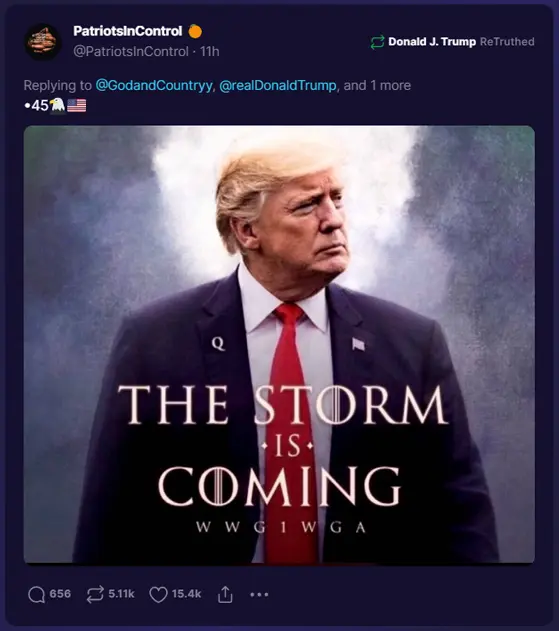
Trump QAnon meme: "The Storm is Coming" in Game of Thrones font, shared on Truth Social

While often benign and humorous, memes can also be wielded as powerful tools of disinformation and information warfare. The American right-wing, among other political groups globally, has harnessed the viral nature of memes to influence public opinion, manipulate discourse, and spread their ideologies. As digital media continues to evolve, the role of memes in political and social spheres is likely to grow, making it crucial for consumers and citizens to approach them with a critical eye.

More about memes

Read more

The “repetition effect” is a potent psychological phenomenon and a common propaganda device. This technique operates on the principle that repeated exposure to a specific message or idea increases the likelihood of its acceptance as truth or normalcy by an individual or the public. Its effectiveness lies in its simplicity and its exploitation of a basic human cognitive bias: the more we hear something, the more likely we are to believe it.

Repetition effect, by Midjourney

Historical context

The repetition effect has been used throughout history, but its most notorious use was by Adolf Hitler and the Nazi Party in Germany. Hitler, along with his Propaganda Minister, Joseph Goebbels, effectively employed this technique to disseminate Nazi ideology and promote antisemitism. In his autobiography “Mein Kampf,” Hitler wrote about the importance of repetition in reinforcing the message and ensuring that it reached the widest possible audience. He believed that the constant repetition of a lie would eventually be accepted as truth.

Goebbels echoed this sentiment, famously stating, “If you tell a lie big enough and keep repeating it, people will eventually come to believe it.” The Nazi regime used this strategy in various forms, including in speeches, posters, films, and through controlled media. The relentless repetition of anti-Semitic propaganda, the glorification of the Aryan race, and the demonization of enemies played a crucial role in the establishment and maintenance of the Nazi regime.

Psychological basis

The effectiveness of the repetition effect is rooted in cognitive psychology. This bias is known as the “illusory truth effect,” where repeated exposure to a statement increases its perceived truthfulness. The phenomenon is tied to the ease with which familiar information is processed. When we hear something repeatedly, it becomes more fluent to process, and our brains misinterpret this fluency as a signal for truth.

Modern era usage

The transition into the modern era saw the repetition effect adapting to new media and communication technologies. In the age of television and radio, political figures and advertisers used repetition to embed messages in the public consciousness. The rise of the internet and social media has further amplified the impact of this technique. In the digital age, the speed and reach of information are unprecedented, making it easier for false information to be spread and for the repetition effect to be exploited on a global scale.

The repetition effect on screens and social media, by Midjourney

Political campaigns, especially in polarized environments, often use the repetition effect to reinforce their messages. The constant repetition of slogans, talking points, and specific narratives across various platforms solidifies these messages in the public’s mind, regardless of their factual accuracy.

Ethical considerations and countermeasures

The ethical implications of using the repetition effect are significant, especially when it involves spreading disinformation or harmful ideologies. It raises concerns about the manipulation of public opinion and the undermining of democratic processes.

To counteract the repetition effect, media literacy and critical thinking are essential. Educating the public about this psychological bias and encouraging skepticism towards repeated messages can help mitigate its influence. Fact-checking and the promotion of diverse sources of information also play a critical role in combating the spread of falsehoods reinforced by repetition.

Repetition effect: A key tool of propaganda

The repetition effect is a powerful psychological tool in the arsenal of propagandists and communicators. From its historical use by Hitler and the fascists to its continued relevance in the digital era, this technique demonstrates the profound impact of repeated messaging on public perception and belief.

While it can be used for benign purposes, such as in advertising or reinforcing positive social behaviors, its potential for manipulation and spreading misinformation cannot be understated. Understanding and recognizing the repetition effect is crucial in developing a more discerning and informed approach to the information we encounter daily.

Read more

The term “alternative facts” gained widespread attention on January 22, 2017, when Kellyanne Conway, then-Counselor to President Donald Trump, used it during a “Meet the Press” interview. Conway was defending White House Press Secretary Sean Spicer’s false statements about the attendance numbers at Trump’s presidential inauguration the day before.

When challenged by the interviewer, who cited several facts indicating a much smaller crowd size relative to President Obama‘s inauguration, Conway asserted that Spicer was offering “alternative facts” to the media reports, which suggested a lower attendance compared to previous inaugurations.

Kellyanne Conway, by Midjourney

Philosophical and Historical Context

The term, while new in its specific phrasing, taps into a long-standing philosophical debate about truth and reality. Historically, the idea that there can be different interpretations of facts has roots in relativism and constructivism.

However, the way “alternative facts” was used implied a more radical departure from the accepted notion of objective facts, tilting towards a post-truth era where the line between truth and falsehood becomes blurred. It indicated an intentional strategy of disseminating disinformation early on in the Trump administration, and articulated it out loud in a way that previous presidents had never done before.

Use in US politics

The use of “alternative facts” in US politics has been controversial and highly debated. Proponents argue that the term simply reflects different perspectives and interpretations of events. Critics, however, see it as an attempt to legitimize falsehoods or misleading information, particularly when used by those in power to contradict evidence and well-established facts.

The term quickly became symbolic of the Trump administration’s relationship with the media and its approach to information dissemination. It was seen as part of a broader strategy that involved discrediting mainstream media as so-called “fake news,” promoting favorable narratives, and challenging the notion of objective truth. It extended the already prevalent right-wing strategy of science denialism into a kind of denialism of reality itself — a dangerous path towards authoritarianism reminiscent of the use of Newspeak in George Orwell’s famous classic dystopian novel, 1984.

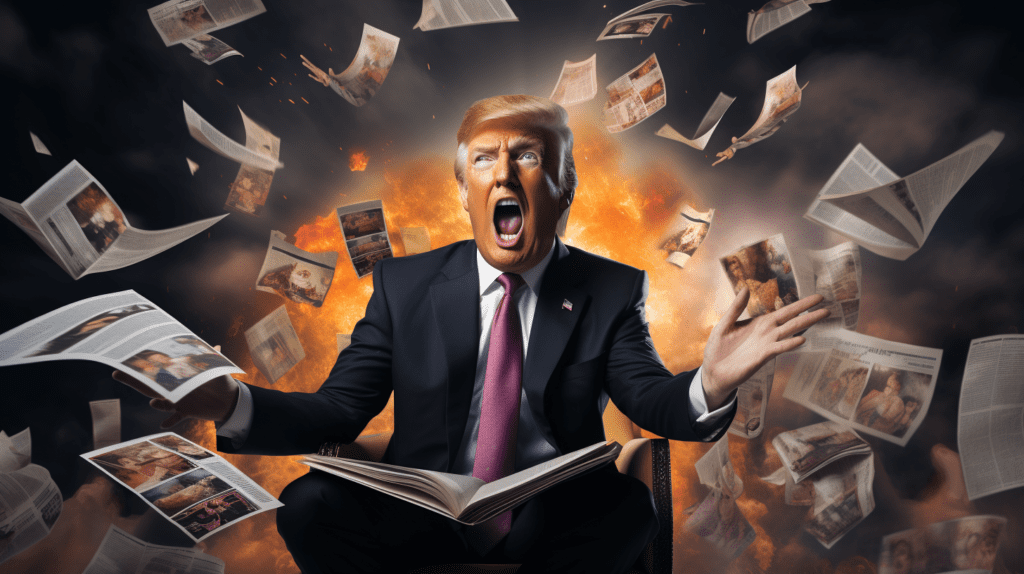
Donald Trump spewing "Alternative Facts" into the disinformation ecosystem, by Midjourney

Implications for American democracy

The implications of the widespread use of “alternative facts” for American democracy are profound and multifaceted:

  1. Erosion of Trust: The concept challenges the role of a free press and fact-checking institutions in democracy. When official statements are at odds with verifiable evidence, it erodes public trust in both the government and the media.
  2. Polarization: It exacerbates political polarization. When people cannot agree on basic facts, finding common ground becomes challenging, leading to a more divided society.
  3. Manipulation and Propaganda: The term can be weaponized for political ends, allowing for manipulation of public opinion and spreading propaganda.
  4. Accountability and Governance: In a democracy, accountability is key. If leaders are seen to use “alternative facts” without consequence, it undermines democratic governance and the expectation that leaders are truthful and transparent.
  5. Public Discourse and Decision Making: Accurate information is crucial for informed decision making by the electorate. When false information is disseminated under the guise of “alternative facts,” it impairs the public’s ability to make informed decisions.
  6. Legal and Ethical Concerns: The concept raises ethical concerns about honesty and integrity in public office and can complicate legal proceedings when factual accuracy is disputed.

The dangers of “reality denial”alternative facts” in political discourse

“Alternative facts,” as a term and a concept, represents more than just a linguistic novelty; it signifies a shift in the landscape of political discourse and the relationship between truth, power, and democracy. Its emergence and use reflect deeper tensions in society about trust, media, and the nature of reality itself. For American democracy, grappling with the implications of this term is not just an intellectual exercise but a necessary endeavor to preserve the integrity of our democratic institutions and public discourse.

It’s one thing to have legitimately different perspectives on the issues. It’s quite another to throw out the founding ideals and Enlightenment principles of rational inquiry, scientific observation, and reality testing altogether. If we cannot agree even on the basic facts of a situation, the ability to arrive at any kind of policy consensus about what to do to solve issues and problems in society that will always occur is deeply impaired — and indeed, our democracy is placed in great peril.

We must recommit fully to the finding of Actual Facts — and put behind us the childish nursing of our favored Alternative Facts.

Read more

Climate Change Denial: From Big Tobacco Tactics to Today’s Global Challenge

In the complex narrative of global climate change, one pervasive thread is the phenomenon of climate change denial. This denial isn’t just a refusal to accept the scientific findings around climate change; it is a systematic effort to discredit and cast doubt on environmental realities and the need for urgent action.

Remarkably, the roots of this denial can be traced back to the strategies used by the tobacco industry in the mid-20th century to obfuscate the link between smoking and lung cancer. This companies conspired to create a disinformation campaign against the growing scientific consensus on the manmade nature of climate change, to cast doubt about the link between the burning of fossil fuels and the destruction of the planet’s natural ecosystems — and they succeeded, for over half a century, beginning in 1953.

climate change and its denial, by Midjourney

Origins in big tobacco’s playbook

The origins of climate change denial lie in a well-oiled, public relations machine initially designed by the tobacco industry. When scientific studies began linking smoking to lung cancer in the 1950s, tobacco companies launched an extensive campaign to challenge these findings. Their strategy was not to disprove the science outright but to sow seeds of doubt, suggesting that the research was not conclusive and that more studies were needed. This strategy of manufacturing doubt proved effective in delaying regulatory and public action against tobacco products, for more than 5 decades.

Adoption by climate change deniers

This playbook was later adopted by those seeking to undermine climate science. In the late 20th century, as scientific consensus grew around the human impact on global warming, industries and political groups with a vested interest in maintaining the status quo began to employ similar tactics around lying at scale. They funded research to challenge or undermine climate science, supported think tanks and lobbyists to influence public opinion and policy, and used media outlets to spread a narrative of uncertainty and skepticism.

Political consequences

The political consequences of climate change denial have been profound. In the United States and other countries, it has polarized the political debate over environmental policy, turning what is fundamentally a scientific issue into a partisan one. This politicization has hindered comprehensive national and global policies to combat climate change, as legislative efforts are often stalled by ideological conflicts.

a burning forest of climate change, by Midjourney

Denial campaigns have also influenced public opinion, creating a significant segment of the population that is skeptical of climate science years after overwhelming scientific consensus has been reached, which further complicates efforts to implement wide-ranging environmental reforms.

Current stakes and global impact

Today, the stakes of climate change denial could not be higher. As the world faces increasingly severe consequences of global warming β€” including extreme weather events, rising sea levels, and disruptions to ecosystems β€” the need for decisive action becomes more urgent. Yet, climate change denial continues to impede progress. By casting doubt on scientific consensus, it hampers efforts to build the broad public support necessary for bold environmental policies that may help thwart or mitigate some of the worst disasters.

Moreover, climate change denial poses a significant risk to developing countries, which are often the most vulnerable to climate impacts but the least equipped to adapt. Denialism in wealthier nations can lead to a lack of global cooperation and support needed to address these challenges comprehensively.

Moving forward: acknowledging the science and embracing action

To effectively combat climate change, it is crucial to recognize the roots and ramifications of climate change denial. Understanding its origins in the Big Tobacco disinformation strategy helps demystify the tactics used to undermine environmental science. It’s equally important to acknowledge the role of political and economic interests in perpetuating this denial — oil tycoon Charles Koch alone spends almost $1 billion per election cycle, heavily to climate deniers.

A climate change desert, by Midjourney

However, there is a growing global movement acknowledging the reality of climate change and the need for urgent action. From international agreements like the Paris Accord to grassroots activism pushing for change, there is a mounting push against the tide of denial.

Climate change denial, with its roots in the Big Tobacco playbook, poses a significant obstacle to global efforts to address environmental challenges. Its political ramifications have stalled critical policy initiatives, and its ongoing impact threatens global cooperation. As we face the increasing urgency of climate change, acknowledging and countering this denial is crucial for paving the way towards a more sustainable and resilient future.

Read more

the deep state

The “deep state” conspiracy theory, particularly as it has been emphasized by supporters of former President Donald Trump, alleges the existence of a hidden, powerful network within the U.S. government, working to undermine and oppose Trump’s presidency and agenda. In reality, the epithet is an elaborate way of discrediting the non-partisan civil service personnel who are brought in to government for their expertise and competence, who typically remain in their posts through Presidential transitions regardless of which party is occupying the White House.

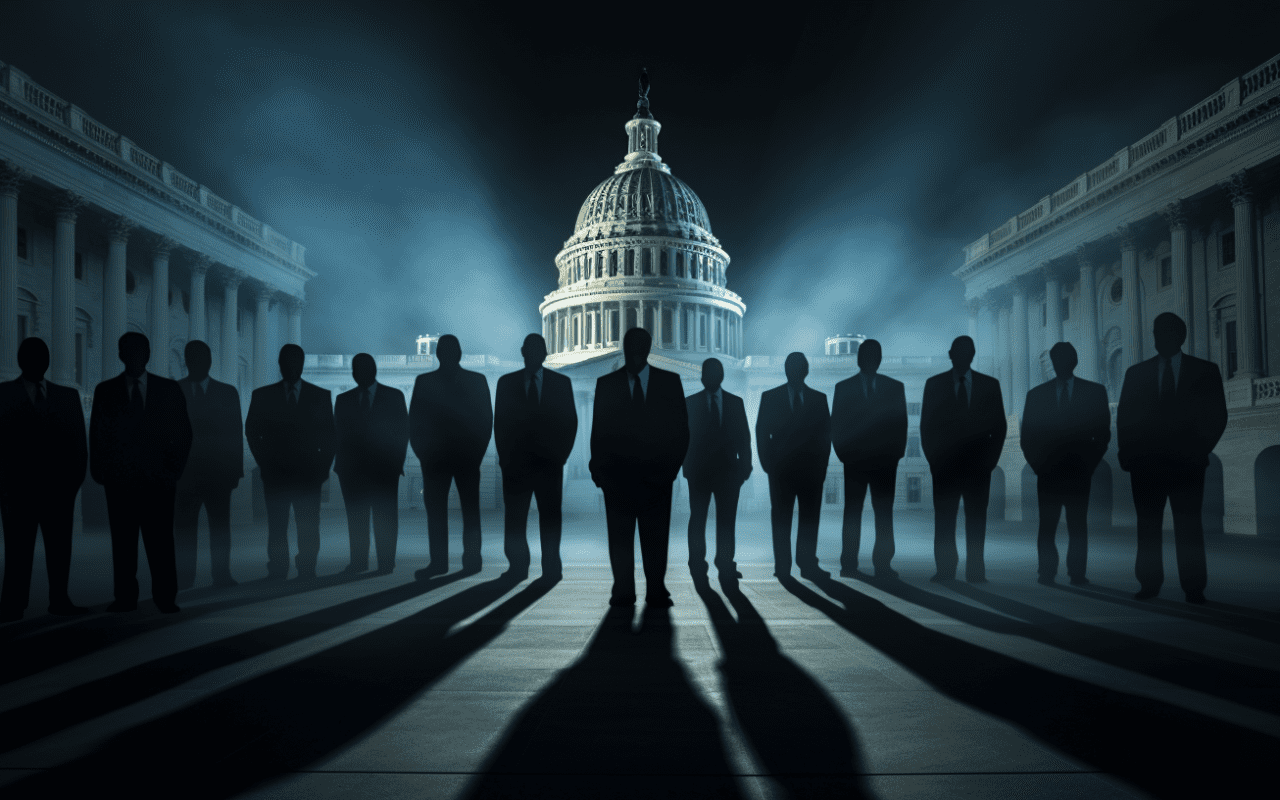
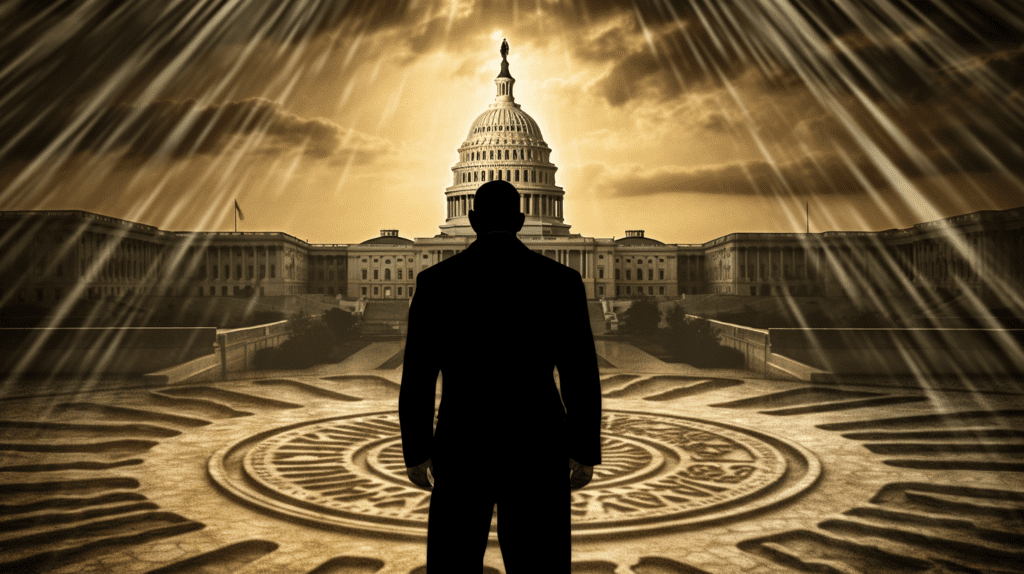
The deep state gathers in front of the US Capitol, by Midjourney

Origin of the deep state meme

The term “deep state” originated in Turkey in the 1990s, referring to a clandestine network of military officers and their civilian allies who, it was believed, were manipulating Turkish politics. In the American context, the term was popularized during the Trump administration as a meme, evolving to imply a shadowy coalition — echoing other popular conspiracy theories such as the antisemitic global cabal theory — within the U.S. government, including intelligence agencies, the civil service, and other parts of the bureaucracy.

Main claims

  1. Bureaucratic opposition: The theory posits that career government officials, particularly in intelligence and law enforcement agencies, are systematically working against Trump’s interests. This includes alleged sabotage of his policies and leaking information to the media.
  2. Manipulation of information: Proponents believe that these officials manipulate or withhold information to influence government policy and public opinion against Trump.
  3. Alleged connections with other theories: The deep state theory often intersects with other conspiracy theories, like those surrounding the investigation of Russian interference in the 2016 election and the impeachment proceedings against Trump. It suggests these events were orchestrated by the deep state to discredit or destabilize his presidency.

Contextual factors

  1. Political polarization: The rise of the deep state theory is partly attributed to the increasing political polarization in the U.S. It serves as a narrative to explain and rally against perceived opposition within the government.
  2. Media influence: Certain media outlets and social media platforms have played a significant role in propagating this theory. It’s often amplified by commentators who support Trump, contributing to its widespread dissemination among his base.
  3. Trump’s endorsement: Trump himself has referenced the deep state, particularly when discussing investigations into his administration or when responding to criticism from within the government.

Criticism and counterarguments to deep state “theory”

  1. Lack of concrete evidence: Critics argue that the deep state theory lacks substantial evidence. They contend that routine government processes, checks and balances, and the separation of powers are mischaracterized as clandestine operations.
  2. Undermining trust in institutions: There’s concern that such theories undermine public trust in vital governmental institutions, particularly those responsible for national security and law enforcement.
  3. Political tool: Detractors view the deep state concept as a political tool used to dismiss or discredit legitimate investigation and opposition.
Deep state conspiracy theory, as illustrated by Midjourney

Impact on governance and society

  1. Influence on supporters: For many Trump supporters, the deep state theory provides an explanatory framework for understanding his political challenges and defeats. It galvanizes his base by portraying him as an outsider battling corrupt, entrenched interests.
  2. Public trust and conspiracism: The theory contributes to a broader erosion of trust in government and institutions, fostering a climate where conspiratorial thinking becomes more mainstream.
  3. Policy implications: Belief in the deep state can impact policy discussions and decisions, as it frames certain government actions and policies as inherently suspect or malicious.

Comparative perspective

Globally, similar theories exist in various forms, often reflecting local political and historical contexts. They typically emerge in situations where there is a distrust of the political establishment and are used to explain perceived injustices or power imbalances.

The deep state conspiracy theory as espoused by Trump’s MAGA movement plays a significant role in current American political discourse, impacting public perception of government, policy debates, and the broader social and political climate. Its lack of verifiable evidence and potential to undermine democratic institutions make it a dangerous propaganda prop applied recklessly by the current GOP frontrunner for the 2024 nomination.

Books on conspiracy theories

More conspiracy theories

Read more

PizzaGate originated in 2016 from the hacked emails of John Podesta, Hillary Clinton‘s campaign manager, published by WikiLeaks. Internet users on platforms like 4chan and Reddit began to interpret these emails, focusing on those that mentioned pizza and other food items. They falsely claimed these were code words for a child sex trafficking ring operated by high-ranking Democratic Party members and associated with a Washington, D.C., pizzeria named Comet Ping Pong.

The theory was fueled by various coincidences and misinterpretations. For instance, references to pizza were interpreted as part of a secret code, and the pizzeria’s quirky artwork was misconstrued as sinister symbolism. Despite the lack of credible evidence, these interpretations quickly gained traction online.

PizzaGate conspiracy theory, imagined by Midjourney

The broader political context

PizzaGate should be understood within the broader political context of the 2016 U.S. presidential election. This period was marked by intense partisanship and the proliferation of disinformation and fake news, with social media acting as a catalyst. The theory emerged against the backdrop of a highly contentious election, with Hillary Clinton as a polarizing figure. In such a climate, conspiracy theories found fertile ground to grow, particularly among those predisposed to distrust the political establishment.

Impact and aftermath

The most immediate and dangerous impact of PizzaGate was an incident in December 2016, when Edgar Maddison Welch, motivated by the conspiracy theory, fired a rifle inside Comet Ping Pong. Fortunately, there were no injuries. This incident highlighted the real-world consequences of online conspiracy theories and underscored the potential for online rhetoric to inspire violent actions.

In the aftermath, social media platforms faced criticism for allowing the spread of baseless allegations. This led to discussions about the role of these platforms in disseminating fake news and the balance between free speech and the prevention of harm.

Lasting effects

PizzaGate had several lasting effects:

  1. Polarization and distrust: It exacerbated political polarization and distrust towards mainstream media and political figures, particularly among certain segments of the population.
  2. Conspiracy culture: The incident became a significant part of the modern conspiracy culture, linking it to other conspiracy theories and contributing to a growing skepticism of official narratives.
  3. Social media policies: It influenced how social media companies manage content, leading to stricter policies against misinformation and the promotion of conspiracy theories.
  4. Public awareness: On a positive note, it raised public awareness about the dangers of misinformation and the importance of critical thinking in the digital age.
  5. Legitimacy of investigations: The theory, though baseless, led some people to question the legitimacy of genuine investigations into sexual misconduct and abuse, potentially undermining efforts to address these serious issues.

Caveat, Internet

PizzaGate serves as a stark reminder of the power of the internet to spread misinformation and the real-world consequences that can ensue. It reflects the complexities of the digital age, where information, regardless of its veracity, can be disseminated widely and rapidly. As we continue to navigate this landscape, understanding phenomena like PizzaGate becomes crucial in fostering a more informed and discerning online community — as well as thwarting the march of fascism.

Read more

The Snow Revolution was a series of popular protests beginning in Moscow in 2011, demanding the reinstatement of free elections, the ability to form opposition parties, and the end of massive state corruption. The protests were sparked by claims of electoral fraud in the 2011 Russian parliamentary elections and were further fueled by Vladimir Putin‘s announcement that he would seek a third presidential term.

Tens of thousands of Russians took to the streets in Moscow and other cities, marking the largest public demonstrations since the fall of the Soviet Union. Hundreds if not thousands of protestors were detained on the first day of action (Dec 5), continuing over the next 2 years as punishments grew increasingly harsh and more activists were sent to penal colonies.

Snow Revolution in Russia, by Midjourney

The role of social media in the Snow Revolution

The protests were notable for their use of technology and social media, which played a crucial role in organizing and spreading awareness. This was a new phenomenon in Russian political activism, reflecting the influence of the digital age on political movements.

One of the leaders of the Snow Revolution, Alexei Navalny, emerged as a serious rival to Putin’s rule. In 2020 the Russian dictator had the popular blogger-turned-political leader poisoned with the powerful nerve agent novichok. He was treated in Germany and managed to survive, only to voluntarily return and be thrown into prison indefinitely by the Russian state.

Alexei Navalny in a high-security prison, by Midjourney

Aftermath of the Snow Revolution

The Russian government responded with a mix of concessions and repressions. While some dialogue was opened with opposition figures, and a few electoral reforms were promised, there was also a significant crackdown on protesters, opposition leaders, and non-governmental organizations, especially those receiving foreign funding.

The Snow Revolution did not lead to immediate substantial political change in Russia. Putin was re-elected in 2012, and the United Russia party maintained its dominance. However, the movement had a lasting impact on the Russian political landscape. It exposed the growing divide between the government and a significant segment of the population, particularly among the urban, educated middle class. It also demonstrated a rising discontent with authoritarian governance and a growing awareness and engagement in political processes among the Russian public.

The Snow Revolution marked a significant moment in modern Russian history, highlighting the power and limitations of protest movements in challenging entrenched political systems.

Read more

republican vs. democrat cage match boxing ring

Buckle up, we’re in for a wild ride. Many of the serious scholars of political history and authoritarian regimes are sounding the alarm bells that America has rapidly tilted towards authoritarianism. How did we get here?! How has hyper partisanship escalated to the point of an attempted coup that is not only shrugged off, but nurtured by the party in power?

These are some of the resources that have helped me continue grappling with these questions, and with the rapidly shifting landscape of information warfare. How can we understand this era of polarization, this age of tribalism? This piece is a (slow!) work in progress, and I’m planning to keep adding to this list as the tape keeps rolling.

Key Events: In bite-sized Mini History format

The roots of today’s political extremism run deep and long, so it’s helpful to get at least a bit of pre-history refresher material to set the context for more recent times. I’ve been doing these short 40-second mini history videos with AI and they’re great for resurfacing things we’ve no doubt forgotten about since grade school in some cases.

These are the key developments I’ve covered so far, and I’ll keep filling in this section as I produce more.

The Original American Schism

Civil War & the Lincoln-Douglas Debates Before there was red versus blue, there was free versus slave. The Lincoln-Douglas debates of 1858 laid bare the fundamental moral fissure that would tear the nation apart β€” and established that American polarization isn’t a bug, it’s a feature baked into the republic’s DNA from the start.

The Ideology of Inequality

Mudsill Theory In 1858, pro-slavery Senator James Henry Hammond articulated the philosophical architecture that still animates conservative economics today: society requires a permanent underclass to function. From “mud-sill” to “takers versus makers,” the through-line to modern wealth-class rhetoric is disturbingly direct.

Continue reading Hyper Partisanship: Why are we so politically polarized?
Read more

Fascism is a specific type of authoritarianism. Both are forms of government characterized by tightly centralized power, either under a sole dictatorship / demagogue or a small cadre of rulers — typically of wealthy oligarchs — where rule is absolute and the vast majority of people have little say in policy-making or national events. Identifying authoritarianism vs. fascism isn’t always a clearcut distinction, particularly given that one of the hallmarks of fascism is often that fascist leaders tend to conceal or hide their ideological aims until they achieve power and sometimes even beyond — so as not to alert the public to their true plans until it’s too late for people to fight back.

Under both authoritarianism and fascism, there is little or no political freedom and few (if any) individual rights. Authoritarian governments often use force or coercion to maintain control, dissent is typically suppressed, and political violence is tacitly encouraged so long as it is in support of the ruling regime.

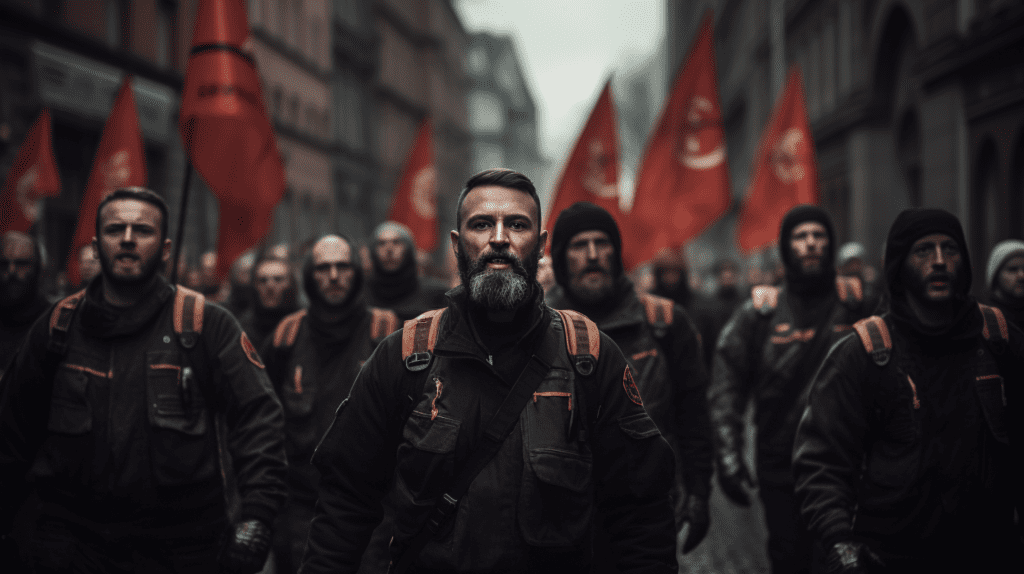
fascists marching in the streets, by Midjourney

Fascism is one type of authoritarian political system

Fascism is a type of authoritarianism with distinct ideological features that emerged in the early 20th century. In addition to the core characteristics of authoritarian government, fascism is typified by extreme nationalism, a belief in the superiority of one’s own race or nation (a form of collective narcissism), and propaganda about both a mythical past and a promised utopian future. The idea of hierarchy is central to fascist mythology, with a core belief in a “natural” social hierarchy that — curiously — must be maintained by force.

Fascist regimes often promote aggressive foreign policies and use violence and intimidation to suppress opposing views. Other key features of fascism include a cult of personality around the leader, a focus on traditional values, and the use of propaganda and disinformation to control public opinion.

Fascist regimes of the 20th century

  1. Italy (1922-1943): Italy was the birthplace of fascism, and under the leadership of Benito Mussolini, it became the first fascist regime in the world. Mussolini and his National Fascist Party came to power in 1922, and ruled Italy as a one-party state until he was deposed in 1943.
  2. Germany (1933-1945): Nazi Germany, led by Adolf Hitler and the National Socialist German Workers’ Party, was a fascist regime that came to power in 1933. The Nazi regime was known for its extreme racism, antisemitism, militarism, and aggressive expansionism, which ultimately led to World War II and the genocide of the Holocaust.
  3. Spain (1939-1975): After a bloody civil war, General Francisco Franco established a fascist dictatorship in Spain in 1939. Franco’s regime was characterized by authoritarianism, repression, and a focus on traditional Catholic values.
  4. Portugal (1932-1974): Portugal was ruled by a fascist regime under the Estado Novo (New State) government, led by Antonio de Oliveira Salazar, from 1932 until 1974. The Estado Novo government was characterized by authoritarianism, nationalism, and corporatism.
  5. Romania (1940-1944): Ion Antonescu, a military dictator and fascist sympathizer, came to power in Romania in 1940. Antonescu’s regime was characterized by anti-Semitism, political repression, and a close alliance with Nazi Germany.
  6. Hungary (1944-1945): Hungary was ruled by a fascist government under Ferenc SzΓ‘lasi and the Arrow Cross Party from 1944 until the end of World War II. The Arrow Cross regime was known for its extreme anti-Semitism and brutality.
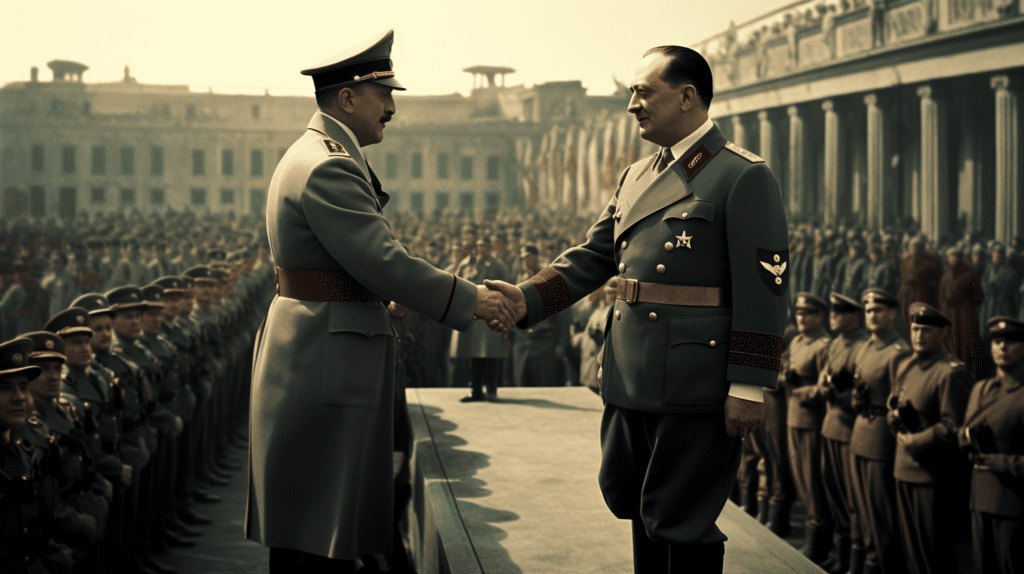
Adolf Hitler and Benito Mussolini shaking hands in front of a crowd of soldiers, by Midjourney

The cognitive dissonance of fascist ideology

One of the many things I find problematic about fascism’s core belief system is its insistence on enforcing a “natural” social hierarchy. Personally, I find this to be something I call a “self-evident falsehood” — because if the social hierarchy were really natural, it would not require force to maintain it. It would exist in a state of natural equilibrium that does not require the expenditure of effort.

Applying violence and coercion to a population requires a considerable amount of work, and work comes at a cost — a cost factor that is both an unnecessary waste and a destabilizing force acting on society. Those who claim today in America to be upholding the nation’s “original ideals” would do well to remember the self-evident truths we fought a Revolution over: “that all men are created equal.”

Authoritarian regimes in world history

Authoritarianism is an older and more prevalent form of government than fascism, given its origins over 2000 years ago with the Roman Empire. Some of the most notable authoritarian regimes are as follows:

  1. The Roman Empire (27 BC – 476 AD): The Roman Empire was a vast and powerful empire that was ruled by an authoritarian government, after Julius Caesar overthrew the Roman Republic shortly before the turn of the millennium in 27 BC. After his son Octavian emerged victorious from a series of civil wars that followed, a succession of Roman emperors who had almost unlimited power ruled the Empire, and dissent was often suppressed with violence.
  2. The Mongol Empire (1206-1368): The Mongol Empire was one of the largest empires in history, and it was ruled by a series of authoritarian leaders who conquered and subjugated vast territories across Asia, Europe, and the Middle East — most notably Genghis Khan.
  3. The Ottoman Empire (1299-1922): The Ottoman Empire was a vast and powerful Islamic empire that was ruled by a series of sultans who held absolute power over their subjects.
  4. The Soviet Union (1917-1991): The Soviet Union was a communist state that was ruled by the Communist Party and its leaders, including Joseph Stalin. The Soviet regime was characterized by totalitarianism, repression, and the suppression of political dissent.
  5. China under Mao Zedong (1949-1976): Mao Zedong was the founder of the People’s Republic of China and the leader of the Chinese Communist Party. During his rule, China was transformed into a socialist state, but the regime was also characterized by repression, mass killings, and the suppression of political dissent.
  6. North Korea (1948-present): North Korea is a communist state that is ruled by the Workers’ Party of Korea and its leader, currently Kim Jong-un. The North Korean regime is known for its extreme repression, propaganda, and human rights abuses.
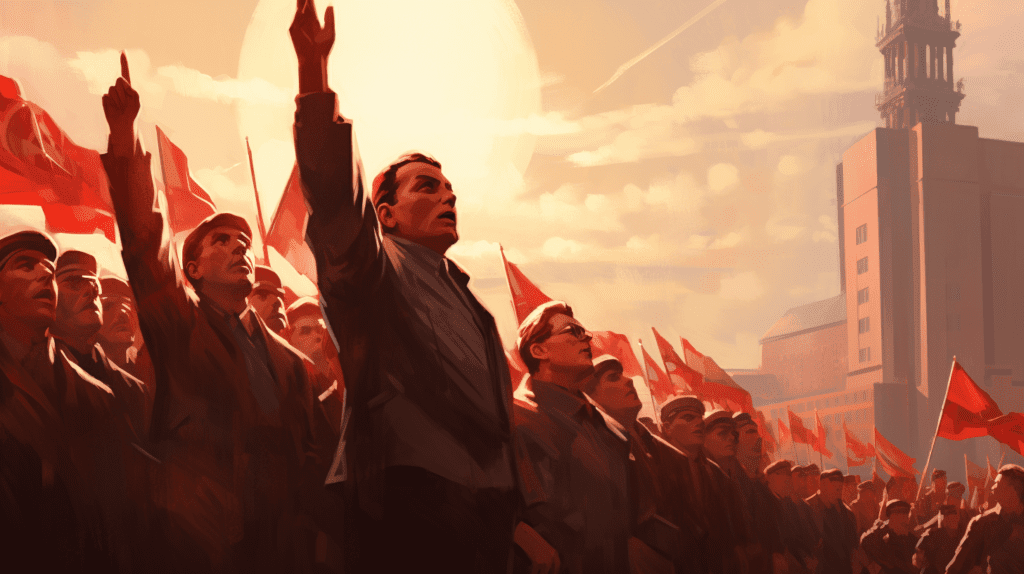
Authoritarian regimes like the Soviet Union, by Midjourney

Learn More:

Essential thinkers on authoritarian personality theory β†—

The authoritarian personality is characterized by excessive strictness and a propensity to exhibit oppressive behavior towards perceived subordinates.

American Fascists & the Global Right β†—

The rise of American fascists and right-wing extremism around the world has been a trend for decades.

Authoritarianism Dictionary β†—

This dictionary of authoritarianism collects definitions and charts the recent resurgence of language, ideology, tactics, and rhetoric of authoritarians in America and around the world.

More posts on fascism.

Read more

These days the GOP is just 3 cults in a trenchcoat — nevertheless, it’s helpful to understand some of the ideologies and extremist beliefs that folks on the right engage with. Understanding the psychology can help us make predictions about actions, reactions, and other developments in the political landscape.

What is an ideology?

An ideology is a comprehensive set of beliefs, ideas, and values that shape the way individuals or groups perceive the world and interact within it. It serves as a lens through which people interpret social, political, and economic phenomena, guiding their actions and decisions. Ideologies can be as broad as political doctrines like liberalism, conservatism, or socialism, or as specific as belief systems within a particular culture or organization.

Ideologies often manifest in various forms, such as political platforms, religious doctrines, or social movements. They can be explicit, where the principles are clearly outlined, or implicit, subtly influencing behavior without overt expression. Ideologies are not static; they evolve over time, adapting to new information, social changes, or shifts in power dynamics.

In the realm of politics and governance, ideologies play a crucial role. They inform policy decisions, shape public opinion, and influence the behavior of political actors. They can also be divisive, leading to conflict and exclusion of those who do not conform. In the media, ideologies can affect the framing of news and the dissemination of information, subtly shaping public perception.

Right-wing ideologies

Read more

Racists tend to see democracy itself as a conspiracy against white people, thanks in large part to the Lost Cause Religion that sprouted up after the South lost the Civil War and had to live with themselves after destroying their economy and stature for immoral ends. Authoritarians tend to get very agitated by diversity and difference. White nationalism is the Venn diagram between these two groups.

White nationalist ideology gained renewed attention in the late 20th and early 21st centuries, often manifesting through hate groups, online forums, and political movements. White nationalists argue for policies that would establish or maintain a white majority in the country, often opposing immigration from non-European countries and advocating for policies that they believe would preserve white culture. These views are widely considered to be based on racial prejudices and are often associated with hate crimes and domestic terrorism.

Prominent white nationalists

With the emergence of the alt-right and neoreactionary groups espousing flavors of accelerationism during the Trump era, a host of white nationalists have come out of the closet and said the quiet parts out loud. Here are a few figures to watch out for:

Related to white nationalism

Read more

strict father morality

Strict Father Morality is a term coined by cognitive linguist George Lakoff to describe a type of moral worldview that centers on the values of authority, discipline, and individual responsibility. This worldview is often associated with conservative political and social positions, and is often contrasted with a more nurturing and empathetic worldview that Lakoff refers to as the “Nurturant Parent” model — more closely aligned to a liberal and progressive worldview.

At the core of the Strict Father Morality worldview is the belief that the world is a fundamentally dangerous and competitive place, and that individuals must be prepared to compete and succeed in order to survive and thrive. In this worldview, the father is seen as the ultimate authority figure, responsible for providing for and protecting his family, and for instilling the discipline and self-control necessary for success in life.

Strict Father Morality -- a moral philosophy concept by Georg eLakoff

This patriarchal worldview is rooted in a traditional understanding of gender roles, where men are seen as the primary breadwinners and protectors, while women are seen as nurturing caregivers. This gendered division of labor is seen as necessary for the survival and flourishing of the family unit, and deviations from traditional gender roles are often viewed with suspicion or even hostility.

Christianity and Strict Father Morality

Central to the Strict Father Morality worldview is the idea that success is the result of hard work, self-discipline, and personal responsibility. Those who succeed in life are seen as having earned their success through their own efforts, while those who struggle or fail are seen as having brought it upon themselves through a lack of discipline or effort. This ideology is a derivative of the Protestant work ethic identified by sociologist Max Weber as one of the core animating worldviews behind fervent belief in capitalism.

Emerging out of Calvinism, the Protestant work ethic extends the idea that constant economic activity can show evidence of one’s eternal salvation. The emphasis on self-blame for one’s low economic condition is often used to justify policies that limit government intervention in areas such as healthcare, education, and social welfare.

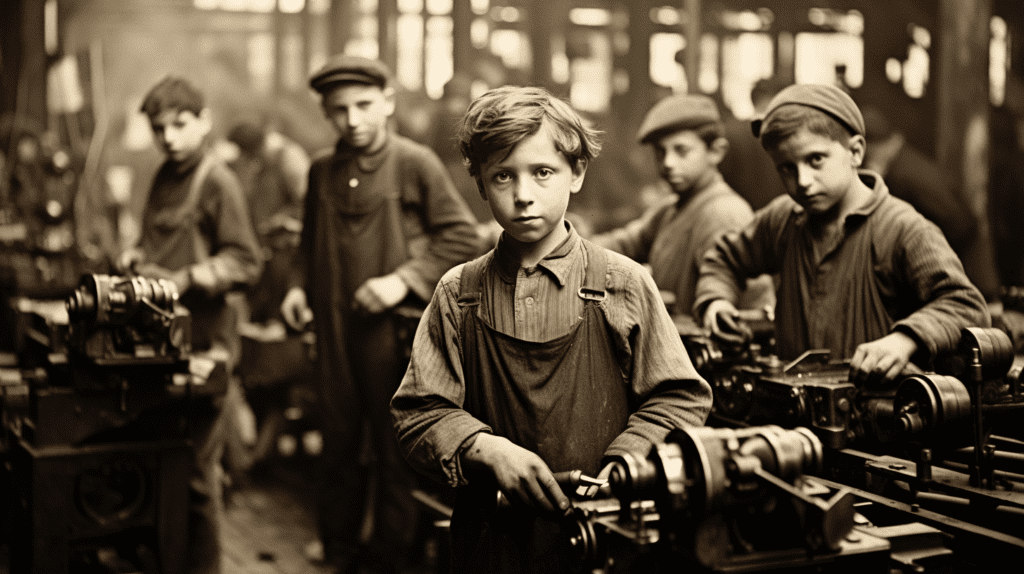
the Protestant work ethic drove society to justify sending children to work in dangerous factories

Black and white thinking and Strict Father Morality

Another important aspect of Strict Father Morality is the belief in moral absolutes and the importance of maintaining a strong moral code. This includes a belief in the importance of law and order, and the need to punish those who break the law. In this worldview, moral relativism is seen as a dangerous threat to the stability and order of society, and the preservation of traditional values is seen as essential to maintaining social cohesion and stability.

Critics of Strict Father Morality argue that it is overly simplistic and ignores the complexity of human experience. They argue that the overemphasis on blaming individuals for their circumstances is a form of victim blaming, and can encourage a lack of empathy for those who face systemic barriers to success. They note the similarity of the entire ideology to a type of black and white thinking, and also argue that the traditional gender roles and emphasis on hierarchy and authority can lead to authoritarianism and intolerance.

traditional gender roles, by Midjourney

Strict Father Morality is also seen as being aligned with sexism, racism, and bigotry in general. It’s associated with ideas long ago debunked, dispelled, or defeated as poor ways of viewing and interacting with the world — due to basic inaccuracy.

In summary, Strict Father Morality is a moral worldview that emphasizes the values of authority, hierarchy, discipline, and limited government involvement, and is rooted in a traditional understanding of gender roles and moral absolutes. While this worldview can provide a sense of security and stability, it has been criticized for its oversimplification of human experience and its potential to usher in authoritarianism and glorify intolerance.

Related:

Black and White Thinking β†—

Black and white thinking is the tendency to see things in extremes, and to view the world through a very polarized lens.

Christian Nationalism β†—

Christian nationalism is the belief in, and attempt to bring about, Christianity as the state religion in America — including the imposition of Biblical Law.

Bob Altemeyer The Authoritarians, a Summary β†—

Professor Altemeyer has studied authoritarianism and the authoritarian personality since 1966.

Read more