
The Kansas Prophecy: We Already Ran This Experiment and the SAVE Act in Kansas Was a Disaster
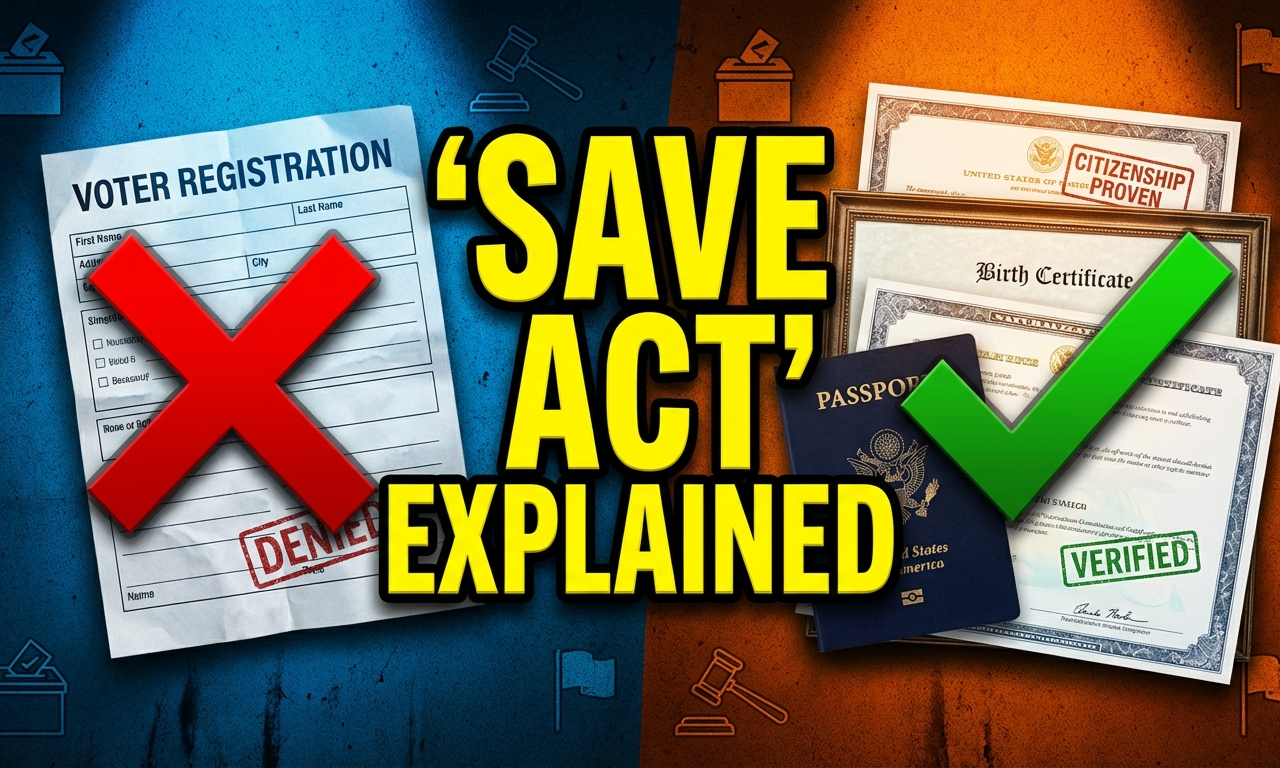
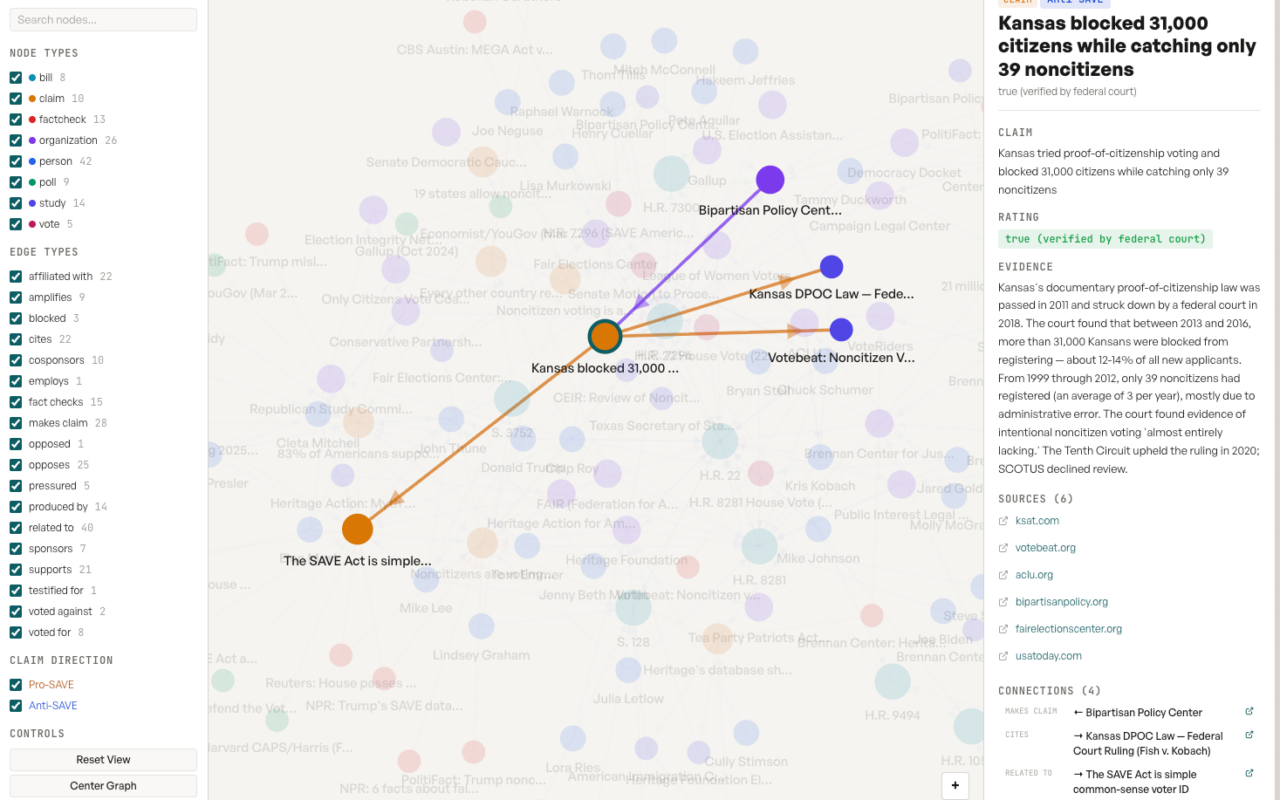
When Kansas tried its early version of the SAVE Act, a whopping 31,089 eligible American citizens were blocked from voting. Meanwhile only 39 noncitizens were “caught”… over 19 years. And many of them turned out to be administrative errors.
That’s the final score from Kansas’s proof-of-citizenship experiment — the same core policy the SAVE America Act would impose on all 50 states. Republicans are selling it as “election security.” Kansas already has the receipts on what it actually is.
Been There, Done That
In 2011, Kansas passed a law requiring documentary proof of citizenship to register to vote — a birth certificate, passport, or naturalization papers. It was the brainchild of then-Secretary of State Kris Kobach, who styled himself as America’s foremost crusader against the specter of rampant illegal voting. The law went into effect in 2013 and immediately went sideways.
DMV clerks weren’t allowed to request the new documents — or even tell people the requirement existed. Voter registration drives cratered: one effort at Washburn University collected 400 applications but managed to fully register roughly 75 people. A process that used to take five minutes stretched to an hour. Steven Fish, a warehouse worker born on a now-closed Air Force base in Illinois, couldn’t produce an acceptable birth certificate. Multiple plaintiffs in the lawsuit that followed were military veterans. All were U.S. citizens. None were the noncitizen bogeymen the law was supposed to stop.
The federal courts annihilated it. A 118-page district court ruling struck it down as unconstitutional. The 10th Circuit affirmed. The Supreme Court declined to hear it. The judge sanctioned Kobach personally and ordered him to take remedial legal education — a humiliation nearly without precedent for a sitting state official. Kansas paid $1.9 million in attorneys’ fees to the winning parties. The state’s current Republican Secretary of State, Scott Schwab — who voted for the law as a legislator — delivered the epitaph: “It didn’t work out so well.”
The “Problem” Rounds to Zero
And it’s not just Kansas. Everywhere officials have looked for the noncitizen voting crisis, they’ve found a rounding error:
The Heritage Foundation itself — which advocates for the SAVE Act — found 68 documented cases of noncitizen voting since the 1980s out of over a billion ballots cast; a rate of 0.0000001% (!). Utah reviewed its entire voter list of two million registrants and found one noncitizen registration and zero noncitizen votes. Georgia audited 8.2 million voters and found 20 noncitizens. The Brennan Center found 30 suspected cases across 23.5 million votes. This isn’t a policy responding to a problem. It’s a solution in search of a pretext.
The bill is also set to take effect immediately, which is fairly insane to think about such a radical change to the rules of voting mere months before an election. I’m old enough to remember when supposedly Good Governance dictated that we leave a Supreme Court seat empty for an entire year — allegedly so “The People” could have their say on this important lifetime appointment. If the precedent is supposed to be that no major structural changes happen during an election year, then how does the right wing justify the sudden about face? It’s okay only when a Republican is in office, no doubt.
Kansas at Scale
The SAVE America Act is Kansas’s disaster, federalized and supercharged. In addition to the proof-of-citizenship registration requirements, it would force states to hand voter roll data to DHS with no safeguards on how it’s used, criminalize election workers who register someone without the right paperwork — even if that person is a citizen — and effectively eliminate online registration, mail registration, and automatic voter registration programs used by millions.
It passed the House in February 2026. The Senate opened debate March 17. Prediction markets give it roughly an 11% chance of becoming law. Trump has threatened to block all other legislation — including DHS funding during a partial shutdown — until it passes. A leaked 17-page executive order draft would require all 211 million registered Americans to re-register in person if the Senate doesn’t comply.
SAVE Act Network Graph Explorer
Explore the web of people, organizations, and money behind the push.
The Quiet Part Out Loud
Kansas proved that proof-of-citizenship laws don’t catch noncitizen voters. They catch citizens. The 31,000-to-39 ratio isn’t a bug — it’s the feature. And the bill doesn’t need to pass the Senate to serve its real purpose: manufacturing a narrative that “Democrats are blocking election security,” setting the stage for executive overreach, filibuster destruction, or post-election delegitimization.
The Kansas cautionary tale isn’t that the policy is flawed. It’s that it works exactly as intended — just the opposite of the way they’re selling it.