There’s something conspicuously absent from American political discourse: actual discussion of values and the morals, ethical choices, and beliefs that go into the creation of good government policy.
Think about the last major political debate you watched, or the last campaign ad that stuck with you. How much of it was about what government should do versus who you should hate? How much was articulating a vision for society versus performing dominance over the out-group?
This isn’t an accident. It’s a strategy.
When your policy positions are wildly unpopular — when majorities oppose you on healthcare, taxation, abortion, climate change, guns, and wages — you don’t engage on the substance. You change the subject. You make politics about identity, grievance, and tribal belonging. You turn every election into a referendum on vibes rather than vision.
The American right has become extraordinarily sophisticated at this evasion. They’ve built an entire media ecosystem designed not to argue for right-wing values, but to ensure those values never have to be argued for at all. And the Trump administration is chock full of people from that media ecosystem.
The Polling Problem
Here’s the uncomfortable reality the modern right has to navigate, and we need to trumpet: their actual policy preferences are not popular.
Exposed to the individual provisions of the Affordable Care Act, majorities supported them — even among Republicans. Majorities support raising taxes on the wealthy, protecting Social Security and Medicare, acting on climate change, keeping abortion legal in most cases, and implementing universal background checks for gun purchases. On issue after issue, when you strip away the partisan framing and ask people what they actually want government to do, the “conservative” position loses.
This creates a strategic problem. You can’t win elections by articulating positions most people reject. So you articulate… something else.
The Retreat from Argument
Meanwhile, the right-wing has indefensible values, which is why they no longer even bother to try to articulate them. Instead, they express them obliquely through “memes” and mores that evince cruelty, bigotry, narcissism, domination, supremacy, greed, selfishness, and contempt for vulnerability — all while maintaining plausible deniability through irony, “just asking questions,” and the ever-ready accusation that anyone who names the pattern is being hysterical or unfair.
This is the function of the perpetual rhetorical shell game: you can’t pin down a position that’s never stated plainly. The cruelty gets expressed through policy and aesthetic, but when challenged, retreats behind procedural objections or “economic anxiety.” The bigotry shows up in who gets mocked and who gets protected, but is never admitted as such — it’s always reframed as “common sense” or “tradition.”
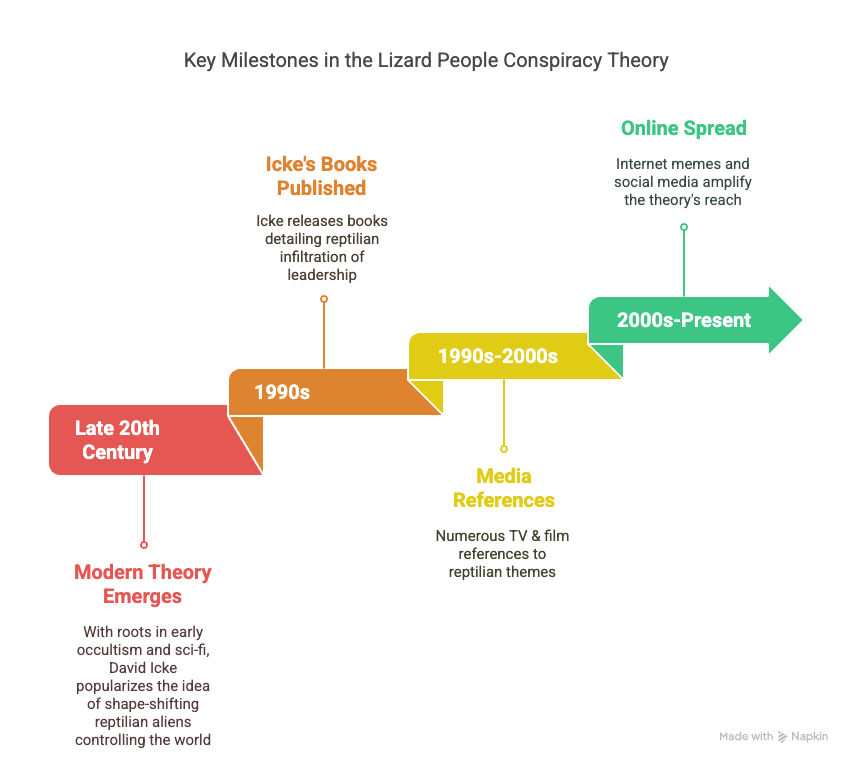
The “lizard people” conspiracy theory is one of the more fantastical narratives that have found a niche within modern conspiracy culture. This theory suggests that shape-shifting reptilian aliens have infiltrated human society to gain power and control. They are often depicted as occupying high positions in government, finance, and industry, manipulating global events to serve their sinister agenda.
Origins and evolution
The roots of the reptilian conspiracy theory can be traced back to a mix of earlier science fiction, mythological tales, and conspiracy theories. However, it was British author David Icke who, in the 1990s, catapulted the idea into the mainstream of conspiracy culture. Icke’s theory combines elements of New Age philosophy, Vedic texts, and a wide array of conspiracy theories, proposing that these reptilian beings are part of a secret brotherhood that has controlled humanity for millennia — a variation on the global cabal conspiracy theory framework that shows up in a lot of places.
Icke’s initial ideas were presented in his book “The Biggest Secret” (1999), where he posits that these entities are from the Alpha Draconis star system, now hiding in underground bases and are capable of morphing their appearance to mimic human form. His theories incorporate a broad range of historical, religious, and cultural references, reinterpreting them to fit the narrative of reptilian manipulation.
Persistence and appeal
The persistence of the lizard people conspiracy can be attributed to several factors. First, it offers a simplistic explanation for the complexities and injustices of the world. By attributing the world’s evils to a single identifiable source, it provides a narrative that is emotionally satisfying for some, despite its utter lack of evidence.
Second, the theory thrives on the human tendency to distrust authority and the status quo. In times of social and economic upheaval, conspiracy theories offer a form of counter-narrative that challenges perceived power structures.
Third, the advent of the internet and social media has provided a fertile ground for the spread of such ideas. Online platforms allow for the rapid dissemination of conspiracy theories, connecting individuals across the globe who share these beliefs, thus reinforcing their validity within these communities.
Understanding the Ecosystem: How lizard people theories function in online conspiracy culture
While the origins and cultural impact of David Icke’s reptilian conspiracy theory reveal much about modern conspiracy thinking, a deeper examination of how these ideas actually function within online communities exposes far more complex dynamics than simple belief and propagation. The video below explores the surprising reality of conspiracy forum culture, where the lizard people theory serves not just as a belief system, but as a weapon used by conspiracy theorists themselves to police the boundaries of their own community. Rather than existing in echo chambers of uniform agreement, these spaces operate more like battlegrounds where believers, skeptics, and those who engage purely for intellectual play constantly clash over what constitutes “legitimate” conspiracy thinking.
The 7-minute video below also delves into the science behind combating such misinformation and disinformation, examining cutting-edge research on “inoculation theory” and other evidence-based strategies for building cognitive resistance to false narratives. From David Icke’s dramatic fall from BBC respectability to the sophisticated psychological techniques now being deployed to counter conspiracy thinking, this analysis reveals how the seemingly absurd world of shape-shifting reptilians has become a crucial case study for understanding the broader challenges of truth, belief, and information warfare in the digital age.
Lizard people in modern culture and society
In modern culture, the lizard people conspiracy theory occupies a peculiar niche. On one hand, it is often the subject of satire and parody, seen as an example of the most outlandish fringe beliefs. Shows, memes, and popular media references sometimes use the imagery of reptilian overlords as a humorous nod to the world of conspiracy theories.
On the other hand, the theory has been absorbed into the larger tapestry of global conspiracy culture, intersecting with other narratives about global elites, alien intervention, and secret societies. This blending of theories creates a complex and ever-evolving mythology that can be adapted to fit various personal and political agendas.
Despite its presence in the digital and cultural landscape, the reptilian conspiracy is widely discredited and rejected by mainstream society and experts. It’s critiqued for its lack of credible evidence, its reliance on anti-Semitic tropes (echoing age-old myths about blood libel and other global Jewish conspiracies), and its potential to fuel mistrust and paranoia.
Current status and impact
Today, the reptilian conspiracy theory exists on the fringes of conspiracy communities. While it has been somewhat overshadowed by newer and more politically charged conspiracies, it remains a staple within the conspiracy theory ecosystem. Its endurance can be seen as a testament to the human penchant for storytelling and the need to find meaning in an often chaotic world.
The impact of such theories is a double-edged sword. While they can foster a sense of community among believers, they can also lead to social alienation and the erosion of trust in institutions. The spread of such unfounded theories poses challenges for societies, emphasizing the need for critical thinking and media literacy in navigating the complex landscape of modern information.
The lizard people conspiracy theory is a fascinating study in the power of narrative, belief, and the human desire to make sense of the unseen forces shaping our world. While it holds little sway in academic or scientific circles, its evolution and persistence in popular culture underscore the enduring allure of the mysterious and the unexplained.
Recent pop culture and media references
The lizard people conspiracy theory continues to captivate the public imagination, finding its way into various forms of media and popular culture. Recent years have seen a surge in references to this outlandish theory, demonstrating its persistent influence on contemporary discourse.
Television and streaming
Netflix’s animated series “Inside Job” (2021) prominently features lizard people as part of its satirical take on conspiracy theories. The show depicts various celebrities and political figures, including Taylor Swift, Judge Judy, and even Queen Elizabeth II, revealing their “true” reptilian forms. This humorous approach both mocks and acknowledges the pervasiveness of the lizard people myth in popular consciousness.
Numerous other shows, from People of Earth (2016-17) and Secret Invasion (2023) to parodies and satire in The Simpsons, Rick & Morty, and Gravity Falls have echoed and amplified the conspiracy in media.
Even before Icke’s book, the original NBC miniseries “V” in 1983 portrayed carnivorous reptilians masquerading as human-looking “Visitors,” seeking to dominate the planet. The show was a Cold War allegory that some modern-day conspiracy theorists misquote as “proof.”
Social media trends
TikTok has become a hotbed for conspiracy theory content, including discussions about lizard people. A study analyzing 1.5 million TikTok videos shared in the US over three years found that approximately 0.1% of all videos contained content related to conspiracy theories. While this percentage may seem small, it represents a significant number of videos given TikTok’s massive user base.
Podcasts and online content
The enduring fascination with the lizard people conspiracy is evident in the existence of dedicated podcasts like “Lizard People,” which explores various conspiracy theories, including the reptilian elite. Such content creators often blend humor with pseudo-investigation, further embedding the concept in internet culture.
Video games and interactive media
While not necessarily directly referencing lizard people, a number of video games have incorporated reptilian humanoids or shape-shifting aliens as antagonists, potentially drawing inspiration from or alluding to the conspiracy theory. Some of the more notable examples include Deus Ex (2000), which includes references to various real-world conspiracy theories, with one of its factions, Majestic 12, connecting to theories about reptilian control.
The Mass Effect series includes the Salarians, a reptilian race highly influential in galactic politics. And in 2013’s Saints Row IV, there’s a direct satirical nod to the lizard people conspiracy theory in one of its mission plot lines that involves fighting against shape-shifting aliens infiltrating the government.
Public figure mentions
Although direct endorsements of the lizard people theory by mainstream public figures are rare, occasional references or jokes about the concept by celebrities or politicians can reignite public interest and discussion. However, it’s crucial to approach such mentions critically and verify their context and intent.
The persistence of the lizard people conspiracy in various media forms underscores its role as a cultural touchstone. Whether treated as satire, serious speculation, or a subject of mockery, the theory continues to evolve and adapt to new platforms and audiences — reflecting broader societal anxieties and the enduring human fascination with and craving for the unknown and the extraordinary.
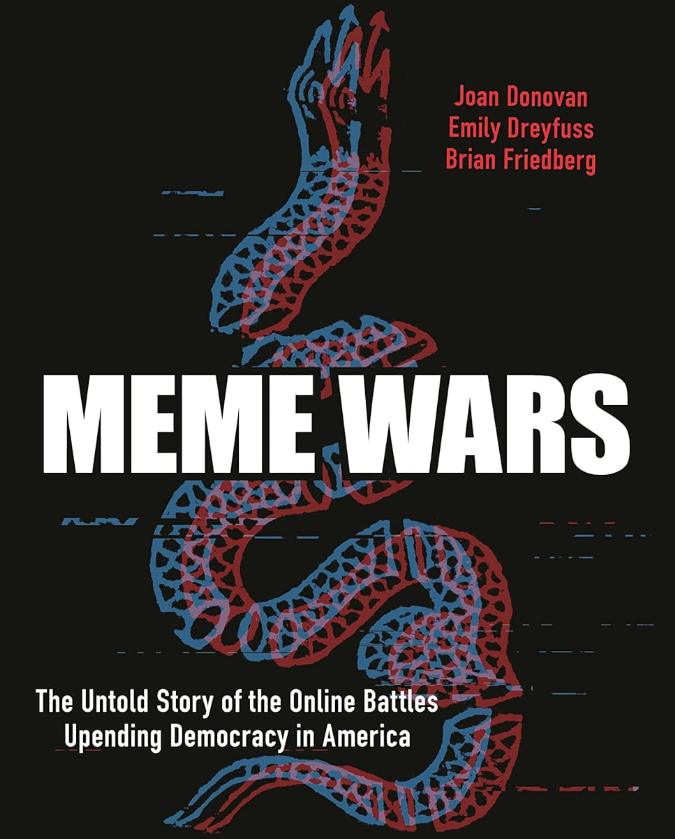
Remember when memes were just harmless internet jokes? Those days are long gone. “Meme Wars” meticulously documents how these seemingly innocent cultural artifacts have evolved into powerful weapons in a coordinated assault on American democracy — a form of information warfare that tears at our very ability to detect fantasy from reality at all, something that Hannah Arendt once warned of as a key tool of authoritarian regimes.
What makes this transformation particularly insidious is how easy it is to dismiss. After all, how could crudely drawn frogs and joke images possibly be a threat to democracy? Yet the authors convincingly demonstrate that this dismissive attitude is precisely what has allowed far-right operatives to wield memes so effectively.
The book reveals how figures like Alex Jones, Milo Yiannopoulos, Nick Fuentes, and Roger Stone have mastered the art of meme warfare. These digital provocateurs understand something that traditional political institutions have been slow to grasp: in today’s media environment, viral content can bypass established gatekeepers and directly shape public opinion at scale.
The Digital Radicalization Pipeline
Perhaps the most disturbing aspect of “Meme Wars” is its detailed examination of what the authors call the “redpill right” and their techniques for radicalizing ordinary Americans. The process begins innocuously enough—a provocative meme shared by a friend, a YouTube video recommended by an algorithm—but can quickly lead vulnerable individuals down increasingly extreme ideological paths.
This digital radicalization operates through sophisticated emotional manipulation. Content is carefully crafted to trigger outrage, fear, or a sense of belonging to an in-group that possesses hidden truths. Over time, these digital breadcrumbs lead users into alternative information ecosystems that gradually reshape their perception of political reality.
From Online Conspiracy to Capitol Insurrection
“Meme Wars” provides what may be the most comprehensive account to date of how online conspiracy theories materialized into physical violence on January 6th, 2021. The authors trace the evolution of the “Stop the Steal” movement from fringe online forums to mainstream platforms, showing how digital organizing translated into real-world action.
The book presents the Capitol insurrection as the logical culmination of years of digital warfare. Participants like “Elizabeth from Knoxville” exemplify this new reality—simultaneously acting as insurrectionists and content creators, live-streaming their participation for online audiences even as they engaged in an attempt to overthrow democratic processes.
This fusion of digital performance and physical violence represents something genuinely new and dangerous in American politics. The insurrectionists weren’t just attacking the Capitol; they were creating content designed to inspire others to join their cause.
Inside the Digital War Rooms
What sets “Meme Wars” apart from other analyses of digital extremism is the unprecedented access the authors gained to the online spaces where anti-establishment actors develop their strategies. These digital war rooms function as laboratories where messaging is crafted, tested, and refined before being deployed more broadly.
The authors document how these spaces identify potential recruits, gradually expose them to increasingly extreme content, and eventually mobilize them toward political action. This sophisticated recruitment pipeline has proven remarkably effective at growing extremist movements and providing them with dedicated foot soldiers.
The Existential Threat to Democracy
At its core, “Meme Wars” is a book about the fundamental challenge digital manipulation poses to democratic governance. By deliberately stirring strong emotions and deepening partisan divides, meme warfare undermines the rational discourse and shared reality necessary for democratic deliberation.
The authors make a compelling case that these tactics represent an existential threat to American democracy. What’s more, the digital warfare techniques developed in American contexts are already being exported globally, representing a worldwide challenge to democratic institutions.
Confronting the Challenge
Perhaps the most important contribution of “Meme Wars” is its insistence that we recognize digital threats as real-world dangers. For too long, online extremism has been dismissed as merely virtual—something separate from “real” politics. The events of January 6th definitively shattered that illusion.
While the book doesn’t offer easy solutions, it makes clear that protecting democracy in the digital age will require new approaches from institutions, platforms, and citizens alike. We need digital literacy that goes beyond spotting fake news to understanding how emotional manipulation operates online. We need platforms that prioritize democratic values over engagement metrics. And we need institutions that can effectively counter extremist narratives without amplifying them.
A Must-Read for Democracy’s Defenders
“Meme Wars” is not just a political thriller, though it certainly reads like one at times. It is a rigorously researched warning about how extremist movements are reshaping American culture and politics through digital means. For anyone concerned with the preservation of democratic institutions, it should be considered essential reading.
The authors — including Joan Donovan, widely known and respected as a foremost scholar on disinformation — have performed a valuable service by illuminating the hidden mechanics of digital manipulation. Now it’s up to all of us to heed their warning and work to build democratic resilience in the digital age. The future of our democracy may depend on it.
Curtis Yarvin, born in 1973, is a software developer and political theorist whose controversial neo-reactionary views have rippled through both Silicon Valley and right-wing political circles. Writing under the pseudonym Mencius Moldbug, Yarvin gained notoriety for his influential blog “Unqualified Reservations,” where he advanced ideas that challenge the foundations of democracy and equality.
Yarvin wasn’t always a fringe political figure. Raised in a secular, liberal family—his paternal grandparents were Jewish American communists, and his father worked for the U.S. Foreign Service—he grew up with a global perspective, spending part of his childhood in Cyprus. But it was after reading figures like Thomas Carlyle and Hans-Hermann Hoppe that Yarvin turned sharply to the right. Disillusioned by libertarianism, he carved out his own niche in far-right ideology, a space he has termed “neo-reaction.”
“The Cathedral” and Neo-Reactionary Thought
At the heart of Yarvin’s philosophy is what he calls “formalism”—a system that would replace modern democracy with something akin to monarchy. His ideas reject progressive norms and push for a consolidation of power akin to aligning political authority with property rights. Yarvin coined the term “Cathedral” to describe the intertwined power structures of mainstream media, academia, and the bureaucracy that he believes work together to perpetuate liberal democracy.
Yarvin’s ideologies have found an audience among Silicon Valley’s elite, where some of his most ardent admirers hold significant clout. Peter Thiel, co-founder of PayPal and noted libertarian-turned-conservative, has supported Yarvin’s work both ideologically and financially. Thiel’s venture capital firm, Founders Fund, even backed Yarvin’s tech startup, Tlon, which developed the decentralized computing platform Urbit.
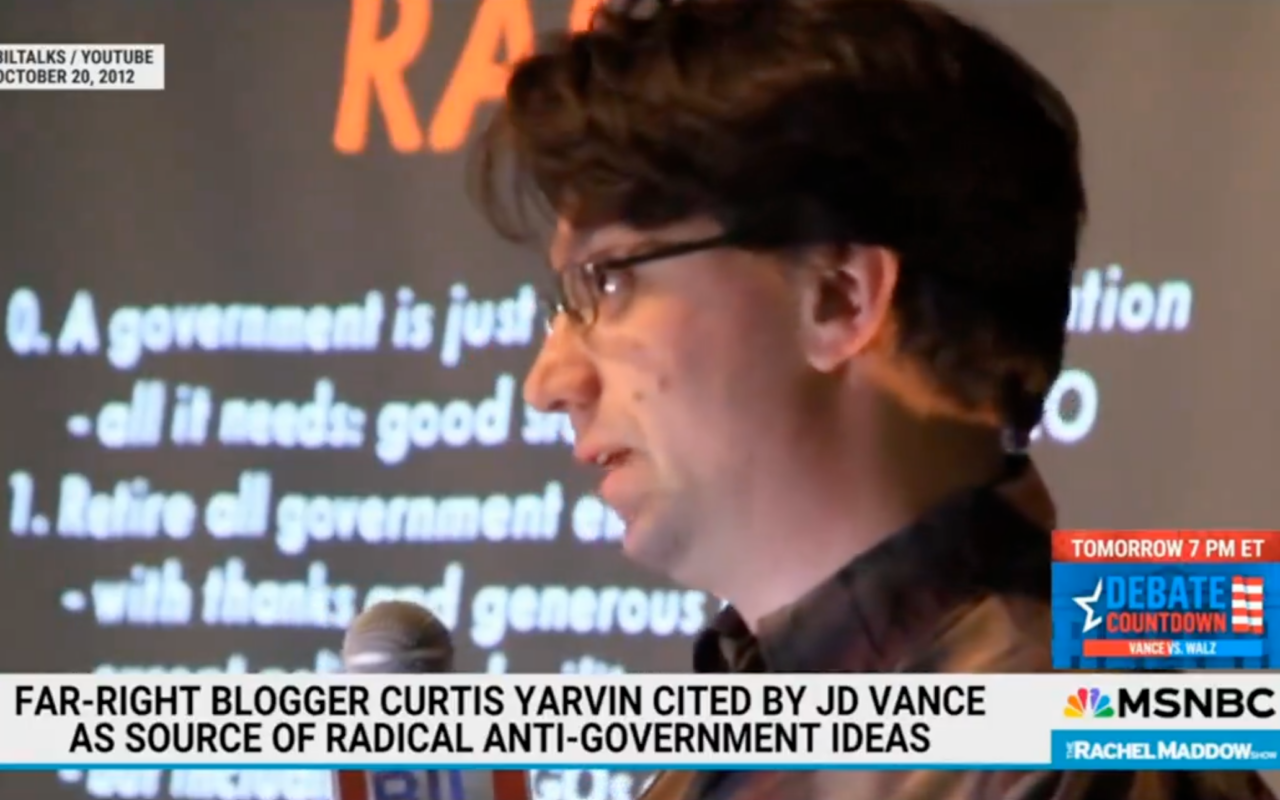
Steve Bannon, the former White House strategist, is also a known reader of Yarvin’s work, while political figures like 2024 Vice Presidential candidate J.D. Vance and failed 2022 AZ Senate candidate Blake Masters—both backed financially by Thiel—have cited and promoted Yarvin’s ideas.
Tech Hubris Meets Political Hubris
Yarvin’s Urbit project, launched in 2002, is a decentralized computing platform designed to overhaul the current internet structure, aligning with his broader vision of restructuring power. Though he left Tlon in 2019, he remains involved with Urbit’s development and continues to influence the tech space through his ideas, despite the controversy surrounding them.
Critics have slammed Yarvin’s views as deeply racist and fascistic, pointing to his writings that flirt with dangerous notions about race and slavery. His ideas—though offensive to many—seem to thrive in niche spaces where libertarian techno-utopianism meets far-right authoritarianism, making him a key figure in the ongoing discourse about the future of governance, especially in a tech-dominated age.
Here’s Rachel Maddow’s segment highlighting the Vance-Yarvin connection:
Breaking: NEW bombshell JD Vance video by MSNBC & Rachel Maddow. JD Vance wants to shut down American universities & business using extra constitutional powers. He wants to rip them out like a tumor and install political religion. Vance is following the plans of right-wing… pic.twitter.com/tDBoaMhydS
Curtis Yarvin represents an ideological fusion that’s hard to ignore: Silicon Valley’s boundless ambition meets a longing for autocratic rule. In this strange nexus, he’s helped shape a disturbing vision of the future, one where tech CEOs could potentially wear the crown.
Whataboutism is a classic debate tactic of old Soviet apologists to deflect criticism of Soviet policy; whenever an American would levy a critique, the response would be, “What about the bad things America does?”
Whataboutism is a rhetorical tactic where a person responds to an accusation or difficult question by making a counteraccusation or bringing up a different issue altogether, rather than addressing the original point. This strategy is often used in debates and discussions to deflect criticism away from oneself by pointing out the flaws in an opponent or in a different situation.
The underlying intent is to divert attention from the initial subject and to reduce the impact of the original argument by suggesting hypocrisy or inconsistency.
This tactic is not confined to any specific political or ideological group; it is widely used across various contexts as a means of muddying the waters and avoiding direct engagement with uncomfortable questions or criticisms. Whataboutism can undermine productive discourse by preventing a focused discussion on the matter at hand.